Biology Department, Wesleyan University Middletown, CT, USA.
Evol Appl. 2013 Feb;6(2):266-78. doi: 10.1111/j.1752-4571.2012.00287.x. Epub 2012 Sep 9.
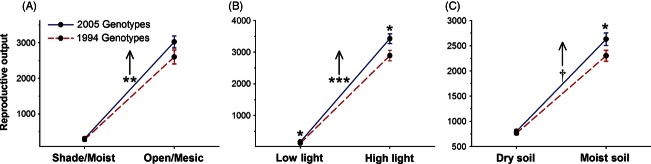
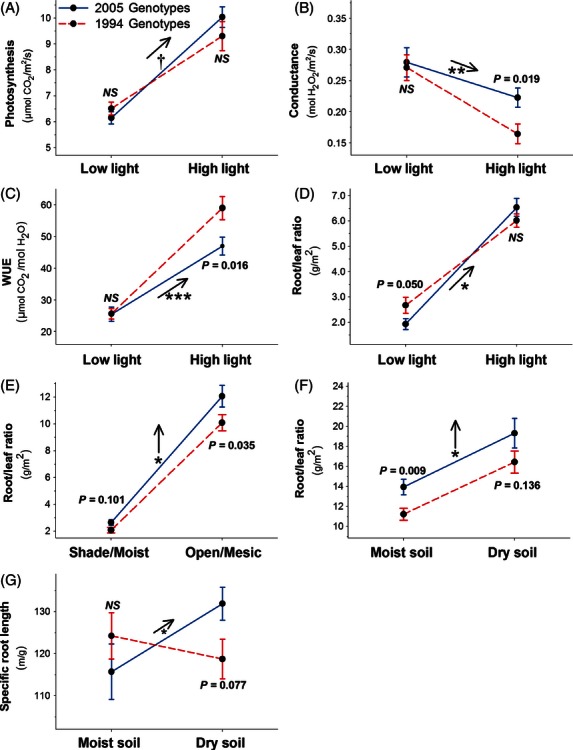
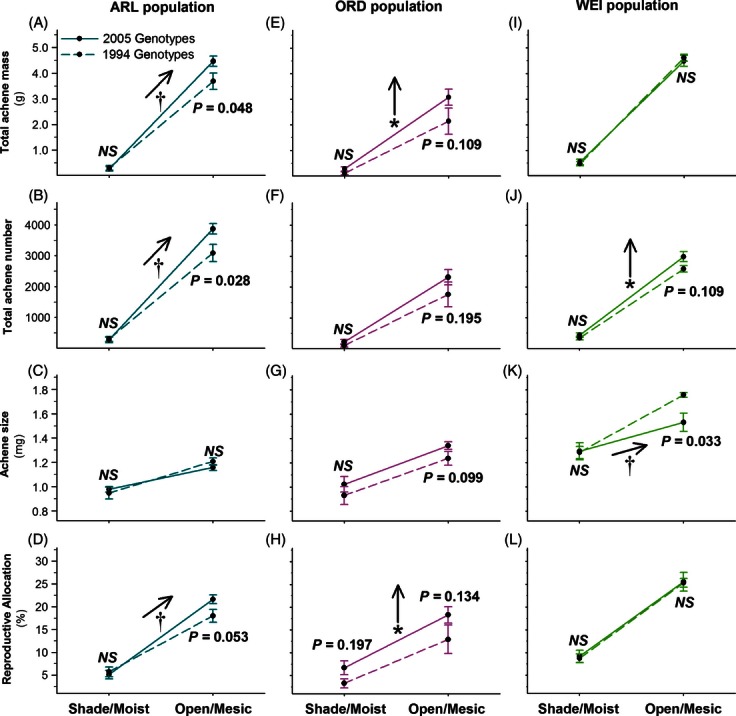
The future spread and impact of an introduced species will depend on how it adapts to the abiotic and biotic conditions encountered in its new range, so the potential for rapid evolution subsequent to species introduction is a critical, evolutionary dimension of invasion biology. Using a resurrection approach, we provide a direct test for change over time within populations in a species' introduced range, in the Asian shade annual Polygonum cespitosum. We document, over an 11-year period, the evolution of increased reproductive output as well as greater physiological and root-allocational plasticity in response to the more open, sunny conditions found in the North American range in which the species has become invasive. These findings show that extremely rapid adaptive modifications to ecologically-important traits and plastic expression patterns can evolve subsequent to a species' introduction, within populations established in its introduced range. This study is one of the first to directly document evolutionary change in adaptive plasticity. Such rapid evolutionary changes can facilitate the spread of introduced species into novel habitats and hence contribute to their invasive success in a new range. The data also reveal how evolutionary trajectories can differ among populations in ways that can influence invasion dynamics.
引入物种的未来传播和影响将取决于其如何适应新分布区的非生物和生物条件,因此物种引入后快速进化的潜力是入侵生物学的一个关键的进化维度。我们采用复苏方法,直接检验了一个物种引入分布区的种群在一段时间内的变化。我们记录了亚洲一年生耐荫植物Polygonum cespitosum 在 11 年的时间里,为了适应北美分布区更加开放、阳光充足的条件,繁殖输出增加以及生理和根系分配可塑性增强。这些发现表明,在引入物种的引入分布区内建立的种群中,极其迅速的适应生态重要特征和可塑性表达模式的适应性修饰可以在物种引入后进化。这项研究首次直接证明了适应性可塑性的进化变化。这种快速的进化变化可以促进引入物种向新栖息地的扩散,从而有助于它们在新分布区的成功入侵。数据还揭示了进化轨迹在影响入侵动态的方式上如何在不同种群中存在差异。