The Laboratory of Biomedical Sciences, The Feinstein Institute for Medical Research, Manhasset, NY, USA; The Elmezzi Graduate School of Molecular Medicine, Manhasset, NY, USA.
J Intern Med. 2013 Oct;274(4):381-90. doi: 10.1111/joim.12104. Epub 2013 Aug 12.
More than 500,000 hospitalized patients survive severe sepsis annually in the USA. Recent epidemiological evidence, however, demonstrated that these survivors have significant morbidity and mortality, with 3-year fatality rates higher than 70%. To investigate the mechanisms underlying persistent functional impairment in sepsis survivors, here we developed a model to study severe sepsis survivors following cecal ligation and puncture (CLP).
Sepsis was induced in mice by CLP and survivors were followed for twelve weeks. Spleen and blood were collected and analyzed at different time points post-sepsis.
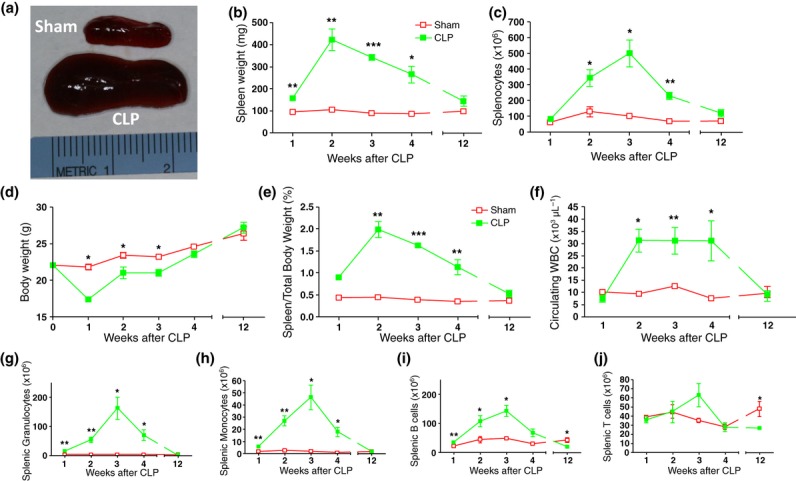
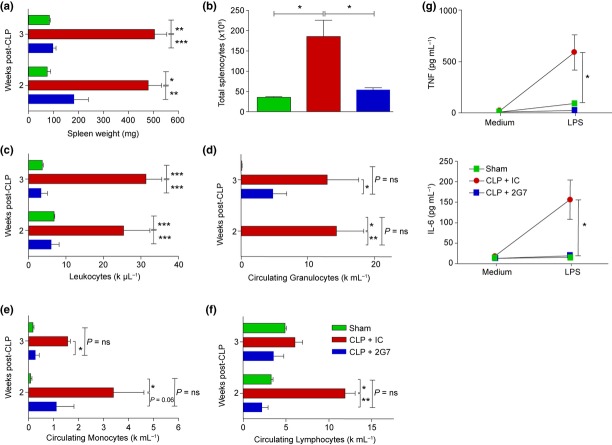
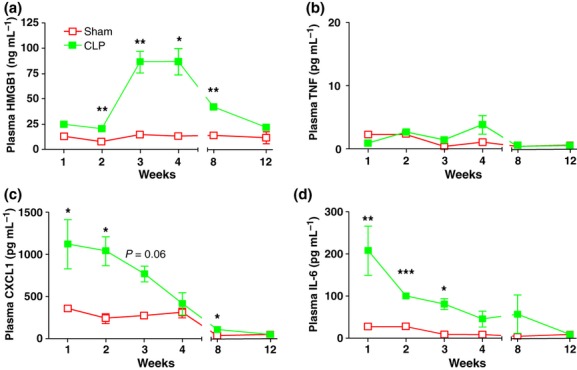
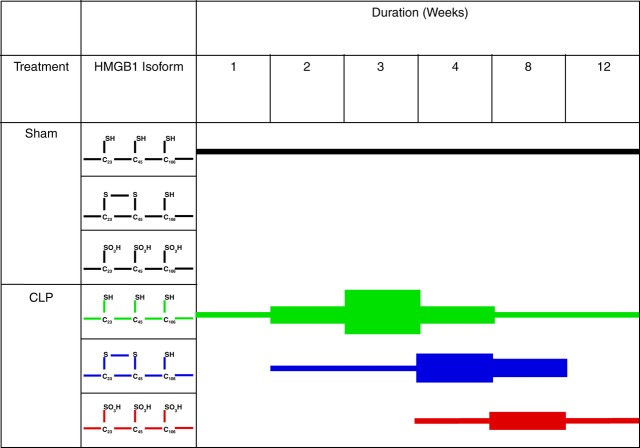
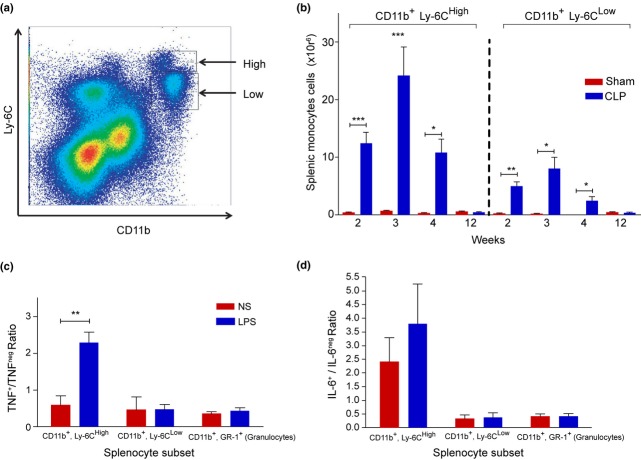
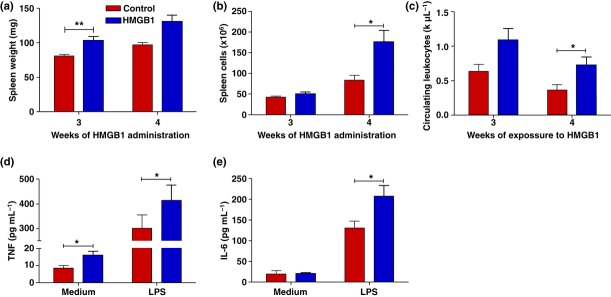
We observed that sepsis survivors developed significant splenomegaly. Analysis of the splenic cellular compartments revealed a major expansion of the inflammatory CD11b+ Ly-6CHigh pool. Serum high-mobility group box 1 (HMGB1) levels in the sepsis surviving mice were significantly elevated for 4-6 weeks after post-sepsis, and administration of an anti-HMGB1 monoclonal antibody significantly attenuated splenomegaly as well as splenocyte priming. Administration of recombinant HMGB1 to naive mice induced similar splenomegaly, leukocytosis and splenocyte priming as observed in sepsis survivors. Interestingly analysis of circulating HMGB1 from sepsis survivors by mass spectroscopy demonstrated a stepwise increase of reduced form of HMGB1 (with known chemo-attractant properties) during the first 3 weeks, followed by disulphide form (with known inflammatory properties) 4-8 weeks after CLP.
Our results indicate that prolonged elevation of HMGB1 is a necessary and sufficient mediator of splenomegaly and splenocyte expansion, as well as splenocyte inflammatory priming in murine severe sepsis survivors.
在美国,每年有超过 50 万名住院患者在严重败血症中幸存。然而,最近的流行病学证据表明,这些幸存者存在显著的发病率和死亡率,3 年死亡率高于 70%。为了研究严重败血症幸存者持续功能障碍的机制,我们在这里开发了一种模型,用于研究盲肠结扎和穿刺(CLP)后的严重败血症幸存者。
通过 CLP 在小鼠中诱导败血症,并在十二周后对幸存者进行随访。在败血症后不同时间点收集和分析脾脏和血液。
我们观察到败血症幸存者出现明显的脾肿大。对脾脏细胞区室的分析显示,炎症性 CD11b+Ly-6CHigh 池显著扩张。败血症幸存小鼠的血清高迁移率族蛋白 B1(HMGB1)水平在败血症后 4-6 周显著升高,而抗 HMGB1 单克隆抗体的给药显著减轻了脾肿大以及脾细胞的激活。向 naive 小鼠给予重组 HMGB1 可诱导类似于败血症幸存者观察到的脾肿大、白细胞增多和脾细胞激活。有趣的是,通过质谱分析从败血症幸存者中循环的 HMGB1 表明,在 CLP 后前 3 周,还原形式的 HMGB1(具有已知趋化作用)呈逐步增加,随后在 4-8 周后为二硫键形式(具有已知炎症作用)。
我们的结果表明,HMGB1 的延长升高是严重败血症幸存者脾肿大、脾细胞扩张以及脾细胞炎症激活的必要和充分介质。