Department of Bioengineering, University of California, San Diego, La Jolla, California 92093-0412, USA.
ASAIO J. 2013 Jul-Aug;59(4):337-54. doi: 10.1097/MAT.0b013e318291fbaa.
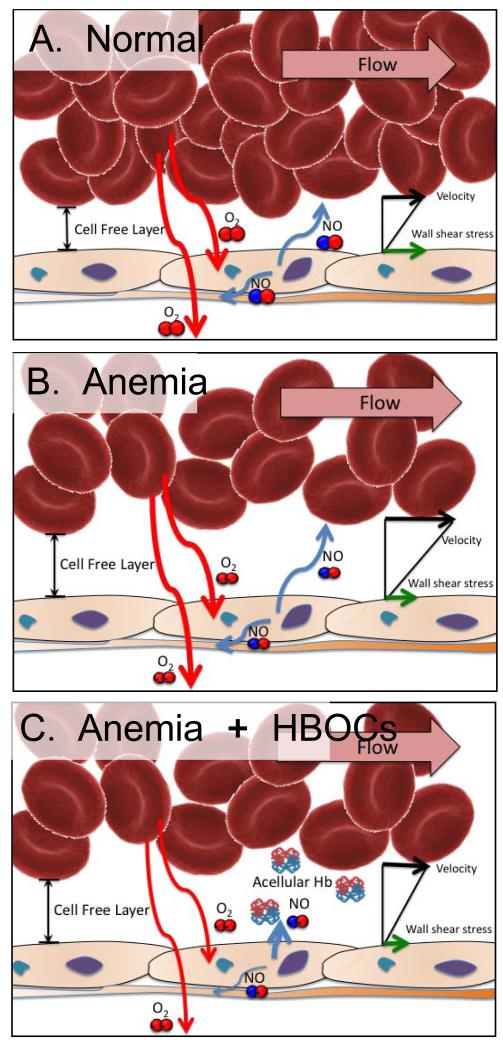
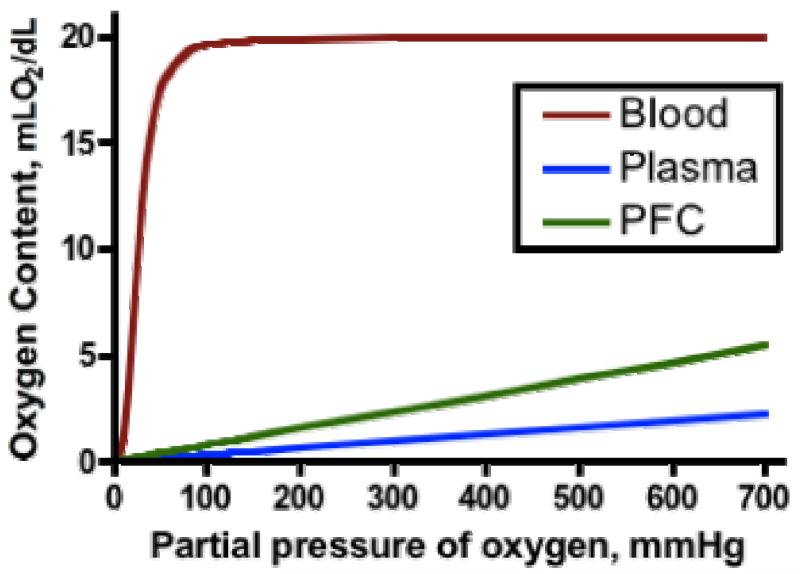
The development of oxygen (O2)-carrying blood substitutes has evolved from the goal of replicating blood O2 transport properties to that of preserving microvascular and organ function, reducing the inherent or potential toxicity of the material used to carry O2, and treating pathologies initiated by anemia and hypoxia. Furthermore, the emphasis has shifted from blood replacement fluid to "O2 therapeutics" that restore tissue oxygenation to specific tissues regions. This review covers the different alternatives, potential and limitations of hemoglobin-based O2 carriers (HBOCs) and perfluorocarbon-based O2 carriers (PFCOCs), with emphasis on the physiologic conditions disturbed in the situation that they will be used. It describes how concepts learned from plasma expanders without O2-carrying capacity can be applied to maintain O2 delivery and summarizes the microvascular responses due to HBOCs and PFCOCs. This review also presents alternative applications of HBOCs and PFCOCs namely: 1) How HBOC O2 affinity can be engineered to target O2 delivery to hypoxic tissues; and 2) How the high gas solubility of PFCOCs provides new opportunities for carrying, dissolving, and delivering gases with biological activity. It is concluded that the development of current blood substitutes has amplified their applications horizon by devising therapeutic functions for O2 carriers requiring limited O2 delivery capacity restoration. Conversely, full, blood-like O2-carrying capacity reestablishment awaits the control of O2 carrier toxicity.
携氧(O2)血液代用品的发展已经从复制血液 O2 转运特性的目标演变为维持微血管和器官功能、降低用于携带 O2 的材料的固有或潜在毒性以及治疗由贫血和缺氧引发的病理的目标。此外,重点已经从血液替代液转移到“O2 治疗剂”,这些治疗剂可以恢复特定组织区域的组织氧合。本文综述了基于血红蛋白的 O2 载体(HBOCs)和全氟化碳基 O2 载体(PFCOCs)的不同替代物、潜力和局限性,重点介绍了它们将被使用时所扰乱的生理条件。它描述了如何将没有携氧能力的血浆扩容剂的概念应用于维持 O2 输送,并总结了 HBOCs 和 PFCOCs 引起的微血管反应。本文还介绍了 HBOCs 和 PFCOCs 的替代应用,即:1)如何通过工程设计 HBOC 的 O2 亲和力来靶向缺氧组织的 O2 输送;以及 2)PFCOCs 的高气体溶解度如何为携带、溶解和输送具有生物活性的气体提供新的机会。结论是,通过为需要有限 O2 输送能力恢复的 O2 载体设计治疗功能,当前血液代用品的发展扩大了它们的应用范围。相反,完全恢复类似于血液的 O2 携载能力还需要控制 O2 载体的毒性。