Rai Sandeep, Mahapatra Bidhubhusan, Sircar Subhashish, Raj Pinnamaneni Yujwal, Venkatesh Srinivasan, Shaukat Mohammed, Rewari Bharat Bhusan
Jharkhand and Bihar State AIDS Control Society, Ranchi, India.
PLoS One. 2013 Jun 18;8(6):e66860. doi: 10.1371/journal.pone.0066860. Print 2013.
Research in India has extensively examined the factors associated with non-adherence to antiretroviral therapy (ART) with limited focus on examining the relationship between adherence to ART regimen and survival status of HIV infected patients. This study examines the effect of optimal adherence to ART on survival status of HIV infected patients attending ART centers in Jharkhand, India.
Data from a cohort of 239 HIV infected individuals who were initiated ART in 2007 were compiled from medical records retrospectively for 36 months. Socio-demographic characteristics, CD4 T cell count, presence of opportunistic infections at the time of ART initiation and ART regimen intake and survival status was collected periodically. Optimal adherence was assessed using pill count methods; patients who took <95% of the specified regimens were identified as non-adherent. Cox-proportional hazard model was used to determine the relative hazards of mortality.
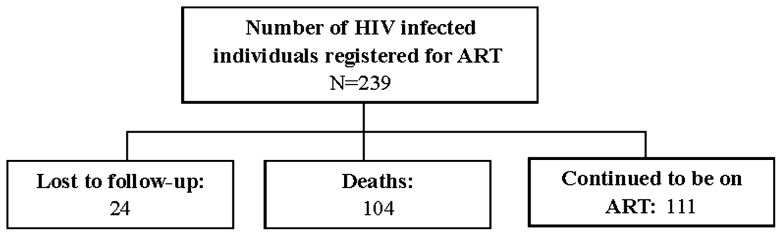
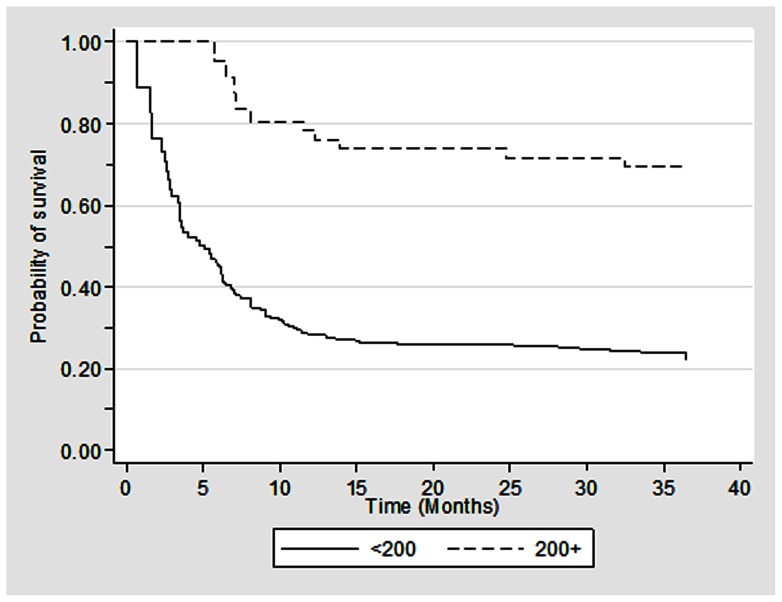
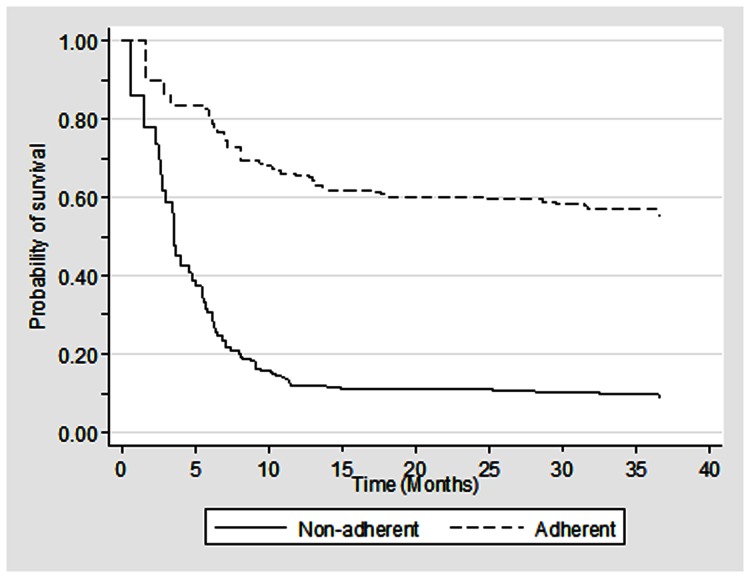
More than three-fourths of the patients were male, on an average 34 year old and median CD4 T cell count was 118 cells/cmm at the time of ART registration. About 57% of the patients registered for ART were found to be adherent to ART. A total of 104 patients died in 358.5 patient-years of observation resulting in a mortality rate of 29 per 100 patient-years (95% confidence interval (CI): 23.9-35.2) and median survival time of 6.5 months (CI: 2.7-10.9). The mortality rate was higher among patients who were non-adherent to ART (64.5, CI: 50.5-82.4) than who were adherent (15.4, CI: 11.3-21.0). The risk of mortality was fourfold higher among individuals who were non-adherent to ART than who were adherent (Adjusted hazard ratio: 3.9, CI: 2.6-6.0).
Adherence to ART is associated with a higher chance of survival of HIV infected patients, ascertaining the need for interventions to improve the ART adherence and early initiation of ART.
印度的研究广泛探讨了与抗逆转录病毒疗法(ART)治疗依从性相关的因素,但对ART治疗方案的依从性与HIV感染患者生存状况之间关系的研究较少。本研究考察了在印度恰尔肯德邦接受ART治疗的HIV感染患者中,最佳ART治疗依从性对其生存状况的影响。
回顾性收集了2007年开始接受ART治疗的239名HIV感染个体的队列数据,为期36个月。定期收集社会人口学特征、CD4 T细胞计数、开始ART治疗时机会性感染的情况、ART治疗方案的服用情况以及生存状况。采用服药计数法评估最佳依从性;服用规定治疗方案不足95%的患者被认定为依从性差。使用Cox比例风险模型确定死亡的相对风险。
超过四分之三的患者为男性,平均年龄34岁,ART登记时CD4 T细胞计数中位数为118个细胞/立方毫米。接受ART治疗登记的患者中,约57%被发现对ART治疗依从性良好。在358.5患者年的观察期内,共有104名患者死亡,死亡率为每100患者年29例(95%置信区间(CI):23.9 - 35.2),中位生存时间为6.5个月(CI:2.7 - 10.9)。ART治疗依从性差的患者死亡率(64.5,CI:50.5 - 82.4)高于依从性好的患者(15.4,CI:11.3 - 21.0)。ART治疗依从性差的个体死亡风险比依从性好的个体高四倍(调整后风险比:3.9,CI:2.6 - 6.0)。
ART治疗依从性与HIV感染患者更高的生存几率相关,这表明需要采取干预措施来提高ART治疗依从性并尽早开始ART治疗。