Jin Eun-Sun, Min Joongkee, Jeon Sang Ryong, Choi Kyoung Hyo, Jeong Je Hoon
Laboratory of Stem Cell Therapy, Asan Medical Center, College of Medicine, University of Ulsan, Seoul, Korea. ; Department of Internal Medicine, College of Medicine, Kyung Hee University, Seoul, Korea.
J Korean Neurosurg Soc. 2013 Apr;53(4):207-12. doi: 10.3340/jkns.2013.53.4.207. Epub 2013 Apr 30.
Recent studies have shown encouraging progress toward the use of autogenic and allogenic mesenchymal stem cells (MSCs) to arrest, or even lead to partial regeneration in, intervertebral disc (IVD) degeneration. However, this technology is still in its infancy, and further development is required. The aim of this study was to analyze whether rat adipose-derived mesenchymal stem cells (ADMSC) can differentiate towards IVD-like cells after treatment with transforming growth factor β3 (TGF-β3) in vitro. We also performed quantitative analysis of gene expression for ADMSC only, ADMSCs treated with TGF-β3, and co-cultured ADMSCs treated with TGF-β3.
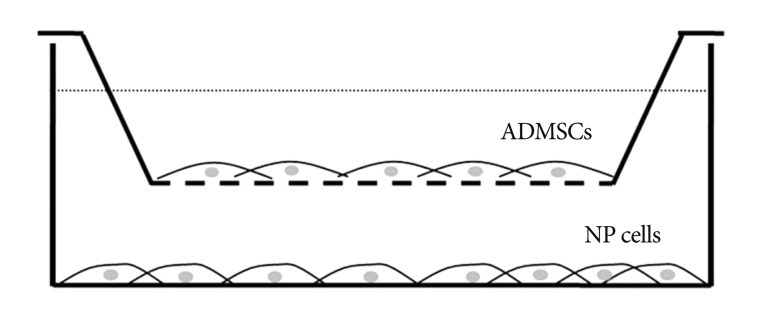
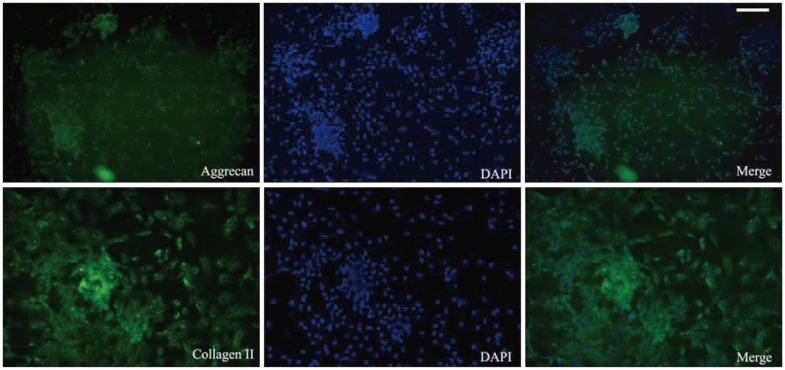
ADMSCs were sub-cultured to homogeneity and used in fluorocytometry assays for CD11, CD45, and CD90/Thy1. ADMSCs were differentiated in spheroid culture towards the chondrogenic lineage by the presence of TGF-β3, dexamethasone, and ascorbate. We also co-cultured pure ADMSCs and nucleus pulposus cells in 24-well plates, and performed immunohistochemical staining, western blotting, and RT-PCR for quantitativeanalysis of gene expression.
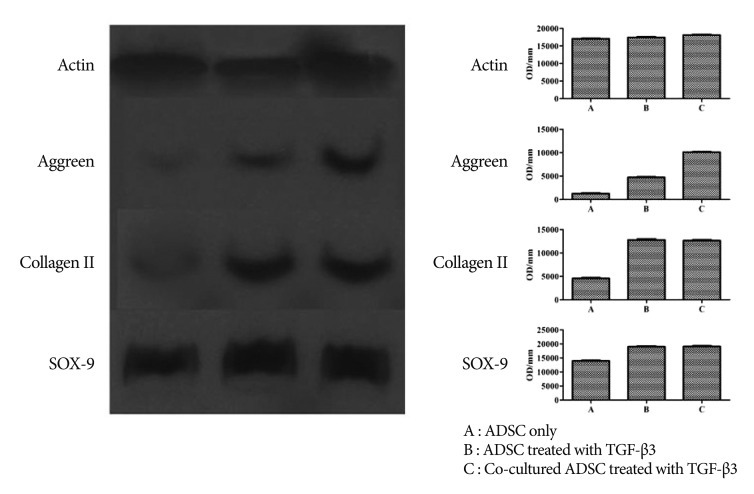
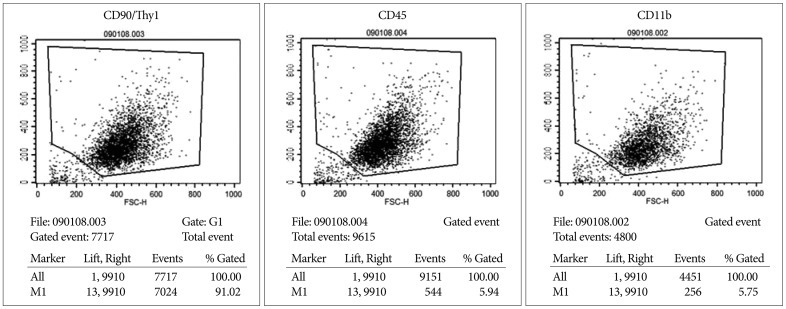
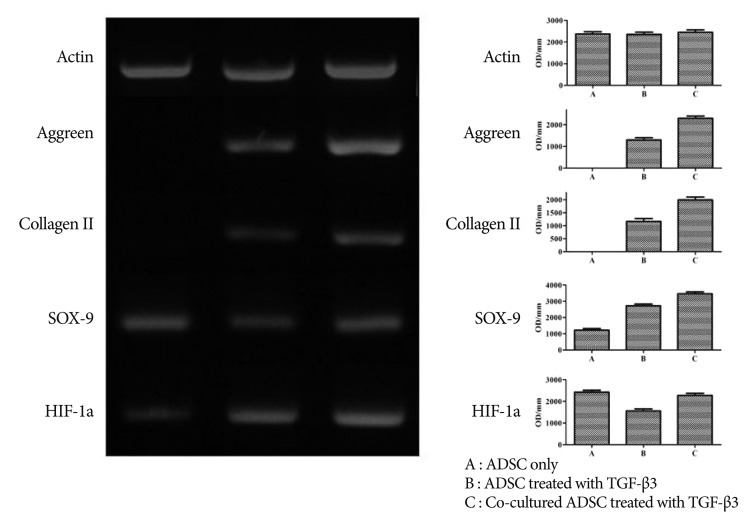
Results of fluorocytometry were positive for CD90/Thy1 and negative for CD11 and CD45. TGF-β3-mediated induction of ADMSCs led to the expression of the differentiation markers of intervertebral disc-like cells, such as aggrecan, collagen II, and sox-9. Co-cultured ADMSCs treated with TGF-β3 showed higher expression of differentiation markers and greater extracellular matrix production compared with ADMSCs treated with TGF-β3 alone.
ADMSC treated with TGF-β3 may be an attractive source for regeneration therapy in degenerative IVD. These findings may also help elucidate the pathologic mechanism of MSC therapy in the degeneration of IVD in vivo.
近期研究表明,在使用自体和异体间充质干细胞(MSCs)阻止椎间盘(IVD)退变甚至实现部分再生方面已取得令人鼓舞的进展。然而,这项技术仍处于起步阶段,需要进一步发展。本研究的目的是分析大鼠脂肪来源的间充质干细胞(ADMSC)在体外经转化生长因子β3(TGF-β3)处理后是否能向IVD样细胞分化。我们还对仅ADMSC、经TGF-β3处理的ADMSC以及经TGF-β3处理的共培养ADMSC进行了基因表达的定量分析。
将ADMSC传代培养至同质化,用于CD11、CD45和CD90/Thy1的荧光细胞术检测。在存在TGF-β3、地塞米松和抗坏血酸的情况下,ADMSC在球体培养中向软骨生成谱系分化。我们还将纯ADMSC与髓核细胞在24孔板中共培养,并进行免疫组织化学染色、蛋白质印迹和RT-PCR以进行基因表达的定量分析。
荧光细胞术结果显示CD90/Thy1呈阳性,CD11和CD45呈阴性。TGF-β3介导的ADMSC诱导导致了椎间盘样细胞分化标志物的表达,如聚集蛋白聚糖、胶原蛋白II和sox-9。与单独用TGF-β3处理的ADMSC相比,经TGF-β3处理的共培养ADMSC显示出更高的分化标志物表达和更多的细胞外基质产生。
经TGF-β3处理的ADMSC可能是退变IVD再生治疗的一个有吸引力的来源。这些发现也可能有助于阐明体内MSCs治疗IVD退变的病理机制。