Department of Biology, Centre for Biomedical Research, University of Victoria, Victoria, British Columbia, Canada.
BMC Genomics. 2013 Jul 6;14:452. doi: 10.1186/1471-2164-14-452.
The sablefish (order: Scorpaeniformes) is an economically important species in commercial fisheries of the North Pacific and an emerging species in aquaculture. Aside from a handful of sequences in NCBI and a few published microsatellite markers, little is known about the genetics of this species. The development of genetic tools, including polymorphic markers and a linkage map will allow for the successful development of future broodstock and mapping of phenotypes of interest. The significant sexual dimorphism between females and males makes a genetic test for early identification of sex desirable.
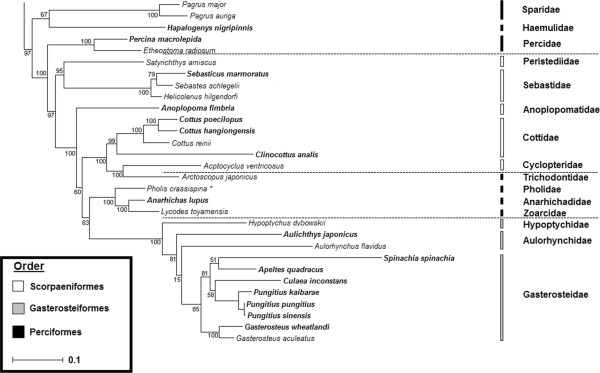
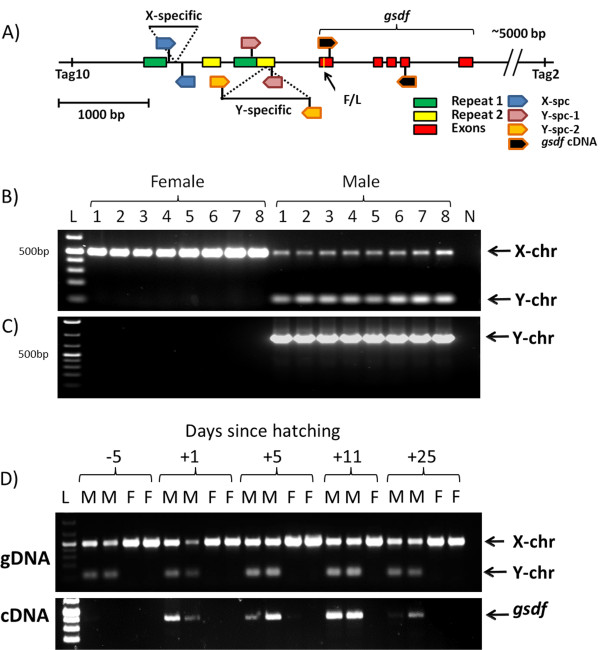
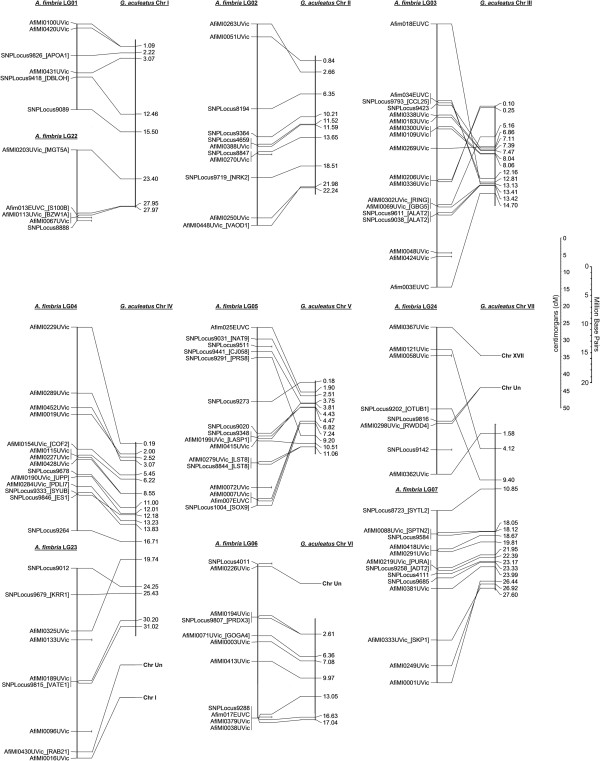
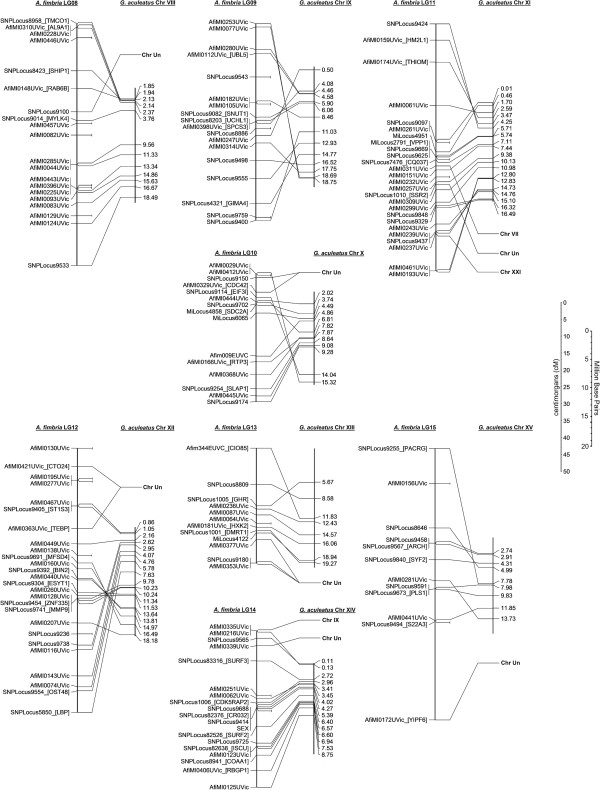
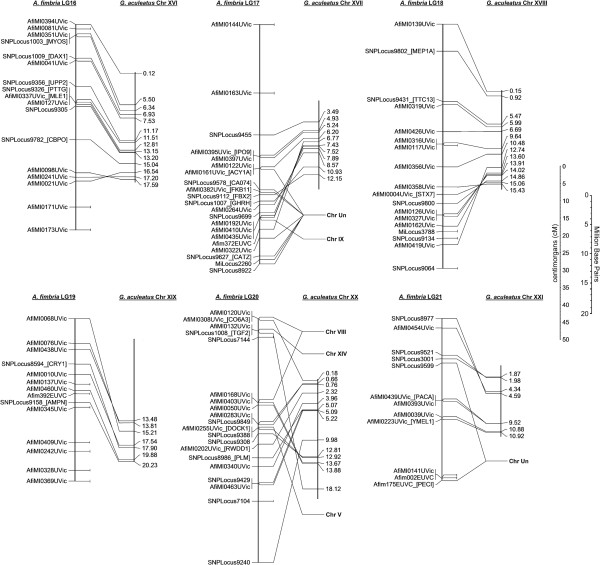
A full mitochondrial genome is presented and the resulting phylogenetic analysis verifies the placement of the sablefish within the Scorpaeniformes. Nearly 35,000 assembled transcript sequences are used to identify genes and obtain polymorphic SNP and microsatellite markers. 360 transcribed polymorphic loci from two sablefish families produce a map of 24 linkage groups. The sex phenotype maps to sablefish LG14 of the male map. We show significant conserved synteny and conservation of gene-order between the threespine stickleback Gasterosteus aculeatus and sablefish. An additional 1843 polymorphic SNP markers are identified through next-generation sequencing techniques. Sex-specific markers and sequence insertions are identified immediately upstream of the gene gonadal-soma derived factor (gsdf), the master sex determinant locus in the medaka species Oryzias luzonensis.
The first genomic resources for sablefish provide a foundation for further studies. Over 35,000 transcripts are presented, and the genetic map represents, as far as we can determine, the first linkage map for a member of the Scorpaeniformes. The observed level of conserved synteny and comparative mapping will allow the use of the stickleback genome in future genetic studies on sablefish and other related fish, particularly as a guide to whole-genome assembly. The identification of sex-specific insertions immediately upstream of a known master sex determinant implicates gsdf as an excellent candidate for the master sex determinant for sablefish.
黑鮶(鲉形目)是北太平洋商业渔业中一种重要的经济物种,也是水产养殖中的新兴物种。除了 NCBI 中的少数几个序列和一些已发表的微卫星标记外,对该物种的遗传信息知之甚少。遗传工具的开发,包括多态性标记和连锁图谱,将有助于未来亲鱼的成功开发和感兴趣表型的图谱绘制。雌雄之间存在显著的性别二态性,因此理想情况下可以进行遗传测试以早期识别性别。
呈现了一个完整的线粒体基因组,由此进行的系统发育分析验证了黑鮶在鲉形目中的位置。利用近 35000 个组装的转录本序列来识别基因,并获得多态 SNP 和微卫星标记。来自两个黑鮶家系的 360 个转录多态性基因座产生了 24 个连锁群图谱。性表型图谱定位在雄性图谱的黑鮶 LG14 上。我们展示了棘背鱼属(Gasterosteus aculeatus)和黑鮶之间的显著保守同线性和基因顺序保守性。通过下一代测序技术还鉴定了 1843 个多态 SNP 标记。性腺-体衍生因子(gsdf)基因上游立即鉴定到了性别特异性标记和序列插入,性腺-体衍生因子(gsdf)基因是黄鳝属(Oryzias luzonensis)物种中主要的性别决定基因座。
黑鮶的第一个基因组资源为进一步研究提供了基础。提出了超过 35000 个转录本,并且遗传图谱代表了我们所能确定的鲉形目成员的第一个连锁图谱。观察到的保守同线性水平和比较图谱将允许在未来的黑鮶和其他相关鱼类的遗传研究中使用棘背鱼基因组,特别是作为全基因组组装的指南。在已知的主要性别决定基因座上游立即鉴定到性别特异性插入,暗示 gsdf 是黑鮶的主要性别决定候选基因。