• 文献检索
  • 文档翻译
  • 深度研究
  • 学术资讯
  • Suppr Zotero 插件Zotero 插件
  • 邀请有礼
  • 套餐&价格
  • 历史记录
应用&插件
Suppr Zotero 插件Zotero 插件浏览器插件Mac 客户端Windows 客户端微信小程序
定价
高级版会员购买积分包购买API积分包
服务
文献检索文档翻译深度研究API 文档MCP 服务
关于我们
关于 Suppr公司介绍联系我们用户协议隐私条款
关注我们

Suppr 超能文献

核心技术专利:CN118964589B侵权必究
粤ICP备2023148730 号-1Suppr @ 2026

文献检索

告别复杂PubMed语法,用中文像聊天一样搜索,搜遍4000万医学文献。AI智能推荐,让科研检索更轻松。

立即免费搜索

文件翻译

保留排版,准确专业,支持PDF/Word/PPT等文件格式,支持 12+语言互译。

免费翻译文档

深度研究

AI帮你快速写综述,25分钟生成高质量综述,智能提取关键信息,辅助科研写作。

立即免费体验

血金属离子检测是一种有效的筛选工具,可用于识别性能不佳的金属对金属轴承表面。

Blood metal ion testing is an effectivescreening tool to identify poorly performing metal-on-metal bearingsurfaces.

机构信息

Newcastle University, StephensonBuilding, Claremont Road, Newcastleupon Tyne NE1 7RU, UK.

出版信息

Bone Joint Res. 2013 May 16;2(5):84-95. doi: 10.1302/2046-3758.25.2000148. Print 2013.

DOI:10.1302/2046-3758.25.2000148
PMID:23836464
原文链接:https://pmc.ncbi.nlm.nih.gov/articles/PMC3670540/
Abstract

OBJECTIVES

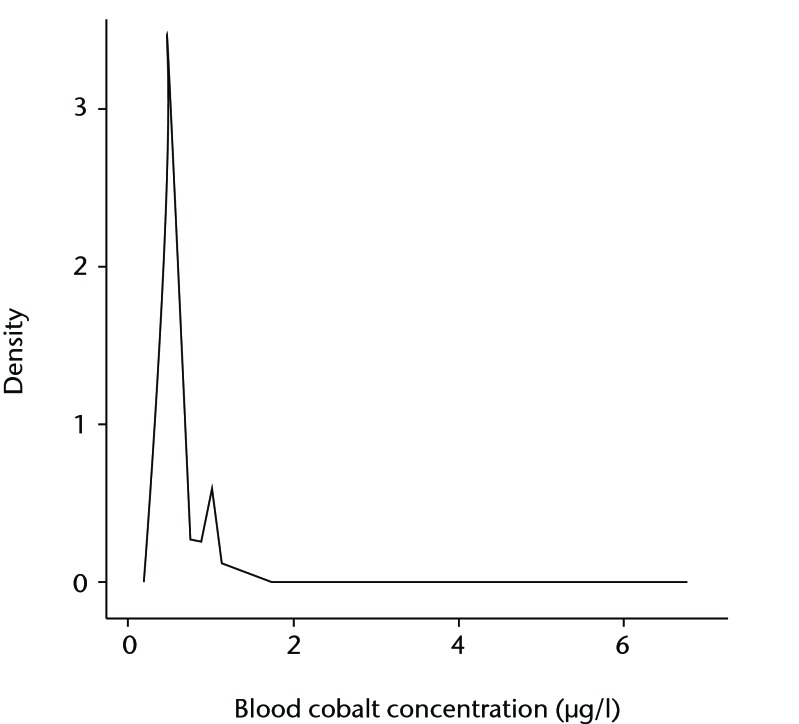
The aims of this piece of work were to: 1) record the background concentrations of blood chromium (Cr) and cobalt (Co) concentrations in a large group of subjects; 2) to compare blood/serum Cr and Co concentrations with retrieved metal-on-metal (MoM) hip resurfacings; 3) to examine the distribution of Co and Cr in the serum and whole blood of patients with MoM hip arthroplasties; and 4) to further understand the partitioning of metal ions between the serum and whole blood fractions.

METHODS

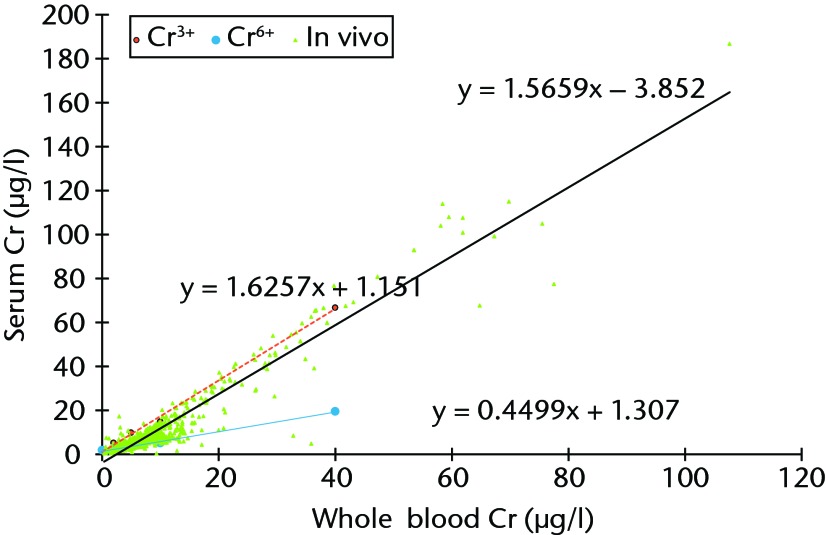
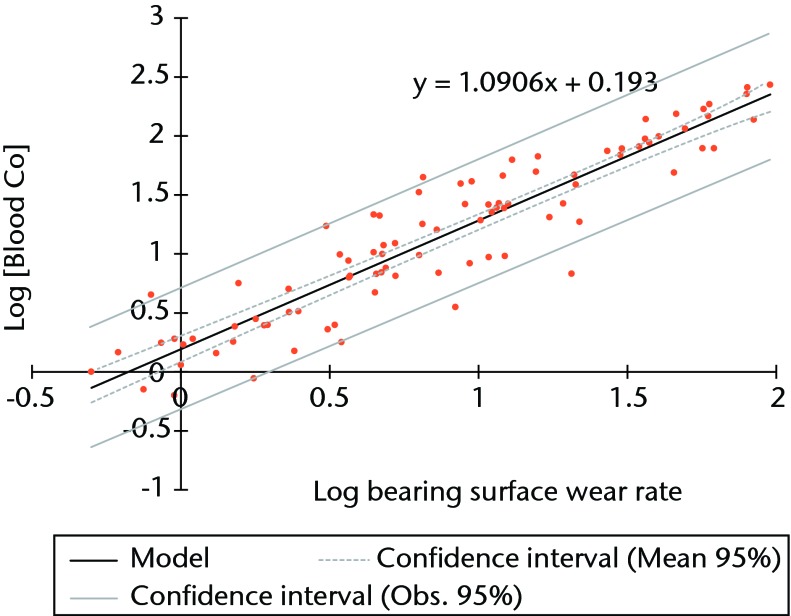
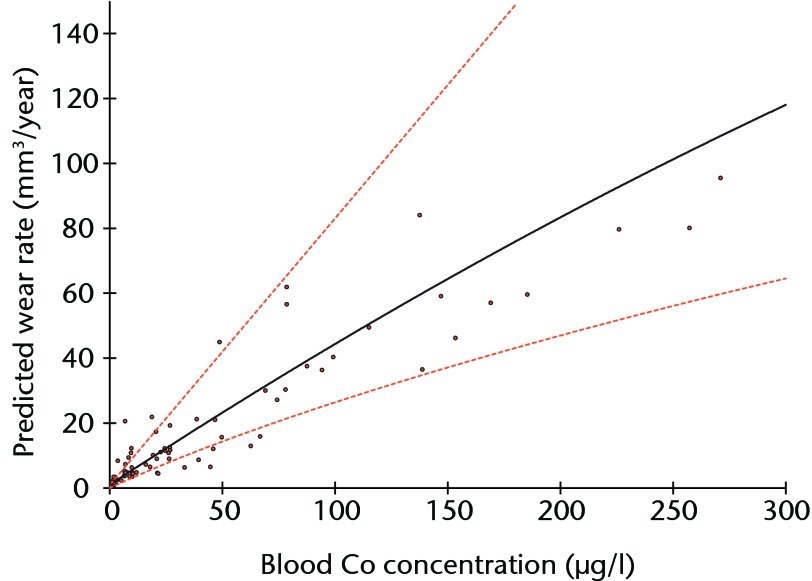
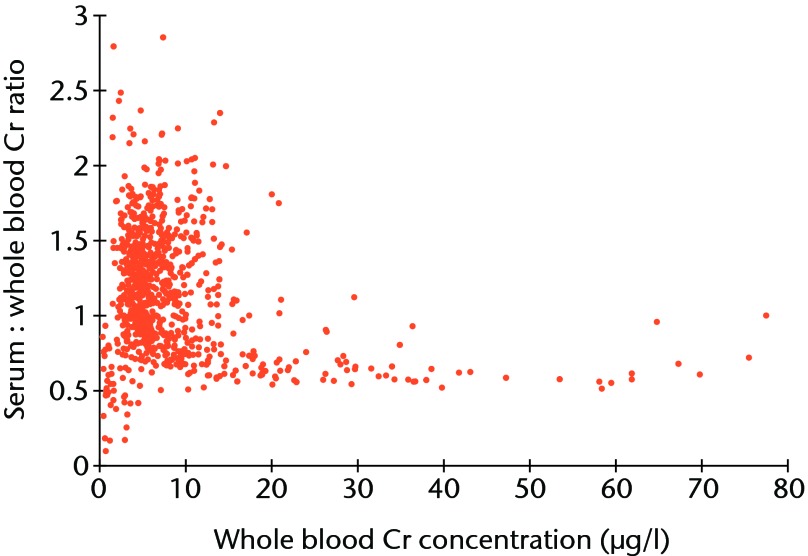
A total of 3042 blood samples donated to the local transfusion centre were analysed to record Co and Cr concentrations. Also, 91 hip resurfacing devices from patients who had given pre-revision blood/serum samples for metal ion analysis underwent volumetric wear assessment using a coordinate measuring machine. Linear regression analysis was carried out and receiver operating characteristic curves were constructed to assess the reliability of metal ions to identify abnormally wearing implants. The relationship between serum and whole blood concentrations of Cr and Co in 1048 patients was analysed using Bland-Altman charts. This relationship was further investigated in an in vitro study during which human blood was spiked with trivalent and hexavalent Cr, the serum then separated and the fractions analysed.

RESULTS

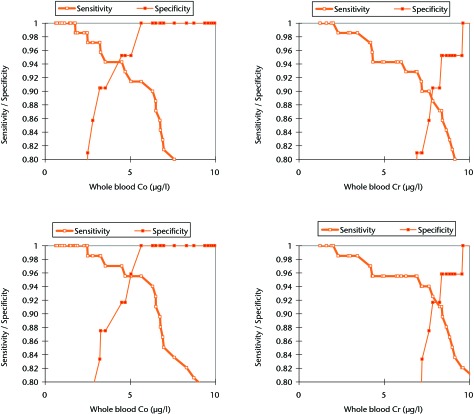
Only one patient in the transfusion group was found to have a blood Co > 2 µg/l. Blood/Serum Cr and Co concentrations were reliable indicators of abnormal wear. Blood Co appeared to be the most useful clinical test, with a concentration of 4.5 µg/l showing sensitivity and specificity for the detection of abnormal wear of 94% and 95%, respectively. Generated metal ions tended to fill the serum compartment preferentially in vivo and this was replicated in the in vitro study when blood was spiked with trivalent Cr and bivalent Co.

CONCLUSIONS

Blood/serum metal ion concentrations are reliable indicators of abnormal wear processes. Important differences exist however between elements and the blood fraction under study. Future guidelines must take these differences into account.

摘要

目的

本研究旨在:1)记录大量人群的血液铬(Cr)和钴(Co)浓度的背景浓度;2)比较血液/血清 Cr 和 Co 浓度与检索到的金属对金属(MoM)髋关节表面置换物;3)检查 MoM 髋关节置换术患者血清和全血中 Co 和 Cr 的分布;4)进一步了解金属离子在血清和全血部分之间的分配。

方法

对当地输血中心捐赠的 3042 份血液样本进行分析,以记录 Co 和 Cr 浓度。同时,对 91 个髋关节表面置换装置进行了体积磨损评估,这些装置来自曾提供金属离子分析预修订血液/血清样本的患者,使用坐标测量机进行了评估。进行线性回归分析,并构建接收者操作特征曲线,以评估金属离子识别异常磨损植入物的可靠性。使用 Bland-Altman 图表分析了 1048 例患者血清和全血中 Cr 和 Co 浓度之间的关系。在体外研究中进一步研究了这种关系,在该研究中,用人血添加三价和六价 Cr,然后分离血清并分析各部分。

结果

仅在输血组中发现一名患者血液 Co > 2 µg/l。血液/血清 Cr 和 Co 浓度是异常磨损的可靠指标。血液 Co 似乎是最有用的临床检测,浓度为 4.5 µg/l 时,对异常磨损的检测具有 94%和 95%的灵敏度和特异性。体内生成的金属离子倾向于优先填充血清室,在体外研究中,当血液中添加三价 Cr 和二价 Co 时,这一点得到了复制。

结论

血液/血清金属离子浓度是异常磨损过程的可靠指标。然而,元素和正在研究的血液部分之间存在重要差异。未来的指南必须考虑到这些差异。
https://cdn.ncbi.nlm.nih.gov/pmc/blobs/3504/3670540/4b2cfca6279d/2000148-galleyfig7.jpg
https://cdn.ncbi.nlm.nih.gov/pmc/blobs/3504/3670540/da1f19a06bb5/2000148-galleyfig1.jpg
https://cdn.ncbi.nlm.nih.gov/pmc/blobs/3504/3670540/83b3823c6a97/2000148-galleyfig2.jpg
https://cdn.ncbi.nlm.nih.gov/pmc/blobs/3504/3670540/4606ca08abbc/2000148-galleyfig3.jpg
https://cdn.ncbi.nlm.nih.gov/pmc/blobs/3504/3670540/68ee8e258fc8/2000148-galleyfig4.jpg
https://cdn.ncbi.nlm.nih.gov/pmc/blobs/3504/3670540/8e2ffe14d4f0/2000148-galleyfig5.jpg
https://cdn.ncbi.nlm.nih.gov/pmc/blobs/3504/3670540/969ffe31af5a/2000148-galleyfig6.jpg
https://cdn.ncbi.nlm.nih.gov/pmc/blobs/3504/3670540/4b2cfca6279d/2000148-galleyfig7.jpg
https://cdn.ncbi.nlm.nih.gov/pmc/blobs/3504/3670540/da1f19a06bb5/2000148-galleyfig1.jpg
https://cdn.ncbi.nlm.nih.gov/pmc/blobs/3504/3670540/83b3823c6a97/2000148-galleyfig2.jpg
https://cdn.ncbi.nlm.nih.gov/pmc/blobs/3504/3670540/4606ca08abbc/2000148-galleyfig3.jpg
https://cdn.ncbi.nlm.nih.gov/pmc/blobs/3504/3670540/68ee8e258fc8/2000148-galleyfig4.jpg
https://cdn.ncbi.nlm.nih.gov/pmc/blobs/3504/3670540/8e2ffe14d4f0/2000148-galleyfig5.jpg
https://cdn.ncbi.nlm.nih.gov/pmc/blobs/3504/3670540/969ffe31af5a/2000148-galleyfig6.jpg
https://cdn.ncbi.nlm.nih.gov/pmc/blobs/3504/3670540/4b2cfca6279d/2000148-galleyfig7.jpg

相似文献

1
Blood metal ion testing is an effectivescreening tool to identify poorly performing metal-on-metal bearingsurfaces.血金属离子检测是一种有效的筛选工具,可用于识别性能不佳的金属对金属轴承表面。
Bone Joint Res. 2013 May 16;2(5):84-95. doi: 10.1302/2046-3758.25.2000148. Print 2013.
2
Is the synovial fluid cobalt-to-chromium ratio related to the serum partitioning of metal debris following metal-on-metal hip arthroplasty?金属对金属髋关节置换术后,滑液中钴与铬的比例与金属碎屑在血清中的分布有关吗?
Bone Joint Res. 2019 Apr 2;8(3):146-155. doi: 10.1302/2046-3758.83.BJR-2018-0049.R1. eCollection 2019 Mar.
3
Blood Metal Ion Levels Have Limited Utility in the Surveillance of Asymptomatic Large-Head Metal-on-Metal Total Hip Arthroplasties.血金属离子水平在无症状大头金属对金属全髋关节置换术后的监测中应用价值有限。
J Arthroplasty. 2017 Dec;32(12):3685-3688. doi: 10.1016/j.arth.2017.07.015. Epub 2017 Jul 20.
4
The Cobalt/Chromium Ratio Provides Similar Diagnostic Value to a Low Cobalt Threshold in Predicting Adverse Local Tissue Reactions in Patients With Metal-on-Metal Hip Arthroplasty.钴/铬比值在预测金属对金属髋关节置换术后患者不良局部组织反应方面提供了与低钴阈值相似的诊断价值。
J Arthroplasty. 2018 Sep;33(9):3020-3024. doi: 10.1016/j.arth.2018.03.072. Epub 2018 Apr 9.
5
Revision of Metal-on-metal Hip Prostheses Results in Marked Reduction of Blood Cobalt and Chromium Ion Concentrations.金属对金属髋关节假体翻修导致血液中钴和铬离子浓度显著降低。
Clin Orthop Relat Res. 2015 Jul;473(7):2305-13. doi: 10.1007/s11999-015-4156-6. Epub 2015 Jan 27.
6
Distribution of chromium and cobalt ions in various blood fractions after resurfacing hip arthroplasty.髋关节表面置换术后不同血液成分中铬离子和钴离子的分布情况。
J Arthroplasty. 2008 Sep;23(6):814-21. doi: 10.1016/j.arth.2007.07.003. Epub 2008 Jan 22.
7
Catastrophic failure of femoral stem modular junction when combined with metal-on-metal bearing in comparison to ceramic-on-ceramic: A retrospective cohort study.股骨柄模块连接处灾难性失效,与金属对金属轴承相比,陶瓷对陶瓷:回顾性队列研究。
Orthop Traumatol Surg Res. 2021 Feb;107(1):102749. doi: 10.1016/j.otsr.2020.102749. Epub 2020 Dec 11.
8
Do cobalt or chromium accumulate in metal-on-metal hip arthroplasty patients who have mild, moderate, or severe renal insufficiency?在患有轻度、中度或重度肾功能不全的金属对金属髋关节置换术患者中,钴或铬是否会蓄积?
Bone Joint J. 2021 Jul;103-B(7):1231-1237. doi: 10.1302/0301-620X.103B7.BJJ-2020-0836.R2.
9
Higher Blood Cobalt and Chromium Levels in Patients With Unilateral Metal-on-Metal Total Hip Arthroplasties Compared to Hip Resurfacings.与髋关节表面置换术相比,单侧金属对金属全髋关节置换术患者的血液钴和铬水平更高。
J Arthroplasty. 2016 Jun;31(6):1261-1266. doi: 10.1016/j.arth.2015.11.045. Epub 2015 Dec 17.
10
Metal ion interpretation in resurfacing versus conventional hip arthroplasty and in whole blood versus serum. How should we interpret metal ion data.表面置换与传统髋关节置换术中以及全血与血清中的金属离子解读。我们应如何解读金属离子数据。
Hip Int. 2011 Sep-Oct;21(5):587-95. doi: 10.5301/HIP.2011.8643.

引用本文的文献

1
Metal-on-Metal Total Hip Arthroplasties: Why Do They Fail?金属对金属全髋关节置换术:为何会失败?
Arthroplast Today. 2025 Mar 20;33:101662. doi: 10.1016/j.artd.2025.101662. eCollection 2025 Jun.
2
Diagnostic Dilemma: Unusual Post-replacement Hip Pain Following Trauma Leading to Metallosis - A Case Report.诊断难题:创伤后人工髋关节置换术后出现异常疼痛导致金属中毒——一例报告
J Orthop Case Rep. 2024 Dec;14(12):111-115. doi: 10.13107/jocr.2024.v14.i12.5040.
3
Titanium nitride coating of pectus bar increases metal contamination after minimally-invasive repair of pectus excavatum.

本文引用的文献

1
Establishment of toxic metal reference range in tobacco from US cigarettes.建立美国香烟中有毒金属的参考范围。
J Anal Toxicol. 2013 Jun;37(5):298-304. doi: 10.1093/jat/bkt021. Epub 2013 Apr 2.
2
Consensus statement "Current evidence on the management of metal-on-metal bearings"--April 16, 2012.共识声明《金属对金属关节假体的当前管理证据》——2012年4月16日。
Hip Int. 2013 Jan-Feb;23(1):2-5. doi: 10.5301/HIP.2013.10754.
3
The 2012 Otto Aufranc Award: The interpretation of metal ion levels in unilateral and bilateral hip resurfacing.
钛氮化物涂层的鸡胸矫正板在微创鸡胸凹陷修复后增加了金属污染。
PLoS One. 2023 Oct 12;18(10):e0292616. doi: 10.1371/journal.pone.0292616. eCollection 2023.
4
Periarticular metal hypersensitivity complications of hip bearings containing cobalt-chromium.含钴铬的髋关节轴承的关节周围金属超敏反应并发症
EFORT Open Rev. 2022 Dec 7;7(11):758-771. doi: 10.1530/EOR-22-0036.
5
The influence of HLA genotype on the development of metal hypersensitivity following joint replacement.HLA基因型对关节置换后金属超敏反应发生发展的影响。
Commun Med (Lond). 2022 Jun 24;2:73. doi: 10.1038/s43856-022-00137-0. eCollection 2022.
6
Cobalt Neurotoxicity: Transcriptional Effect of Elevated Cobalt Blood Levels in the Rodent Brain.钴神经毒性:啮齿动物大脑中钴血水平升高的转录效应。
Toxics. 2022 Jan 28;10(2):59. doi: 10.3390/toxics10020059.
7
Dislocation of a McMinn-Like Prosthesis with Distinctive Metallosis and Fracture of the Os Ilium.具有独特金属沉着症的类麦克明假体脱位及髂骨骨折
Case Rep Orthop. 2021 Nov 10;2021:6151679. doi: 10.1155/2021/6151679. eCollection 2021.
8
Predictive factors affecting long-term survivorship of ASR metal-on-metal total hip arthroplasty.影响ASR金属对金属全髋关节置换术长期生存率的预测因素。
SICOT J. 2021;7:51. doi: 10.1051/sicotj/2021040. Epub 2021 Oct 19.
9
The contribution of the histopathological examination to the diagnosis of adverse local tissue reactions in arthroplasty.组织病理学检查在关节置换术中对局部组织不良反应诊断的贡献。
EFORT Open Rev. 2021 Jun 28;6(6):399-419. doi: 10.1302/2058-5241.6.210013. eCollection 2021 Jun.
10
Comparison of the long-term cause of failure and survivorship of four hundred and twenty seven metal-on-metal hip arthroplasties: resurfacing versus large head total hip arthroplasty.427例金属对金属髋关节置换术失败的长期原因及生存率比较:表面置换与大头全髋关节置换术对比
Int Orthop. 2021 Dec;45(12):3075-3081. doi: 10.1007/s00264-021-05044-y. Epub 2021 Jun 21.
2012 年奥托·奥夫兰克奖:单侧和双侧髋关节表面置换术中金属离子水平的解读。
Clin Orthop Relat Res. 2013 Feb;471(2):377-85. doi: 10.1007/s11999-012-2526-x.
4
Metal-on-metal hip implants. UK quality assurance of blood cobalt and chromium after hip implants.金属对金属髋关节植入物。英国髋关节植入术后血液中钴和铬的质量保证。
BMJ. 2012 Jun 12;344:e4017. doi: 10.1136/bmj.e4017.
5
Dietary exposure to trace elements and health risk assessment in the 2nd French Total Diet Study.《法国第二次总膳食研究中微量元素的膳食暴露与健康风险评估》
Food Chem Toxicol. 2012 Jul;50(7):2432-49. doi: 10.1016/j.fct.2012.04.016. Epub 2012 Apr 20.
6
Ten-year clinical, radiological and metal ion analysis of the Birmingham Hip Resurfacing: from a single, non-designer surgeon.对伯明翰髋关节表面置换术的十年临床、放射学及金属离子分析:来自一位非特定品牌手术医生的报告
J Bone Joint Surg Br. 2012 Apr;94(4):471-6. doi: 10.1302/0301-620X.94B4.27895.
7
Sensitivity and specificity of blood cobalt and chromium metal ions for predicting failure of metal-on-metal hip replacement.血液中钴和铬金属离子对预测金属对金属髋关节置换失败的敏感性和特异性。
J Bone Joint Surg Br. 2011 Oct;93(10):1308-13. doi: 10.1302/0301-620X.93B10.26249.
8
Metal ion interpretation in resurfacing versus conventional hip arthroplasty and in whole blood versus serum. How should we interpret metal ion data.表面置换与传统髋关节置换术中以及全血与血清中的金属离子解读。我们应如何解读金属离子数据。
Hip Int. 2011 Sep-Oct;21(5):587-95. doi: 10.5301/HIP.2011.8643.
9
Accelerating failure rate of the ASR total hip replacement.人工表面置换全髋关节置换术的加速失败率。
J Bone Joint Surg Br. 2011 Aug;93(8):1011-6. doi: 10.1302/0301-620X.93B8.26040.
10
A survey on the prevalence of pseudotumors with metal-on-metal hip resurfacing in Canadian academic centers.加拿大学术中心中金属对金属髋关节表面置换术后假性肿瘤患病率的调查。
J Bone Joint Surg Am. 2011 May;93 Suppl 2:118-21. doi: 10.2106/JBJS.J.01848.