State Key Laboratory of Tree Genetics and Breeding, Research Institute of Forestry, Chinese Academy of Forestry, Beijing, China.
PLoS One. 2013 Jun 28;8(6):e67462. doi: 10.1371/journal.pone.0067462. Print 2013.
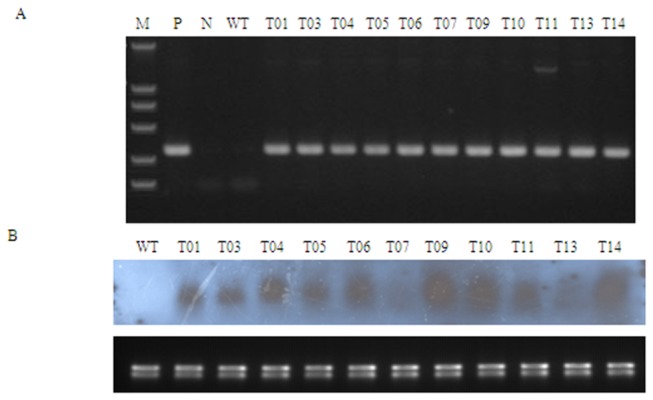
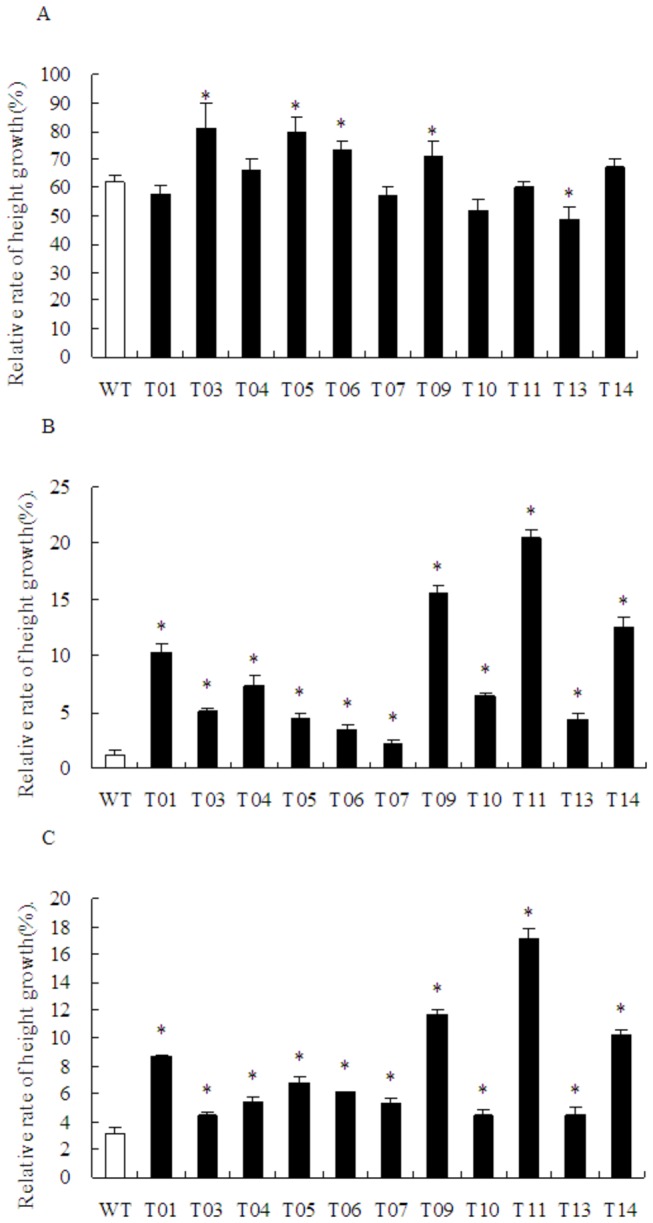
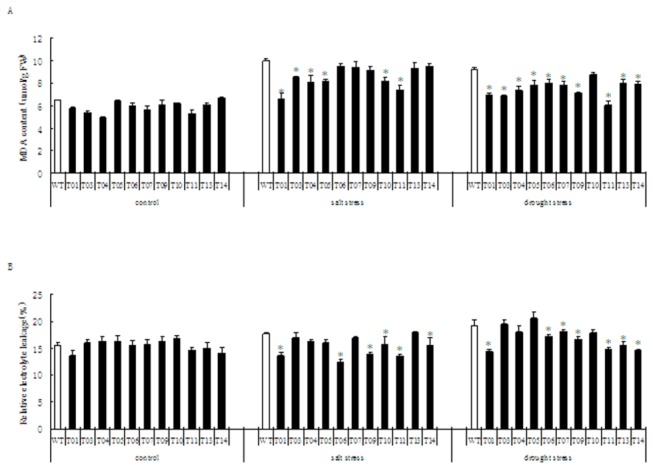
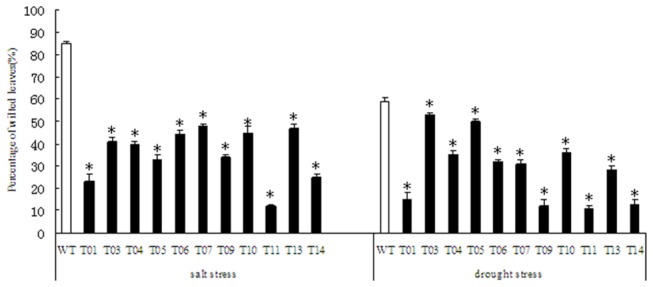
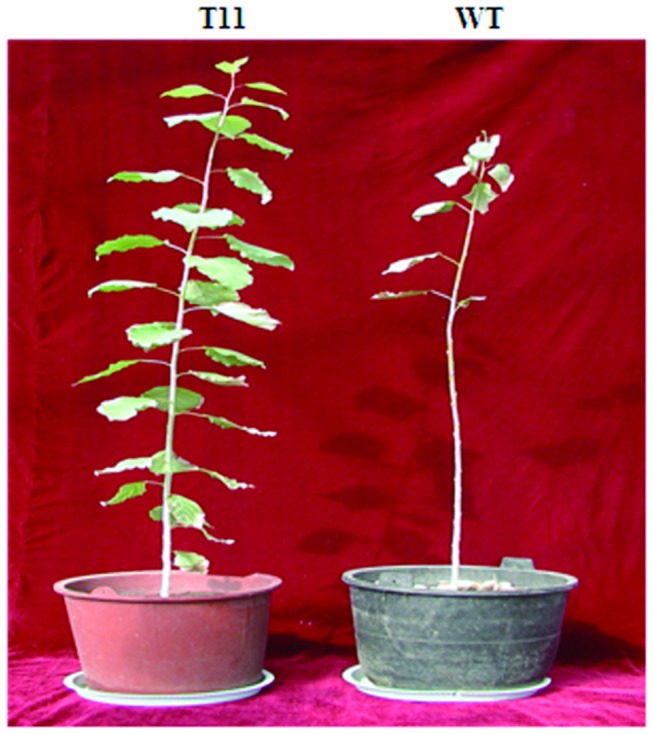
Late embryogenesis abundant (LEA) genes were confirmed to confer resistance to drought and water deficiency. An LEA gene from Tamarixandrossowii (named TaLEA) was transformed into Xiaohei poplar (Populussimonii × P. nigra) via Agrobacterium. Twenty-five independent transgenic lines were obtained that were resistant to kanamycin, and 11 transgenic lines were randomly selected for further analysis. The polymerase chain reaction (PCR) and ribonucleic acid (RNA) gel blot indicated that the TaLEA gene had been integrated into the poplar genome. The height growth rate, malondialdehyde (MDA) content, relative electrolyte leakage and damages due to salt or drought to transgenic and non-transgenic plants were compared under salt and drought stress conditions. The results showed that the constitutive expression of the TaLEA gene in transgenic poplars could induce an increase in height growth rate and a decrease in number and severity of wilted leaves under the salt and drought stresses. The MDA content and relative electrolyte leakage in transgenic lines under salt and drought stresses were significantly lower compared to those in non-transgenic plants, indicating that the TaLEA gene may enhance salt and drought tolerance by protecting cell membranes from damage. Moreover, amongst the lines analyzed for stress tolerance, the transgenic line 11 (T11) showed the highest tolerance levels under both salinity and drought stress conditions. These results indicated that the TaLEA gene could be a salt and drought tolerance candidate gene and could confer a broad spectrum of tolerance under abiotic stresses in poplars.
晚期胚胎丰富(LEA)基因被证实具有抗旱和抗缺水能力。从柽柳(Tamarixandrossowii)中分离出一个 LEA 基因(命名为 TaLEA),并通过根癌农杆菌(Agrobacterium)转化到小黑杨(Populussimonii × P. nigra)中。获得了 25 个对卡那霉素有抗性的独立转基因株系,随机选择了 11 个转基因株系进行进一步分析。聚合酶链反应(PCR)和核糖核酸(RNA)凝胶印迹表明 TaLEA 基因已整合到杨树基因组中。在盐胁迫和干旱胁迫条件下,比较了转基因和非转基因植株的生长速度、丙二醛(MDA)含量、相对电解质渗漏率以及盐和干旱造成的损伤。结果表明,TaLEA 基因在转基因杨树中的组成型表达可诱导其在盐胁迫和干旱胁迫下生长速度的提高,以及萎蔫叶片数量和严重程度的降低。与非转基因植株相比,转基因株系在盐胁迫和干旱胁迫下 MDA 含量和相对电解质渗漏率显著降低,表明 TaLEA 基因可能通过保护细胞膜免受损伤来增强盐胁迫和干旱胁迫耐受性。此外,在分析的耐胁迫株系中,转基因株系 11(T11)在盐胁迫和干旱胁迫条件下表现出最高的耐胁迫水平。这些结果表明,TaLEA 基因可能是一个盐和干旱胁迫耐受候选基因,可赋予杨树在非生物胁迫下广泛的耐受能力。