Department of Anaesthesiology, University Hospital Aachen, Aachen, Germany.
Scand J Trauma Resusc Emerg Med. 2013 Jul 11;21:54. doi: 10.1186/1757-7241-21-54.
Legal regulations often limit the medical care that paramedics can provide. Telemedical solutions could overcome these limitations by remotely providing expert support. Therefore, a mobile telemedicine system to support paramedics was developed. During the implementation phase of this system in four German emergency medical services (EMS), the feasibility and possible limitations of this system were evaluated.
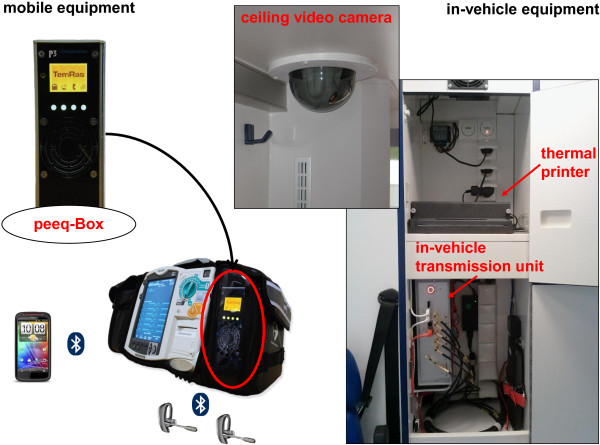
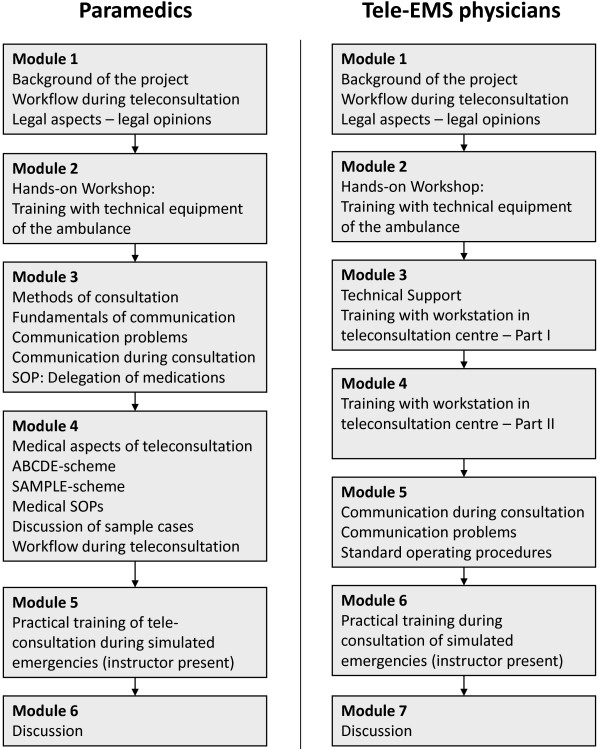
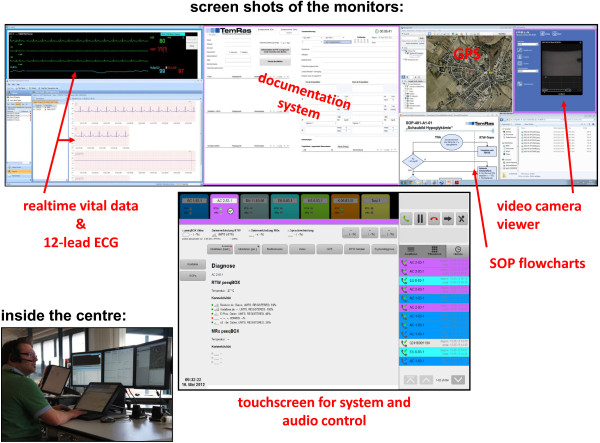
After obtaining ethical approval and providing a structured training program for all medical professionals, the system was implemented on three paramedic-staffed ambulances on August 1st, 2012. Two more ambulances were included subsequently during this month. The paramedics could initiate a consultation with EMS physicians at a teleconsultation centre. Telemedical functionalities included audio communication, real-time vital data transmission, 12-lead electrocardiogram, picture transmission on demand, and video streaming from a camera embedded into the ceiling of each ambulance. After each consultation, telephone-based debriefings were conducted. Data were retrieved from the documentation protocols of the teleconsultation centre and the EMS.
During a one month period, teleconsultations were conducted during 35 (11.8%) of 296 emergency missions with a mean duration of 24.9 min (SD 12.5). Trauma, acute coronary syndromes, and circulatory emergencies represented 20 (57%) of the consultation cases. Diagnostic support was provided in 34 (97%) cases, and the administration of 50 individual medications, including opioids, was delegated by the teleconsultation centre to the paramedics in 21 (60%) missions (range: 1-7 per mission). No medical complications or negative interpersonal effects were reported. All applications functioned as expected except in one case in which the connection failed due to the lack of a viable mobile network.
The feasibility of the telemedical approach was demonstrated. Teleconsultation enabled early initiation of treatments by paramedics operating under the real-time medical direction. Teleconsultation can be used to provide advanced care until the patient is under a physician's care; moreover, it can be used to support the paramedics who work alone to provide treatment in non-life-threatening cases. Non-availability of mobile networks may be a relevant limitation. A larger prospective controlled trial is needed to evaluate the rate of complications and outcome effects.
法律规定往往限制护理人员所能提供的医疗服务。远程医疗解决方案可以通过远程提供专家支持来克服这些限制。因此,开发了一种移动远程医疗系统来支持护理人员。在该系统在德国四个紧急医疗服务机构(EMS)实施阶段,评估了该系统的可行性和可能的局限性。
在获得伦理批准并为所有医疗专业人员提供结构化培训计划后,该系统于 2012 年 8 月 1 日在三辆配备护理人员的救护车上实施。同月随后又增加了两辆救护车。护理人员可以在远程咨询中心与 EMS 医生发起咨询。远程医疗功能包括音频通信、实时生命数据传输、12 导联心电图、按需图片传输以及从每个救护车天花板上嵌入的摄像头进行视频流传输。每次咨询后,都会进行电话汇报。数据从远程咨询中心和 EMS 的文档协议中检索。
在一个月的时间内,在 296 次紧急任务中的 35 次(11.8%)进行了远程咨询,平均持续时间为 24.9 分钟(SD 12.5)。创伤、急性冠状动脉综合征和循环紧急情况占咨询病例的 20(57%)。在 34 个(97%)病例中提供了诊断支持,并通过远程咨询中心向 21 个(60%)任务中的护理人员委托了 50 种个别药物的管理,包括阿片类药物(每次任务 1-7 种药物)。没有报告医疗并发症或负面的人际影响。除了由于没有可行的移动网络而导致连接失败的一个案例外,所有应用程序都按预期运行。
远程医疗方法的可行性得到了证明。远程咨询使在实时医疗指导下操作的护理人员能够及早开始治疗。远程咨询可用于提供高级护理,直到患者接受医生的护理;此外,它还可用于支持单独工作以在非危及生命的情况下提供治疗的护理人员。无法使用移动网络可能是一个相关的限制因素。需要进行更大的前瞻性对照试验来评估并发症和结果影响的发生率。