Department of Dermatology, University of Mainz, Mainz, Rhineland Palatinate, Germany.
PLoS One. 2013 Jul 5;8(7):e66800. doi: 10.1371/journal.pone.0066800. Print 2013.
Despite the increasing incidence of melanoma little is known about patients' emotional distress associated with this disease. Supplemented by the problem list (PL), the distress thermometer (DT) is a recommended screening instrument to measure psychosocial distress in cancer patients. Our objective was to explore the acceptance and the feasibility of the DT and PL as a concise screening tool in an ambulatory setting for routine care and to elucidate determinants of distress in melanoma patients with regard to sociodemographic and clinical variables.
Consecutive melanoma outpatients were asked to complete the DT with the PL prior to their scheduled consultation. Demographic and clinical data were obtained from the patients' charts. Clinical data included melanoma stage, time since diagnosis, previous treatment, current treatment, and other cancer disease.
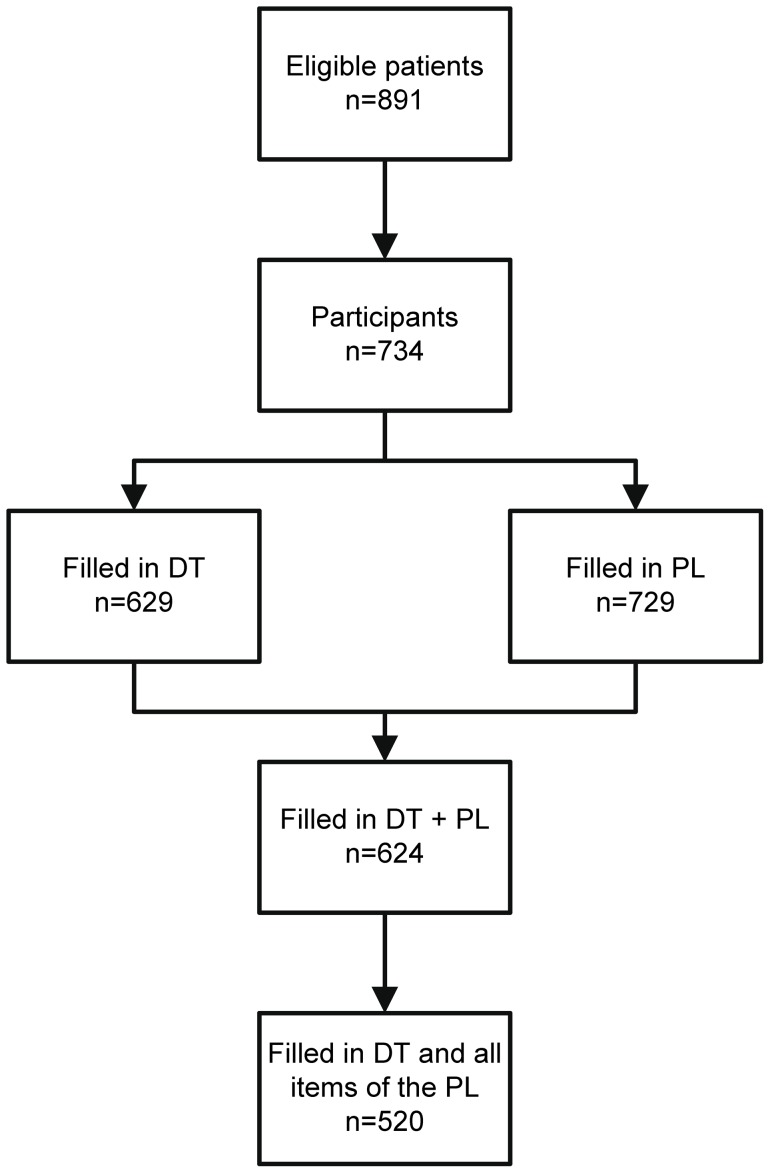
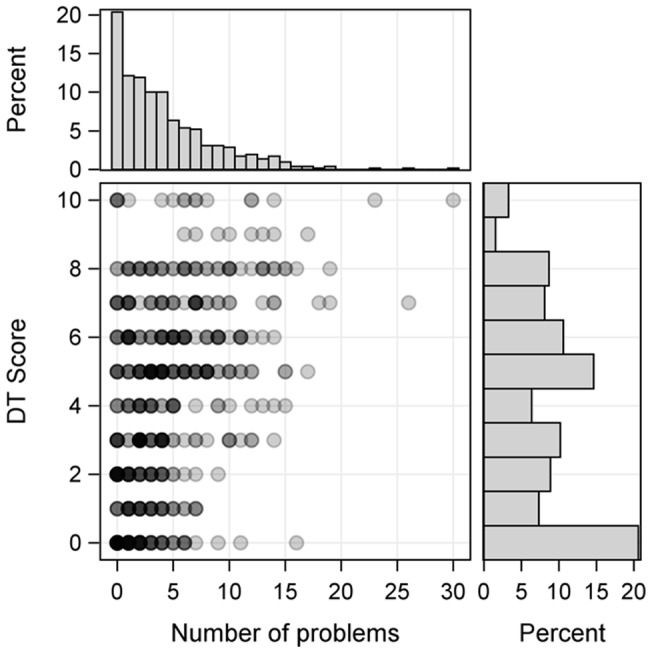
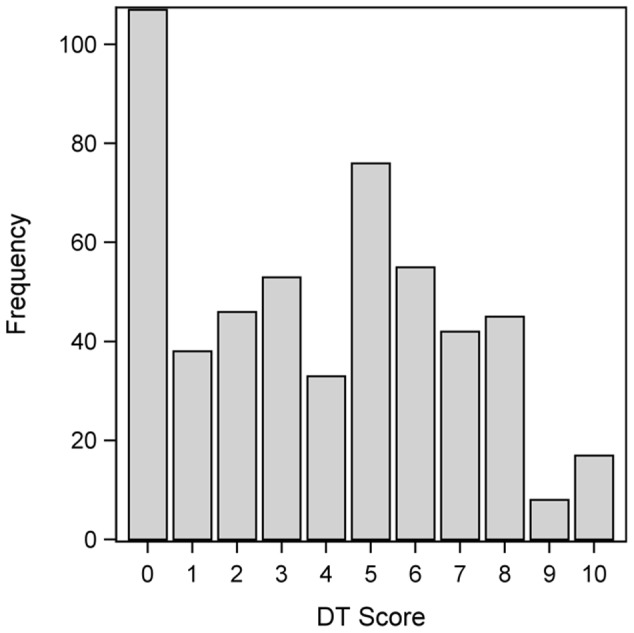
Out of 734 patients recruited into the study, 520 patients (71%) completed both the DT and the PL. Forty-seven percent met the ≥5 cut-off score for distress. Younger and employed patients reported higher distress than older and retired patients. A cut-off score of ≥5 was closely associated with self-reported emotional sources of distress, with practical problems, especially at work, family problems (dealing with the partner), and physical problems like pain, appearance, getting around, and nausea. Apart from higher distress under current systemic treatment, no associations were found between distress and clinical data.
The DT together with the PL seems to be an economically reasonable screening tool to measure psychosocial distress in melanoma patients. In particular, younger melanoma patients who are currently employed are prone to experience distress at some point after diagnosis, but there appears to be almost no association between clinical data and the extent of distress. To characterize the impact of distress on disease outcome and quality of life in melanoma patients, further research is needed.
尽管黑色素瘤的发病率不断上升,但人们对患者与该疾病相关的情绪困扰知之甚少。补充问题清单(PL)后,痛苦温度计(DT)是一种推荐的筛查工具,用于测量癌症患者的心理社会困扰。我们的目的是探索 DT 和 PL 作为一种简明的筛查工具在门诊常规护理中的接受程度和可行性,并阐明黑色素瘤患者的困扰与社会人口学和临床变量的关系。
连续招募黑色素瘤门诊患者,要求他们在预约就诊前完成 DT 并填写 PL。从患者的病历中获取人口统计学和临床数据。临床数据包括黑色素瘤分期、诊断后时间、既往治疗、当前治疗和其他癌症疾病。
在纳入研究的 734 名患者中,有 520 名患者(71%)完成了 DT 和 PL。47%的患者达到了痛苦的≥5 分的 cutoff 分数。年轻且就业的患者报告的痛苦程度高于年长和退休的患者。≥5 的 cutoff 分数与自我报告的情绪困扰源密切相关,特别是在工作中遇到的实际问题、家庭问题(与伴侣相处)和身体问题如疼痛、外貌、行动不便和恶心。除了当前系统治疗下的痛苦程度较高外,痛苦与临床数据之间没有发现任何关联。
DT 与 PL 相结合似乎是一种经济合理的筛查工具,可用于测量黑色素瘤患者的心理社会困扰。特别是目前就业的年轻黑色素瘤患者在诊断后某个时候容易感到困扰,但临床数据与困扰程度之间似乎几乎没有关联。为了描述困扰对黑色素瘤患者疾病结局和生活质量的影响,需要进一步研究。