Faculty of Medicine, University of Toronto, Toronto, ON, Canada.
Virulence. 2013 Aug 15;4(6):537-42. doi: 10.4161/viru.25779. Epub 2013 Jul 17.
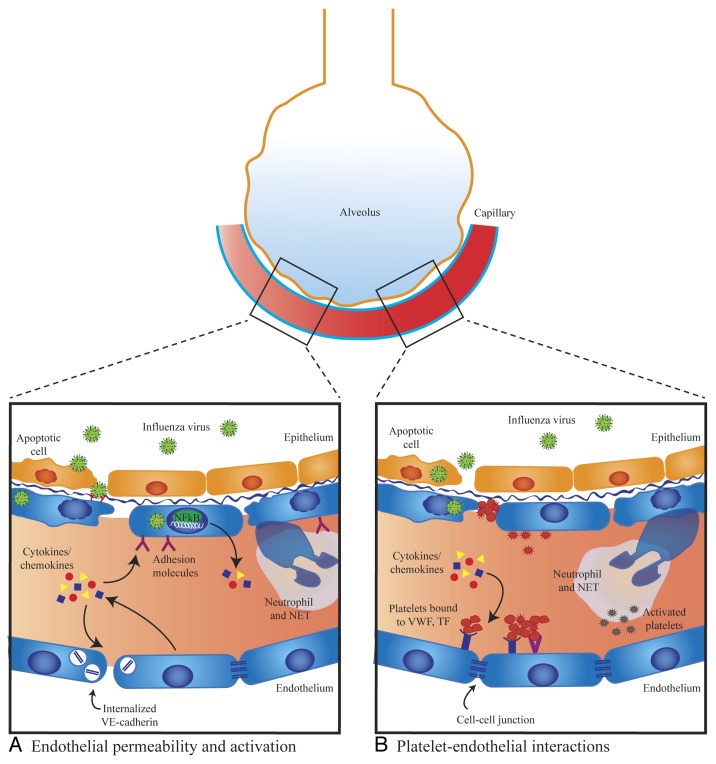
The development of severe influenza has been attributed, in part, to a heightened innate immune response. Recent evidence suggests that endothelial activation, loss of barrier function, and consequent microvascular leak may also serve important mechanistic roles in the pathogenesis of severe influenza. The aim of this review is to summarize the current evidence in support of endothelial activation and dysfunction as a central feature preceding the development of severe influenza. We also discuss the effect of influenza on platelet-endothelial interactions.
严重流感的发展部分归因于增强的固有免疫反应。最近的证据表明,内皮细胞激活、屏障功能丧失以及随之而来的微血管渗漏也可能在严重流感的发病机制中发挥重要的机制作用。本文综述的目的是总结目前支持内皮细胞激活和功能障碍作为严重流感发展之前的核心特征的证据。我们还讨论了流感对血小板-内皮细胞相互作用的影响。