Laboratory of Metabolomics and Isotopic Analyses, Global Change Research Centre, Academy of Sciences of the Czech Republic, Branišovská 31, České Budějovice 37005, Czech Republic.
Molecules. 2013 Jul 17;18(7):8429-39. doi: 10.3390/molecules18078429.
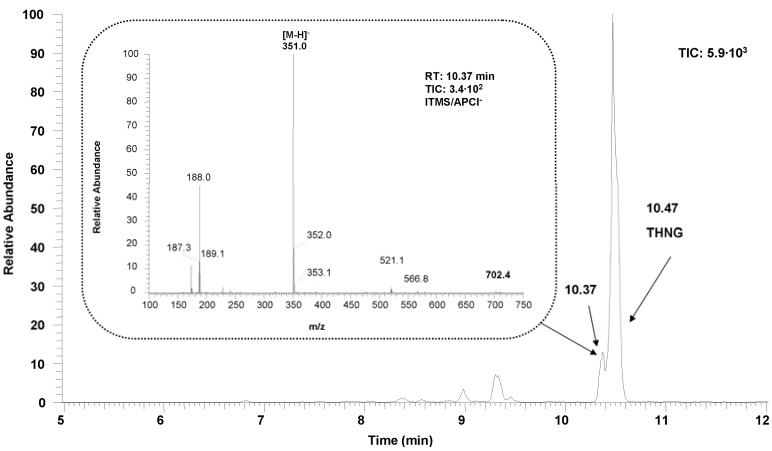
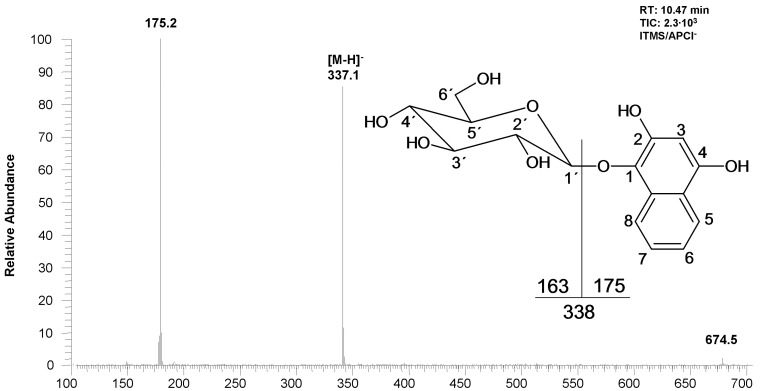
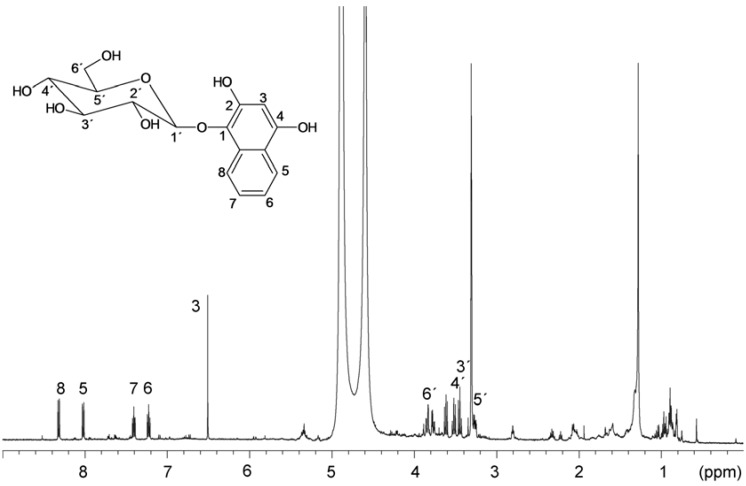
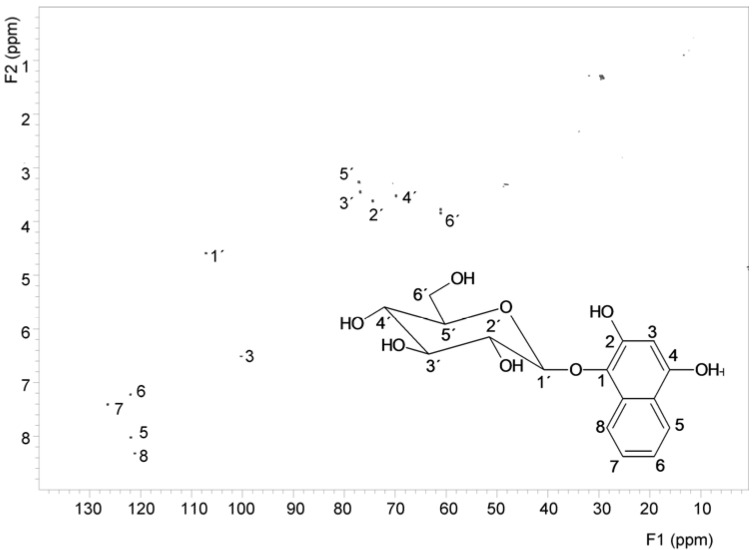
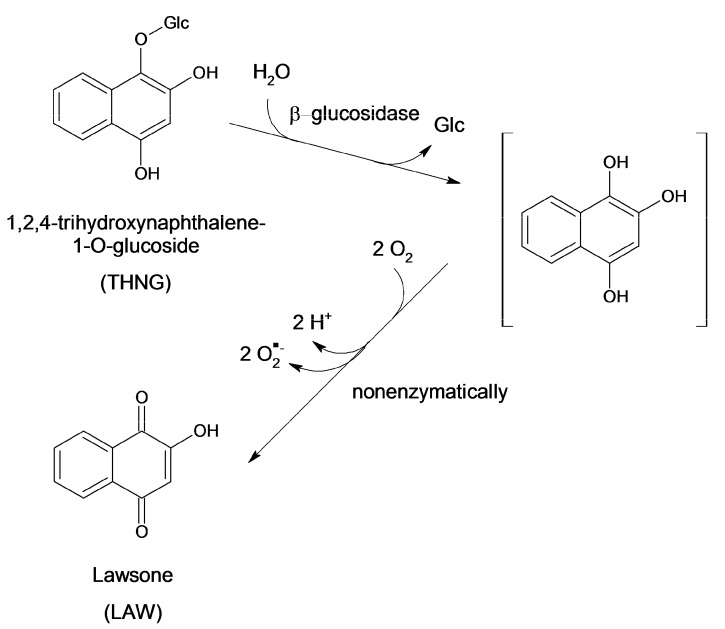
Methanolic extract from lyophilized roots of Impatiens glandulifera Royle was analyzed by high performance liquid chromatography using DAD and FLD detection and this revealed one dominant highly fluorescent very unstable substance. The stability of this derivative is strongly dependent on the plant material drying procedure and extraction procedure used. The structure of the substance was established as 1,2,4-trihydroxynaphthalene-1-O-glucoside (THNG) according LC-MS and NMR measurements. When lyophilized plant material was extracted with methanol an almost four times higher amount of THNG was found in the extract, compared to the amount of 2-hydroxy-1,4-naphthoquinone obtained, while in the case of the same lyophilized plant material extracted with water there was no THNG in the extract. The main compounds in this case was 2-hydroxy-1,4-naphthoquinone. In the plant material dried at the laboratory temperature and extracted by methanol there are only traces of THNG.
从干燥的马缨丹根的甲醇提取物进行高效液相色谱分析,采用 DAD 和 FLD 检测,发现一种主要的高荧光极不稳定的物质。该衍生物的稳定性强烈依赖于所用的植物材料干燥程序和提取程序。根据 LC-MS 和 NMR 测量,该物质的结构被确定为 1,2,4-三羟基萘-1-O-葡萄糖苷(THNG)。当用甲醇提取冻干植物材料时,与提取得到的 2-羟基-1,4-萘醌的量相比,提取物中发现的 THNG 的量高出近四倍,而对于用相同的冻干植物材料提取水时,提取物中没有 THNG。在这种情况下,主要化合物是 2-羟基-1,4-萘醌。在实验室温度下干燥并通过甲醇提取的植物材料中,THNG 只有微量。