Buck Institute for Research on Aging, Novato, CA, USA.
Cell Death Dis. 2013 Jul 18;4(7):e727. doi: 10.1038/cddis.2013.199.
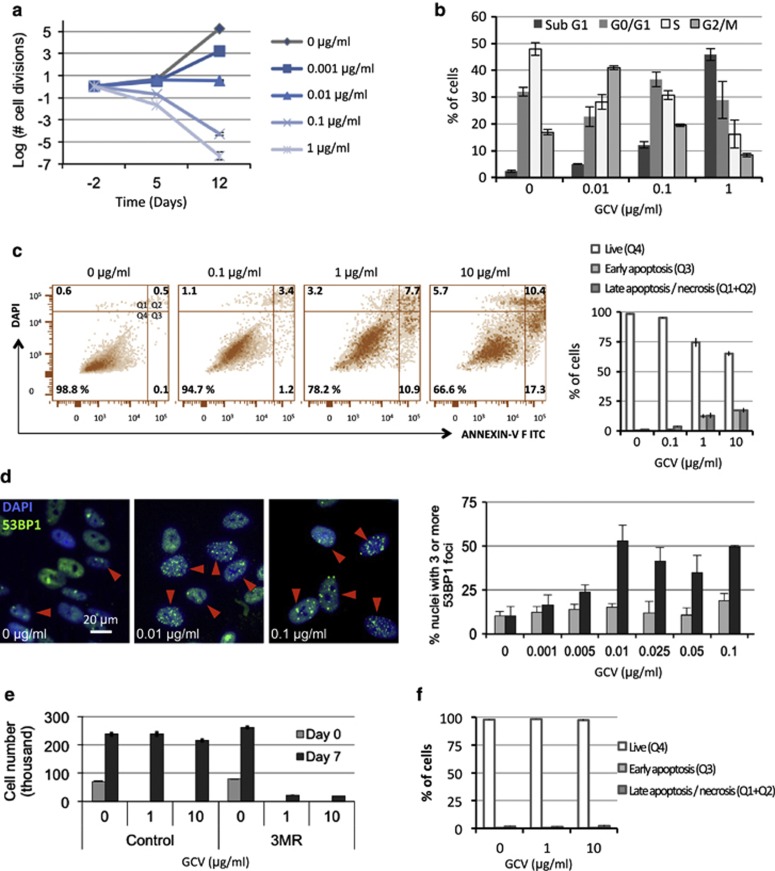
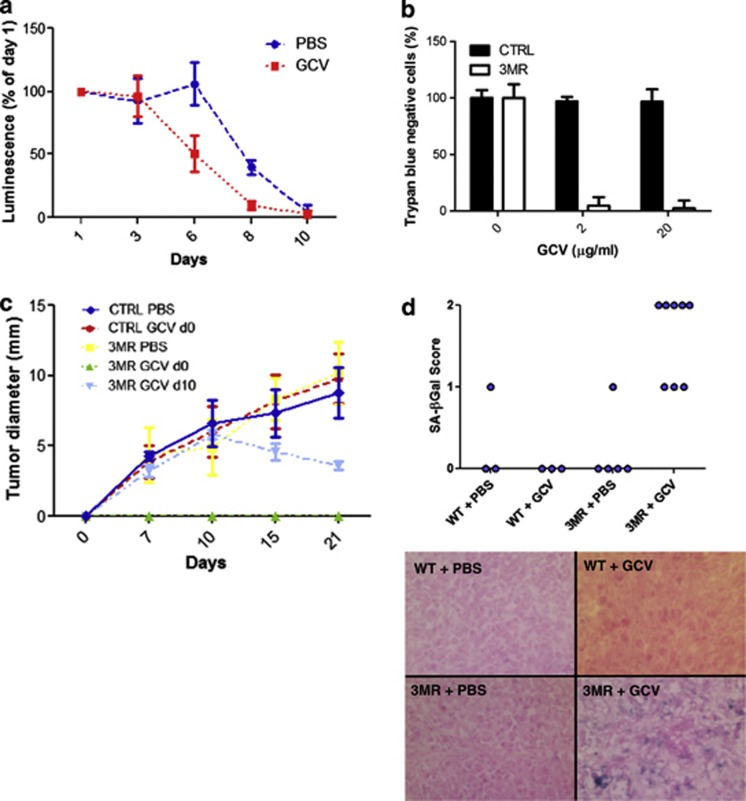
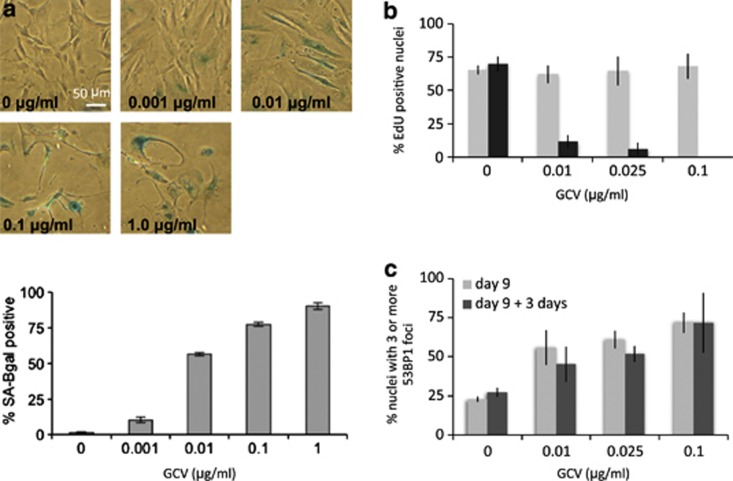
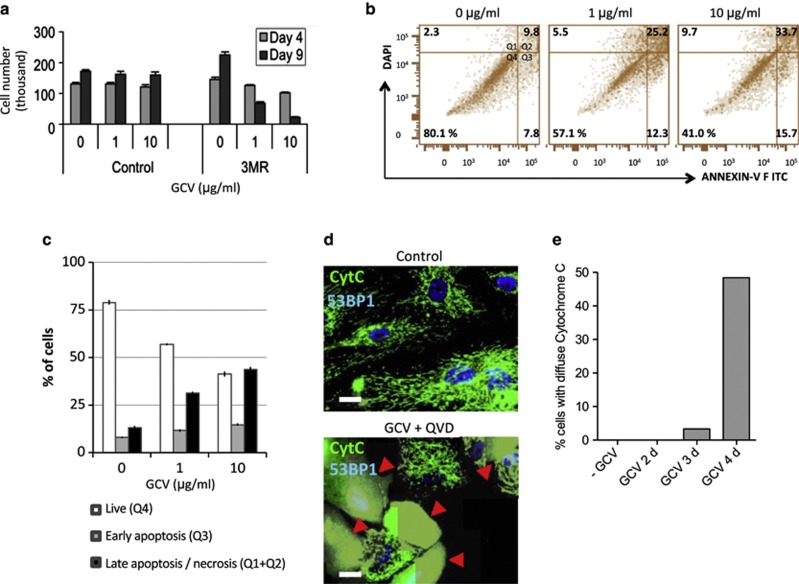
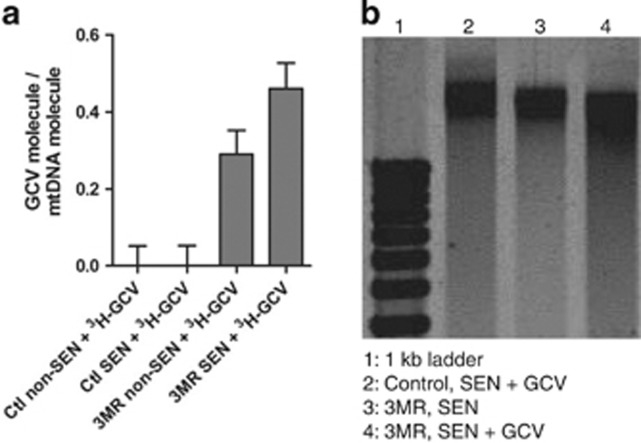
Senescence is a cellular response to damage and stress. The senescence response prevents cancer by suppressing the proliferation of cells with a compromised genome and contributes to optimal wound healing in normal tissues. Persistent senescent cells are also thought to drive aging and age-associated pathologies through their secretion of inflammatory factors that modify the tissue microenvironment and alter the function of nearby normal or transformed cells. Understanding how senescent cells alter the microenvironment would be aided by the ability to induce or eliminate senescent cells at will in vivo. Here, we combine the use of the synthetic nucleoside analog ganciclovir (GCV) with herpes simplex virus thymidine kinase (HSVtk) activity to create or eliminate senescent human cells. We show that low concentrations of GCV induce senescence through the accumulation of nuclear DNA damage while higher concentrations of GCV, similar to those used in vivo, kill non-dividing senescent cells via mitochondrial DNA (mtDNA) damage and caspase-dependent apoptosis. Using this system, we effectively eliminated xenografted normal human senescent fibroblasts or induced senescence in human breast cancer cells in vivo. Thus, cellular senescence and mtDNA damage are outcomes of synthetic nucleoside analog treatment, indicating that the GCV-HSVtk combination can be used effectively to promote the targeted formation or eradication of senescent cells.
衰老(Senescence)是细胞对损伤和应激的一种反应。衰老反应通过抑制基因组受损的细胞增殖来预防癌症,并有助于正常组织的最佳伤口愈合。持续存在的衰老细胞也被认为通过分泌改变组织微环境并改变附近正常或转化细胞功能的炎症因子来驱动衰老和与年龄相关的病理。了解衰老细胞如何改变微环境,将有助于在体内随意诱导或消除衰老细胞的能力。在这里,我们将合成核苷类似物更昔洛韦(GCV)与单纯疱疹病毒胸苷激酶(HSVtk)活性相结合,以产生或消除衰老的人类细胞。我们表明,低浓度的 GCV 通过核 DNA 损伤的积累诱导衰老,而高浓度的 GCV(类似于体内使用的浓度)通过线粒体 DNA(mtDNA)损伤和 caspase 依赖性细胞凋亡杀死非分裂的衰老细胞。使用该系统,我们有效地消除了异种移植的正常人类衰老成纤维细胞,或在体内诱导了人类乳腺癌细胞的衰老。因此,细胞衰老和 mtDNA 损伤是合成核苷类似物治疗的结果,表明 GCV-HSVtk 联合可有效用于促进衰老细胞的靶向形成或消除。