National Center for Child Traumatic Stress, University of California, Los Angeles, CA, USA.
Eur J Psychotraumatol. 2013 Jul 16;4. doi: 10.3402/ejpt.v4i0.20274. Print 2013.
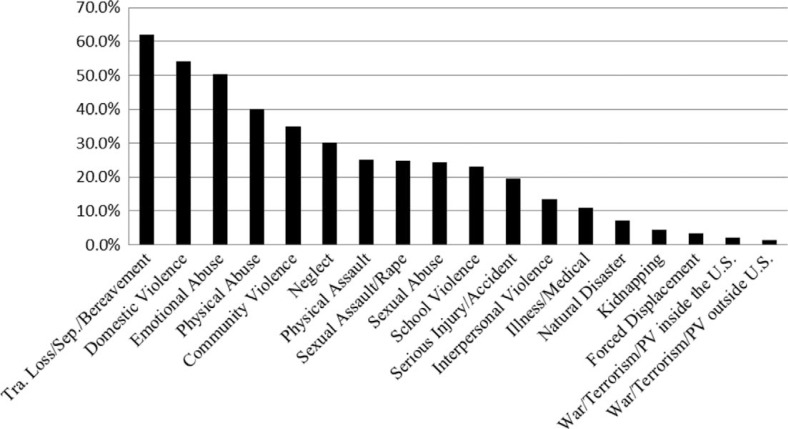
Up to 90% of justice-involved youth report exposure to some type of traumatic event. On average, 70% of youth meet criteria for a mental health disorder with approximately 30% of youth meeting criteria for post-traumatic stress disorder (PTSD). Justice-involved youth are also at risk for substance use and academic problems, and child welfare involvement. Yet, less is known about the details of their trauma histories, and associations among trauma details, mental health problems, and associated risk factors.
This study describes detailed trauma histories, mental health problems, and associated risk factors (i.e., academic problems, substance/alcohol use, and concurrent child welfare involvement) among adolescents with recent involvement in the juvenile justice system.
The National Child Traumatic Stress Network Core Data Set (NCTSN-CDS) is used to address these aims, among which 658 adolescents report recent involvement in the juvenile justice system as indexed by being detained or under community supervision by the juvenile court.
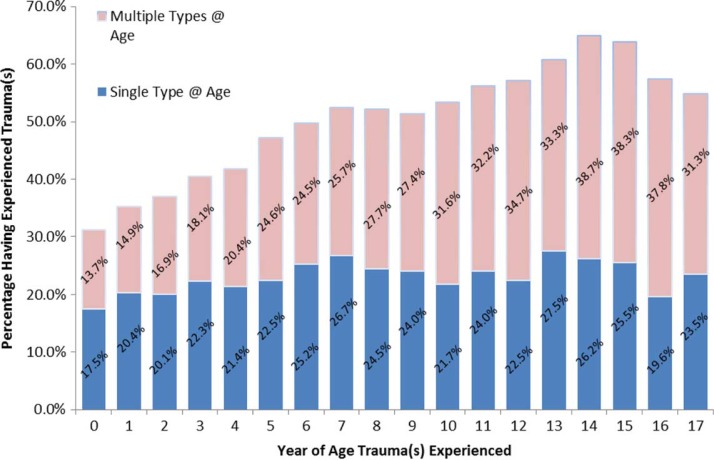
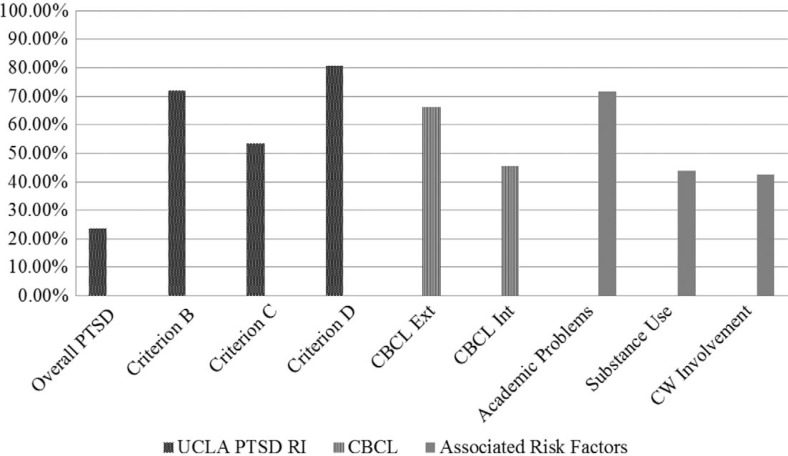
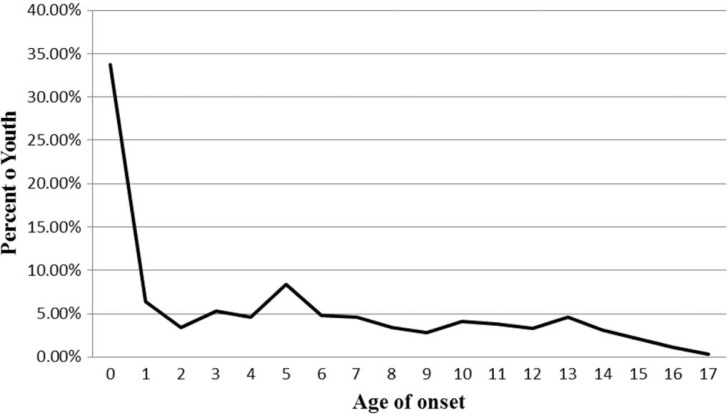
Age of onset of trauma exposure was within the first 5 years of life for 62% of youth and approximately one-third of youth report exposure to multiple or co-occurring trauma types each year into adolescence. Mental health problems are prevalent with 23.6% of youth meeting criteria for PTSD, 66.1% in the clinical range for externalizing problems, and 45.5% in the clinical range for internalizing problems. Early age of onset of trauma exposure was differentially associated with mental health problems and related risk factors among males and females.
The results indicate that justice-involved youth report high rates of trauma exposure and that this trauma typically begins early in life, is often in multiple contexts, and persists over time. Findings provide support for establishing trauma-informed juvenile justice systems that can respond to the needs of traumatized youth.
多达 90%的涉法青少年报告曾经历过某种类型的创伤事件。平均而言,70%的青少年符合心理健康障碍标准,其中约 30%的青少年符合创伤后应激障碍(PTSD)标准。涉法青少年也面临着药物滥用和学业问题以及儿童福利介入的风险。然而,对于他们创伤史的细节以及创伤细节、心理健康问题和相关风险因素之间的关联了解较少。
本研究描述了最近涉及青少年司法系统的青少年的详细创伤史、心理健康问题和相关风险因素(即学业问题、药物/酒精使用以及同时发生的儿童福利介入)。
使用国家儿童创伤应激网络核心数据集(NCTSN-CDS)来解决这些目标,其中 658 名青少年报告最近涉及青少年司法系统,指标为被拘留或受到少年法庭的社区监管。
创伤暴露的发病年龄在生命的前 5 年内的占 62%,大约三分之一的青少年报告每年在青春期经历多种或同时发生的创伤类型。心理健康问题普遍存在,23.6%的青少年符合 PTSD 标准,66.1%的青少年处于外化问题的临床范围,45.5%的青少年处于内化问题的临床范围。创伤暴露的发病年龄较早与男性和女性的心理健康问题和相关风险因素存在差异关联。
研究结果表明,涉法青少年报告了高比例的创伤暴露,而这种创伤通常始于生命早期,通常发生在多个环境中,并持续存在。研究结果为建立能够满足创伤青少年需求的创伤知情的青少年司法系统提供了支持。