Division of Comparative Medicine, Massachusetts Institute of Technology, Cambridge, Massachusetts, United States of America.
PLoS One. 2013 Jul 10;8(7):e68596. doi: 10.1371/journal.pone.0068596. Print 2013.
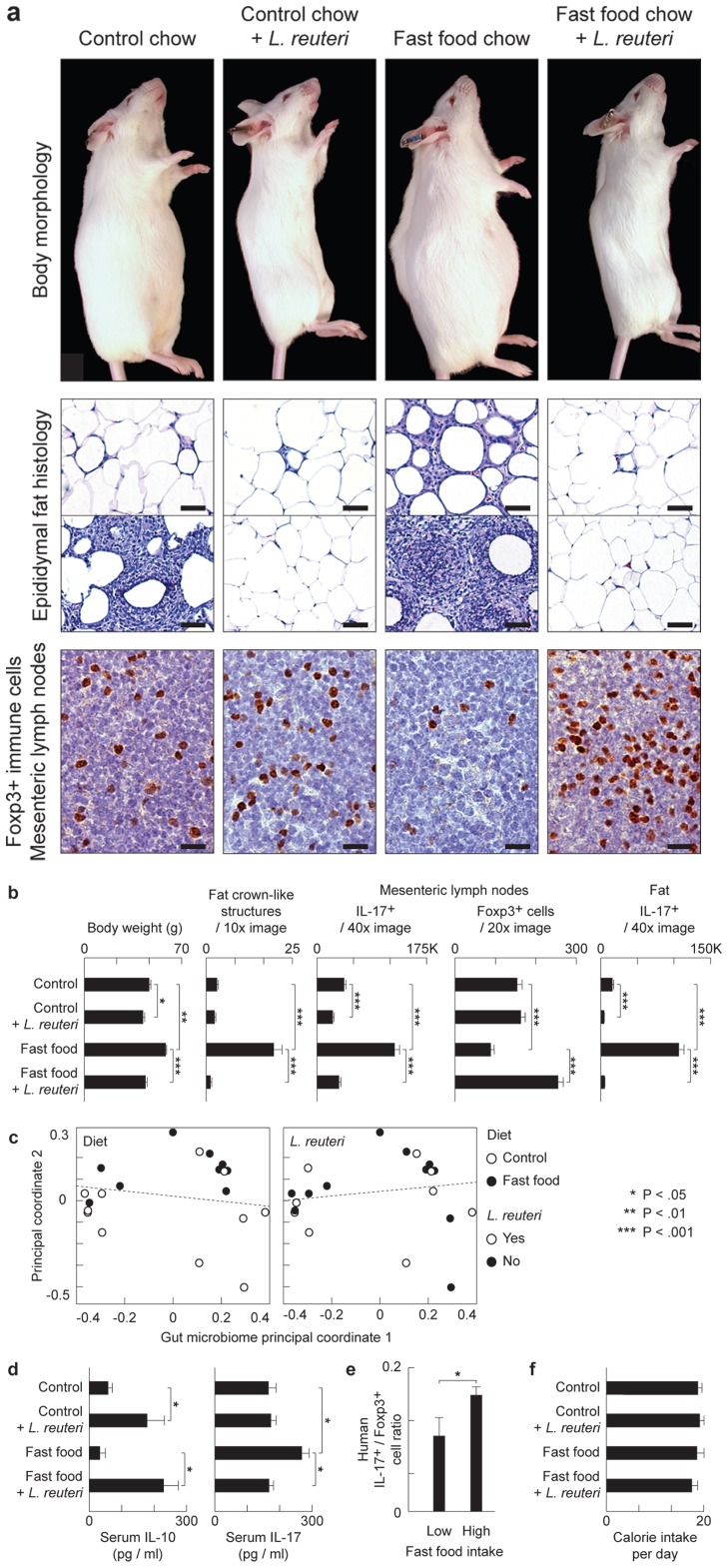
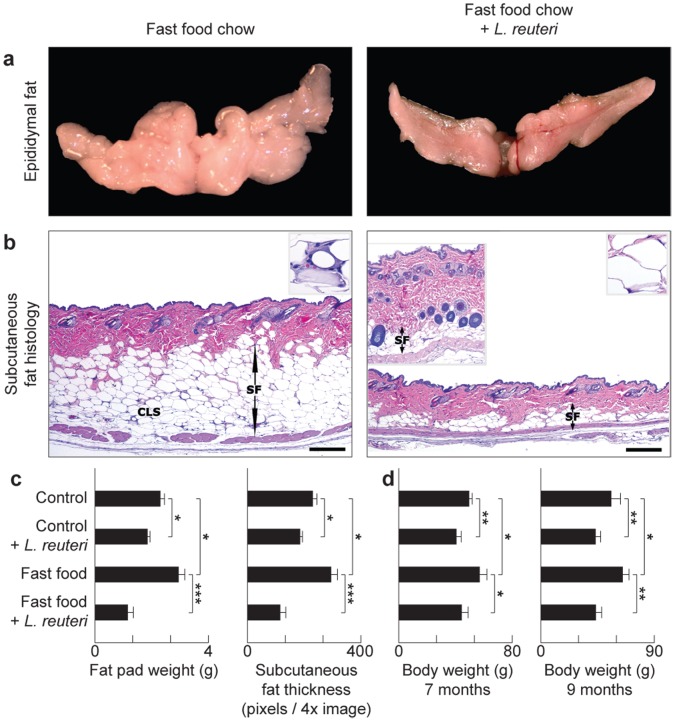
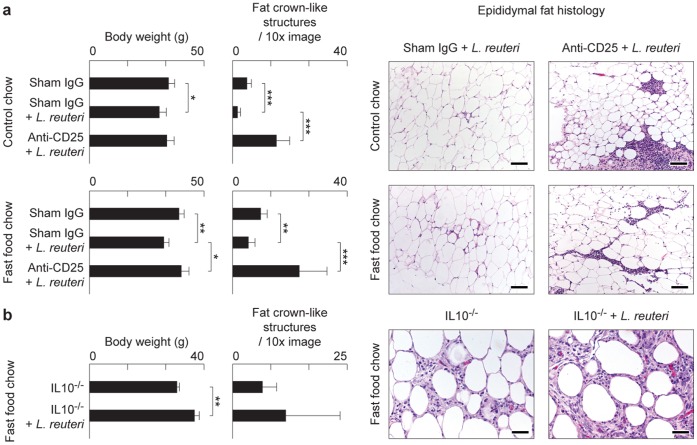
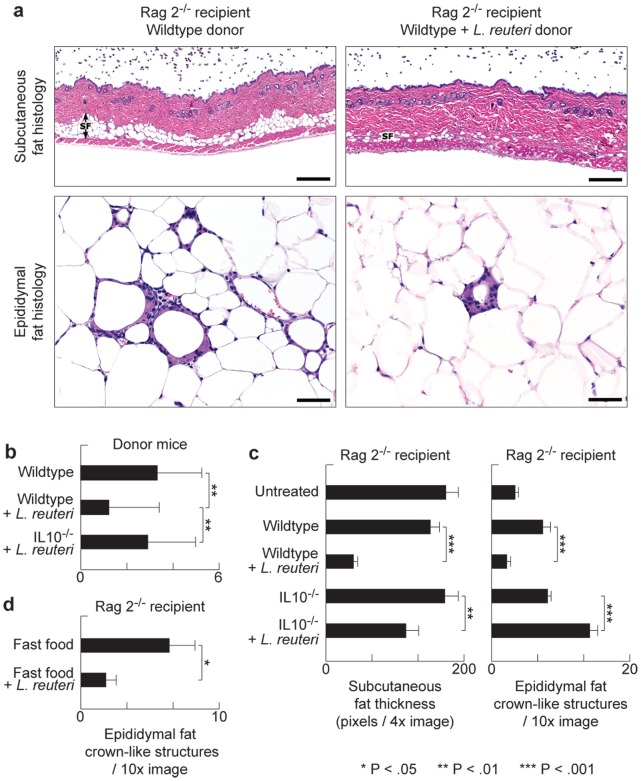
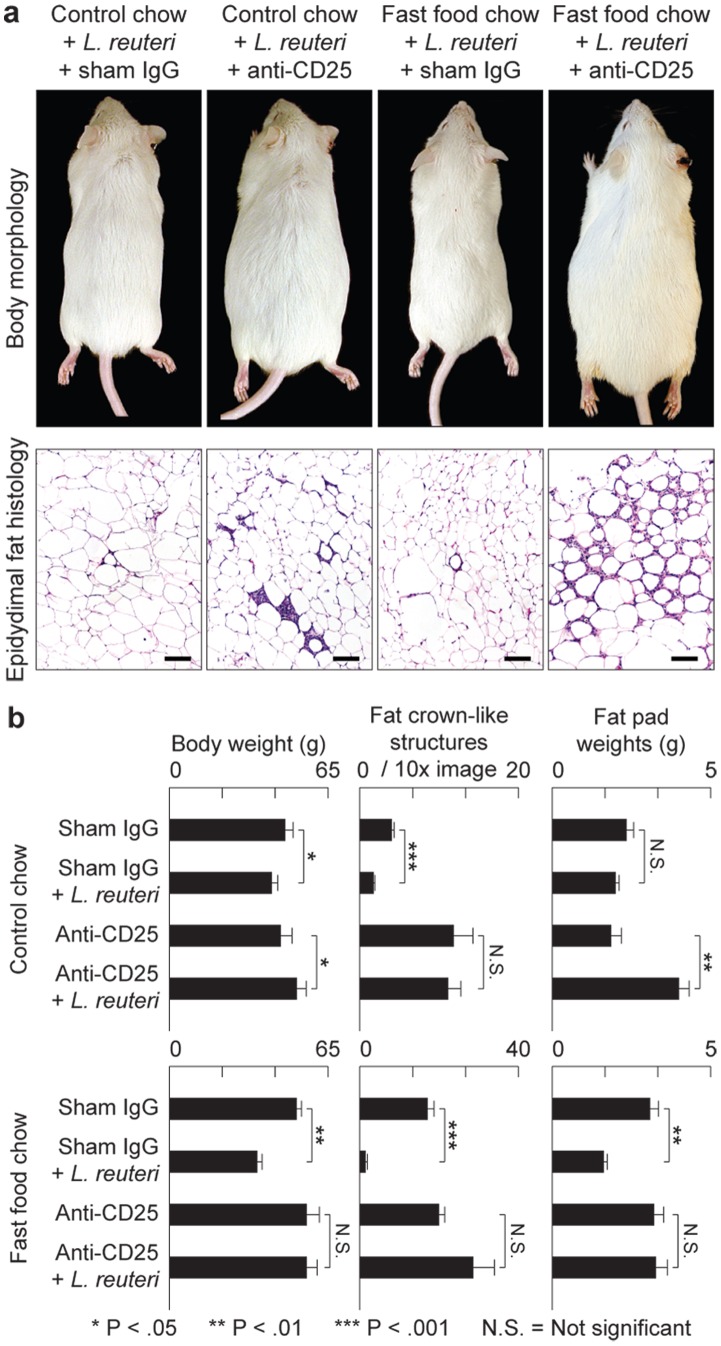
A recent epidemiological study showed that eating 'fast food' items such as potato chips increased likelihood of obesity, whereas eating yogurt prevented age-associated weight gain in humans. It was demonstrated previously in animal models of obesity that the immune system plays a critical role in this process. Here we examined human subjects and mouse models consuming Westernized 'fast food' diet, and found CD4(+) T helper (Th)17-biased immunity and changes in microbial communities and abdominal fat with obesity after eating the Western chow. In striking contrast, eating probiotic yogurt together with Western chow inhibited age-associated weight gain. We went on to test whether a bacteria found in yogurt may serve to lessen fat pathology by using purified Lactobacillus reuteri ATCC 6475 in drinking water. Surprisingly, we discovered that oral L. reuteri therapy alone was sufficient to change the pro-inflammatory immune cell profile and prevent abdominal fat pathology and age-associated weight gain in mice regardless of their baseline diet. These beneficial microbe effects were transferable into naïve recipient animals by purified CD4(+) T cells alone. Specifically, bacterial effects depended upon active immune tolerance by induction of Foxp3(+) regulatory T cells (Treg) and interleukin (Il)-10, without significantly changing the gut microbial ecology or reducing ad libitum caloric intake. Our finding that microbial targeting restored CD4(+) T cell balance and yielded significantly leaner animals regardless of their dietary 'fast food' indiscretions suggests population-based approaches for weight management and enhancing public health in industrialized societies.
最近的一项流行病学研究表明,食用“快餐”食品(如薯片)会增加肥胖的可能性,而食用酸奶则可以防止人类随着年龄增长而体重增加。以前在肥胖动物模型中已经证明,免疫系统在这个过程中起着关键作用。在这里,我们研究了食用西式“快餐”饮食的人类受试者和小鼠模型,发现 CD4(+)辅助性 T 细胞(Th)17 偏向性免疫以及微生物群落和腹部脂肪的变化与食用西式食物后的肥胖有关。相比之下,同时食用益生菌酸奶和西式食物可以抑制与年龄相关的体重增加。我们继续测试酸奶中发现的一种细菌是否可以通过在饮用水中使用纯化的罗伊氏乳杆菌 ATCC 6475 来减轻脂肪病理学。令人惊讶的是,我们发现,单独口服罗伊氏乳杆菌治疗就足以改变促炎免疫细胞谱,并防止小鼠的腹部脂肪病理学和与年龄相关的体重增加,而与它们的基线饮食无关。这些有益的微生物作用可以通过纯化的 CD4(+)T 细胞单独转移到幼稚的受体动物中。具体而言,细菌的作用取决于诱导 Foxp3(+)调节性 T 细胞(Treg)和白细胞介素(Il)-10 的主动免疫耐受,而不会显著改变肠道微生物生态或减少随意热量摄入。我们的发现表明,微生物靶向恢复了 CD4(+)T 细胞平衡,并使无论其饮食“快餐”的不当行为如何的动物显著变瘦,这表明基于人群的方法可以用于体重管理和增强工业化社会的公共卫生。