Centre de Recerca en Salut Internacional de Barcelona CRESIB, Hospital Clínic-Universitat de Barcelona, Barcelona, Spain.
Malar J. 2013 Jul 22;12:257. doi: 10.1186/1475-2875-12-257.
In sub-Saharan Africa, the burden of morbidity and mortality linked to malaria during pregnancy (MiP) is significant and compounded by its unclear symptoms and links with other health problems during pregnancy. Mindful of the biomedical and social complexity of MiP, this article explores and compares local understandings of MiP and their links with other pregnancy-related health problems.
A comparative qualitative study was undertaken at four sites in three countries: Ghana, Malawi and Kenya. Individual and group interviews were conducted with pregnant women, their relatives, opinion leaders, other community members and health providers. MiP-related behaviours were also observed at health facilities and in local communities.
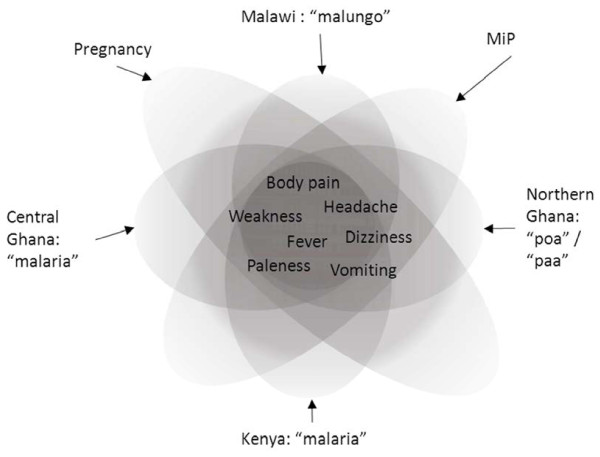
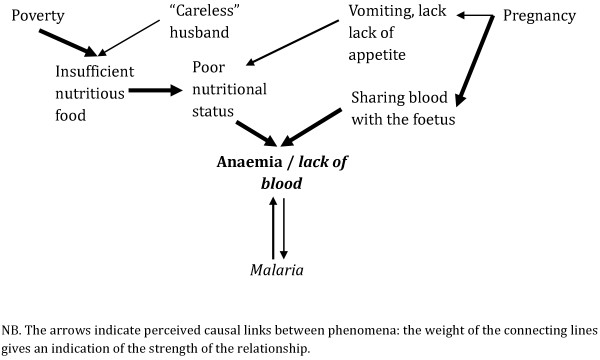
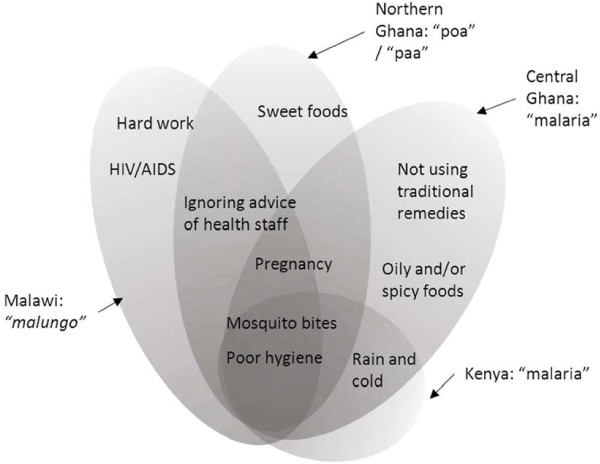
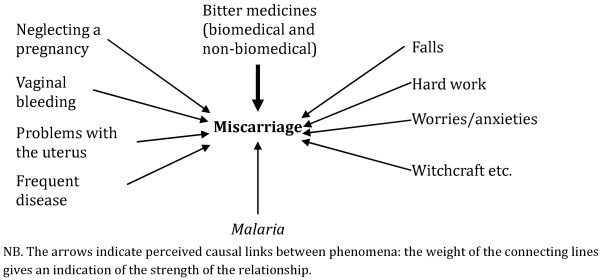
Across the four sites, local malaria concepts overlapped with biomedically defined malaria. In terms of symptoms, at-risk groups, outcomes and aetiology of malaria during pregnancy, this overlap was however both site-specific and partial. Moreover, the local malaria concepts were not monolithic and their descriptions varied amongst respondents. The symptoms of pregnancy and malaria also overlapped but, for respondents, symptom severity was the distinguishing factor. Malaria was generally, though not universally, perceived as serious for pregnant women. Miscarriage was the most widely known outcome, and links with anaemia, low birth weight and congenital malaria were mentioned. Nonetheless, amongst many potential causes of miscarriage, malaria was not recognized as the most important, but rather interacted with other pregnancy-related problems.
Given the overlap of common pregnancy problems with the symptoms of malaria, and the limited association of malaria with its main outcomes, a comprehensive antenatal care programme is the most appropriate strategy for the provision of health education, prevention and treatment for MiP. Variations in locally shared understandings of MiP must however be taken into account when designing and promoting MiP intervention strategies.
在撒哈拉以南非洲,与妊娠期间疟疾(MiP)相关的发病率和死亡率负担巨大,且其症状不明确,并与妊娠期间的其他健康问题有关,情况更为复杂。鉴于 MiP 的生物医学和社会复杂性,本文探讨并比较了当地对 MiP 的理解及其与其他与妊娠相关的健康问题的联系。
在加纳、马拉维和肯尼亚的三个国家的四个地点进行了一项比较定性研究。对孕妇、她们的亲属、意见领袖、其他社区成员和卫生提供者进行了个人和小组访谈。还在卫生机构和当地社区观察了与 MiP 相关的行为。
在这四个地点,当地的疟疾概念与生物医学定义的疟疾重叠。在妊娠期间疟疾的症状、高危人群、结局和病因方面,这种重叠是特定地点和部分的。此外,当地的疟疾概念并不单一,其描述因受访者而异。妊娠和疟疾的症状也有重叠,但对受访者来说,症状的严重程度是区分因素。疟疾通常被认为对孕妇来说是严重的,但并非普遍如此。流产是最广为人知的结局,并且提到了与贫血、低出生体重和先天性疟疾的联系。尽管在许多流产的潜在原因中,疟疾未被认为是最重要的原因,但它与其他与妊娠相关的问题相互作用。
鉴于常见妊娠问题与疟疾症状的重叠,以及疟疾与主要结局的关联有限,全面的产前保健方案是为 MiP 提供健康教育、预防和治疗的最合适策略。然而,在设计和推广 MiP 干预策略时,必须考虑到当地对 MiP 的共同理解的差异。