Maternal Adolescent Reproductive and Child Health Centre (MARCH), London School of Hygiene and Tropical Medicine, London, United Kingdom.
University of Tunis El Manar, Tunis, Tunisia.
PLoS One. 2019 Apr 11;14(4):e0214199. doi: 10.1371/journal.pone.0214199. eCollection 2019.
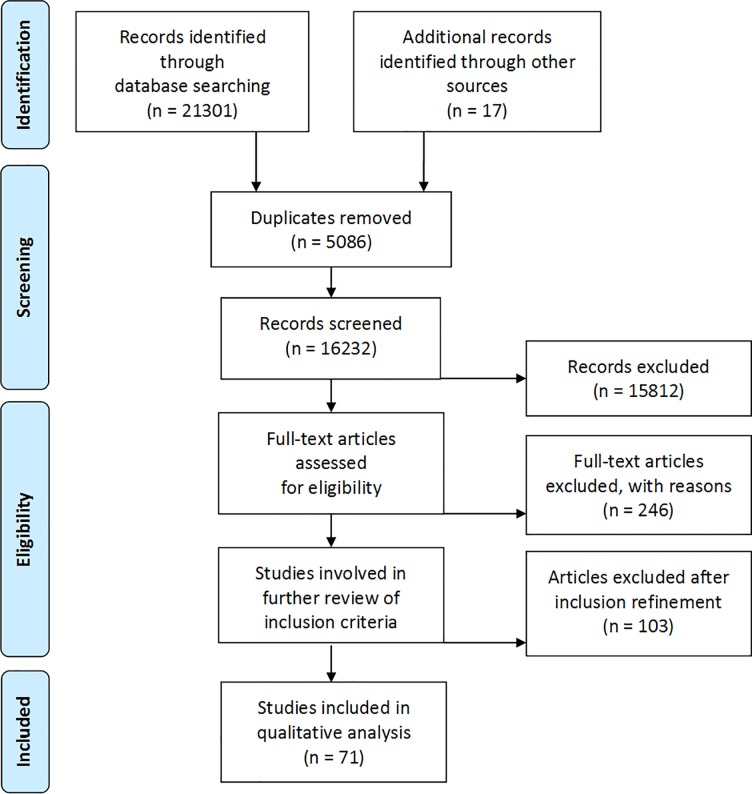
With an estimated 27 million annual incidents of maternal morbidity globally, how they are manifested or experienced is diverse and shaped by societal, cultural and personal influences. Using qualitative research to examine a woman's perception of her pregnancy, its complications, and potential long-term impact on her life can inform public health approaches and complement and inform biomedical classifications of maternal morbidities, historically considered a neglected dimension of safe motherhood. As part of the WHO's Maternal Morbidity Working Group's efforts to define and measure maternal morbidity, we carried out a thematic analysis of the qualitative literature published between 1998 and 2017 on how women experience maternal morbidity in low and lower-middle income countries.
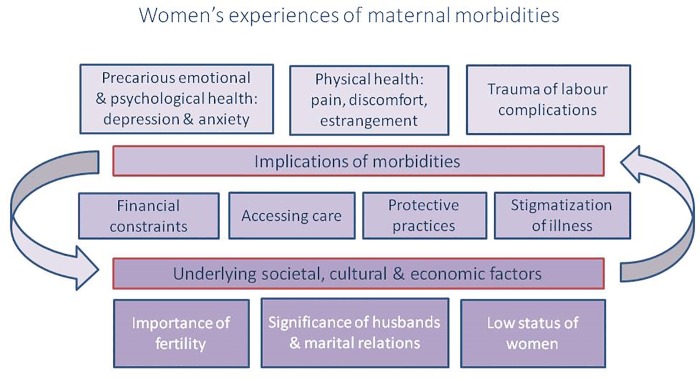
Analysis of the 71 papers included in this study shows that women's status, their marital relationships, cultural attitudes towards fertility and social responses to infertility and pregnancy trauma are fundamental to determining how they will experience morbidity in the pregnancy and postpartum periods. We explore the physical, economic, psychological and social repercussions pregnancy can produce for women, and how resource disadvantage (systemic, financial and contextual) can exacerbate these problems. In addition to an analysis of ten themes that emerged across the different contexts, this paper presents which morbidities have received attention in different regions and the trends in researching morbidities over time. We observed an increase in qualitative research on this topic, generally undertaken through interviews and focus groups. Our analysis calls for the pursuit of high quality qualitative research that includes repeat interviews, participant observation and triangulation of sources to inform and fuel critical advocacy and programmatic work on maternal morbidities that addresses their prevention and management, as well as the underlying systemic problems for women's status in society.
全球每年约有 2700 万例产妇发病,其表现和经历因社会、文化和个人影响而各不相同。使用定性研究来检查女性对其怀孕、并发症以及对其生活可能产生的潜在长期影响的看法,可以为公共卫生方法提供信息,并补充和告知对产妇发病的生物医学分类,这在历史上被认为是安全孕产的一个被忽视的方面。作为世界卫生组织产妇发病工作组成员努力定义和衡量产妇发病的一部分,我们对 1998 年至 2017 年间发表的关于低和中下收入国家女性如何经历产妇发病的定性文献进行了主题分析。
对本研究中包括的 71 篇论文的分析表明,女性的地位、婚姻关系、对生育的文化态度以及对不孕和妊娠创伤的社会反应,对于确定她们在妊娠和产后期间将如何经历发病至关重要。我们探讨了妊娠可能对女性产生的身体、经济、心理和社会影响,以及资源劣势(系统、财务和背景)如何加剧这些问题。除了对不同背景下出现的十个主题进行分析外,本文还介绍了哪些发病在不同地区受到关注,以及随着时间的推移研究发病的趋势。我们观察到,关于这个主题的定性研究有所增加,通常通过访谈和焦点小组进行。我们的分析呼吁进行高质量的定性研究,包括重复访谈、参与者观察和来源的三角验证,以提供和推动对产妇发病的关键宣传和方案工作,这些工作涉及发病的预防和管理,以及女性在社会中地位的根本系统性问题。