Department of Family Medicine, Boston University School of Medicine and Boston Medical Center, 1 Boston Medical Center Place, Dowling 5 South, Boston, MA 02118, USA.
Evid Based Complement Alternat Med. 2013;2013:658030. doi: 10.1155/2013/658030. Epub 2013 Jun 26.
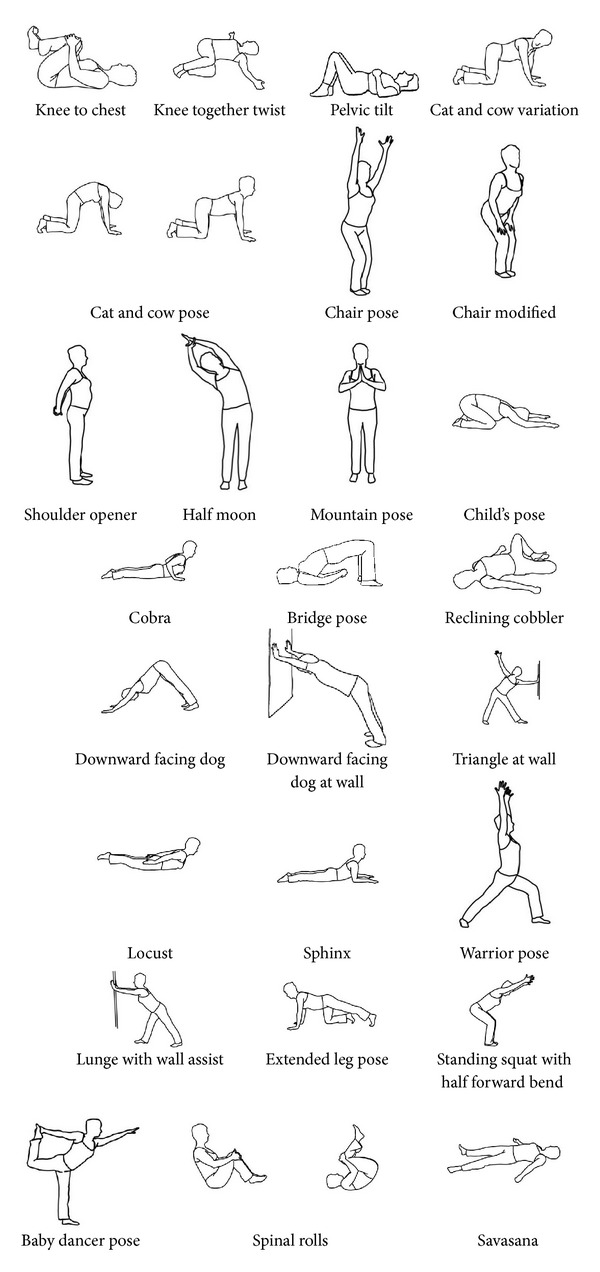
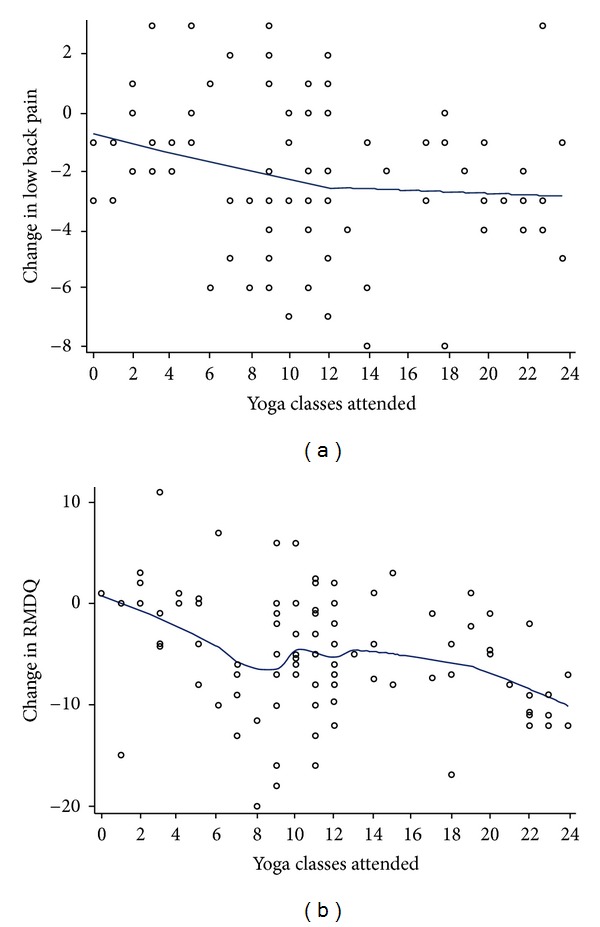
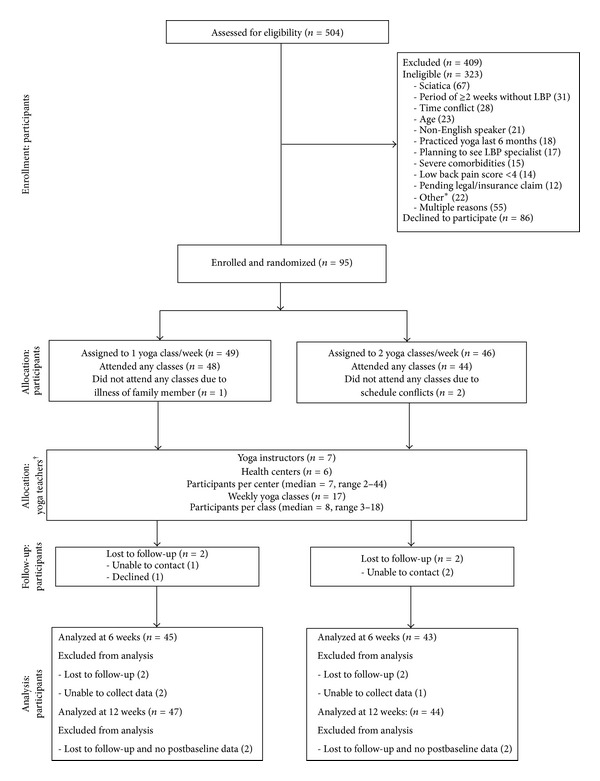
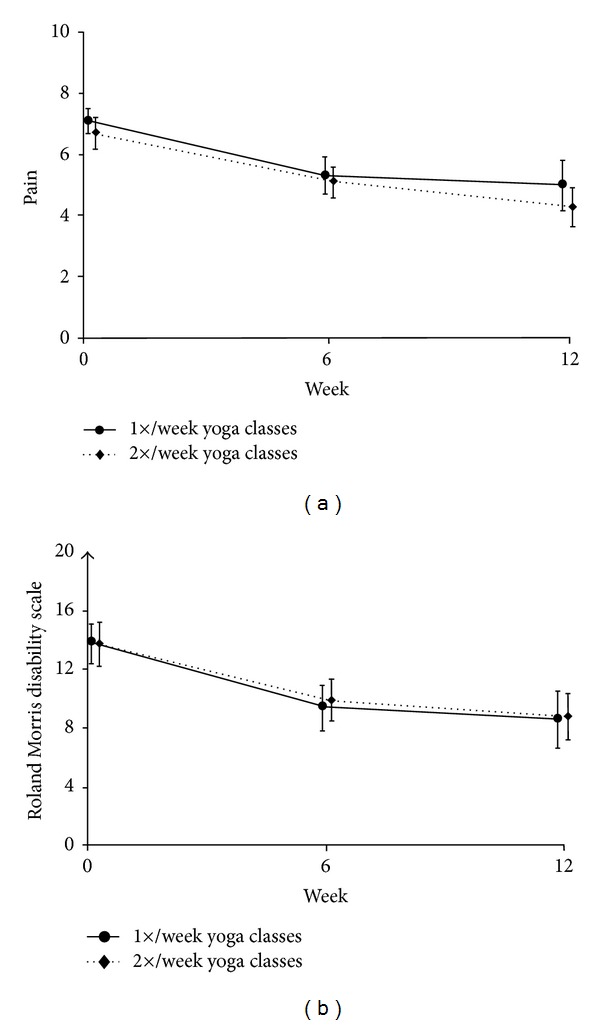
Background. Previous studies have demonstrated that once-weekly yoga classes are effective for chronic low back pain (cLBP) in white adults with high socioeconomic status. The comparative effectiveness of twice-weekly classes and generalizability to racially diverse low income populations are unknown. Methods. We conducted a 12-week randomized, parallel-group, dosing trial for 95 adults recruited from an urban safety-net hospital and five community health centers comparing once-weekly (n = 49) versus twice-weekly (n = 46) standardized yoga classes supplemented by home practice. Primary outcomes were change from baseline to 12 weeks in pain (11-point scale) and back-related function (23-point modified Roland-Morris Disability Questionnaire). Results. 82% of participants were nonwhite; 77% had annual household incomes <$40,000. The sample's baseline mean pain intensity [6.9 (SD 1.6)] and function [13.7 (SD 5.0)] reflected moderate to severe back pain and impairment. Pain and back-related function improved within both groups (P < 0.001). However, there were no differences between once-weekly and twice-weekly groups for pain reduction [-2.1 (95% CI -2.9, -1.3) versus -2.4 (95% CI -3.1, -1.8), P = 0.62] or back-related function [-5.1 (95% CI -7.0, -3.2) versus -4.9 (95% CI -6.5, -3.3), P = 0.83]. Conclusions. Twelve weeks of once-weekly or twice-weekly yoga classes were similarly effective for predominantly low income minority adults with moderate to severe chronic low back pain. This trial is registered with ClinicalTrials.gov NCT01761617.
既往研究表明,对于高社会经济地位的白人慢性下背痛(cLBP)患者,每周一次的瑜伽课程是有效的。每周两次的课程的比较效果和在种族多样化的低收入人群中的推广性尚不清楚。
我们对从城市社区卫生中心招募的 95 名成年人进行了为期 12 周的随机、平行组、剂量试验,比较每周一次(n=49)与每周两次(n=46)的标准化瑜伽课程,两种方案均辅以家庭练习。主要结局指标是从基线到 12 周时疼痛(11 分制)和与背部相关的功能(23 分改良 Roland-Morris 残疾问卷)的变化。
82%的参与者为非白人;77%的参与者家庭年收入<40000 美元。样本的基线平均疼痛强度[6.9(SD 1.6)]和功能[13.7(SD 5.0)]反映了中度至重度背痛和功能障碍。两组的疼痛和与背部相关的功能均有改善(P<0.001)。然而,每周一次和每周两次组之间的疼痛缓解没有差异[-2.1(95%CI-2.9,-1.3)与-2.4(95%CI-3.1,-1.8),P=0.62]或与背部相关的功能[-5.1(95%CI-7.0,-3.2)与-4.9(95%CI-6.5,-3.3),P=0.83]。
每周一次或两次的瑜伽课程对中等至重度慢性下背痛的低收入少数民族成年人同样有效。本试验在ClinicalTrials.gov注册,注册号为 NCT01761617。