PLoS One. 2013 Jul 24;8(7):e69215. doi: 10.1371/journal.pone.0069215. Print 2013.
The internet is gaining importance in global wildlife trade and changing perceptions of threatened species. There is little data available to examine the impact that popular Web 2.0 sites play on public perceptions of threatened species. YouTube videos portraying wildlife allow us to quantify these perceptions.
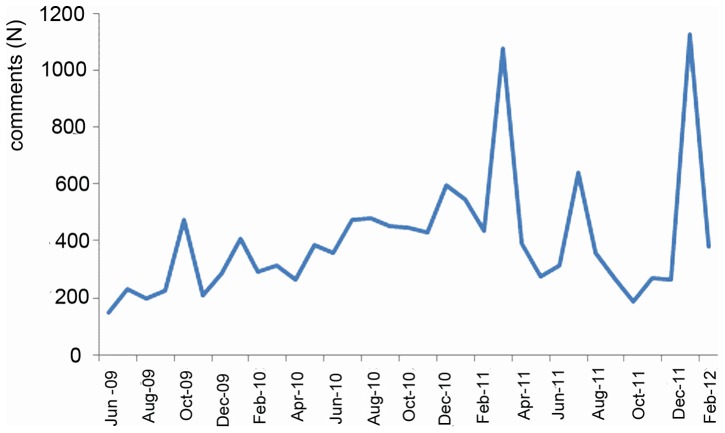
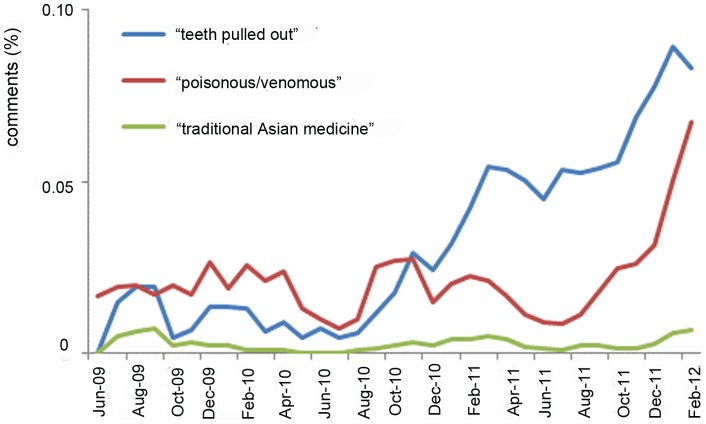
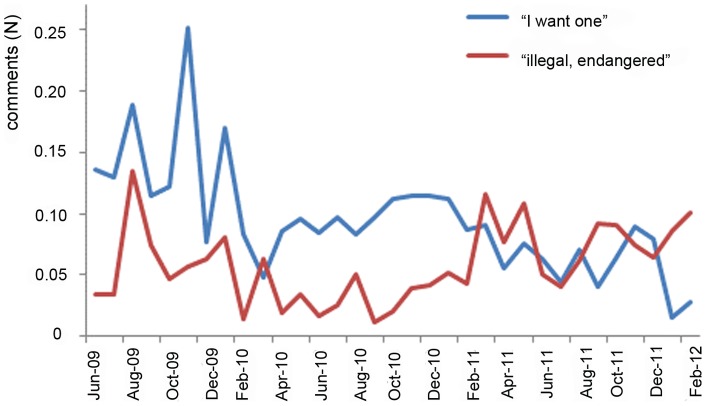
METHODOLOGY/PRINCIPAL FINDINGS: Focussing on a group of threatened and globally protected primates, slow lorises, we quantify public attitudes towards wildlife conservation by analysing 12,411 comments and associated data posted on a viral YouTube video 'tickling slow loris' over a 33-months period. In the initial months a quarter of commentators indicated wanting a loris as a pet, but as facts about their conservation and ecology became more prevalent this dropped significantly. Endorsements, where people were directed to the site by celebrities, resulted mostly in numerous neutral responses with few links to conservation or awareness. Two conservation-related events, linked to Wikipedia and the airing of a television documentary, led to an increase in awareness, and ultimately to the removal of the analysed video.
CONCLUSIONS/SIGNIFICANCE: Slow loris videos that have gone viral have introduced these primates to a large cross-section of society that would not normally come into contact with them. Analyses of webometric data posted on the internet allow us quickly to gauge societal sentiments. We showed a clear temporal change in some views expressed but without an apparent increase in knowledge about the conservation plight of the species, or the illegal nature of slow loris trade. Celebrity endorsement of videos showing protected wildlife increases visits to such sites, but does not educate about conservation issues. The strong desire of commentators to express their want for one as a pet demonstrates the need for Web 2.0 sites to provide a mechanism via which illegal animal material can be identified and policed.
互联网在全球野生动植物贸易中的重要性日益增加,并改变了人们对受威胁物种的看法。目前,可用的数据很少,无法考察热门 Web 2.0 网站对公众对受威胁物种看法的影响。展示野生动物的 YouTube 视频使我们能够量化这些看法。
方法/主要发现:我们专注于一组受威胁和受全球保护的灵长类动物——懒猴,通过分析在 33 个月的时间内,一段有关“挠慢懒猴”的病毒式 YouTube 视频上发布的 12,411 条评论和相关数据,量化了公众对野生动物保护的态度。在最初的几个月中,四分之一的评论者表示想要一只懒猴作为宠物,但随着有关其保护和生态的事实变得更加普遍,这种情况显著下降。名人推荐人们访问该网站的认可大多导致了大量的中性反应,与保护或意识几乎没有联系。与维基百科和电视纪录片播出有关的两次与保护相关的事件导致了意识的提高,并最终导致分析视频被删除。
结论/意义:传播开来的慢猴视频将这些灵长类动物介绍给了原本不会与之接触的广大社会群体。对互联网上发布的网络计量数据的分析使我们能够快速衡量社会情绪。我们表明,一些表达的观点在时间上发生了明显变化,但对该物种保护困境或其非法贸易性质的了解并没有明显增加。名人对展示受保护野生动物的视频的认可增加了对这些网站的访问量,但并没有教育人们保护问题。评论者强烈希望表达他们想要一只作为宠物的愿望,这表明 Web 2.0 网站需要提供一种机制,通过该机制可以识别和监管非法动物材料。