Dundee Epidemiology and Biostatistics Unit, Division of Population Health Sciences, Medical Research Institute, University of Dundee, Dundee, Scotland, UK.
BMJ Open. 2013 Aug 1;3(8):e003274. doi: 10.1136/bmjopen-2013-003274.
To derive prediction models for both initiation and cessation of breastfeeding using demographic, psychological and obstetric variables.
A prospective cohort study.
Women delivering at Ninewells Hospital, Dundee, UK.
Demographic data and psychological measures were obtained during pregnancy by questionnaire. Birth details, feeding method at birth and at hospital discharge were obtained from the Ninewells hospital database, Dundee, UK. Breastfeeding women were followed up by text messages every 2 weeks until 16 weeks or until breastfeeding was discontinued to ascertain feeding method and feeding intentions.
Pregnant women over 30 weeks gestation aged 16 years and above, living in Dundee, booked to deliver at Ninewells Hospital, Dundee, and able to speak English.
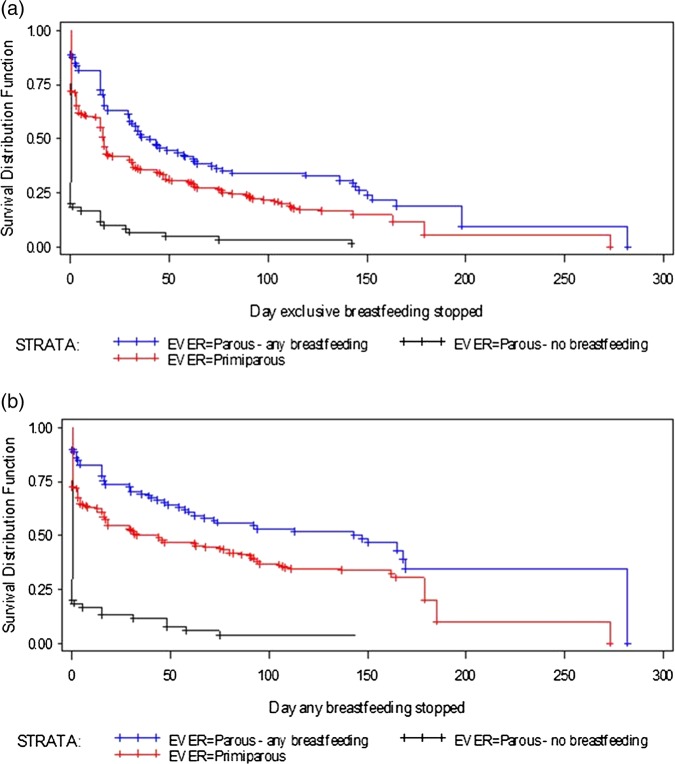
Initiation and cessation of breastfeeding.
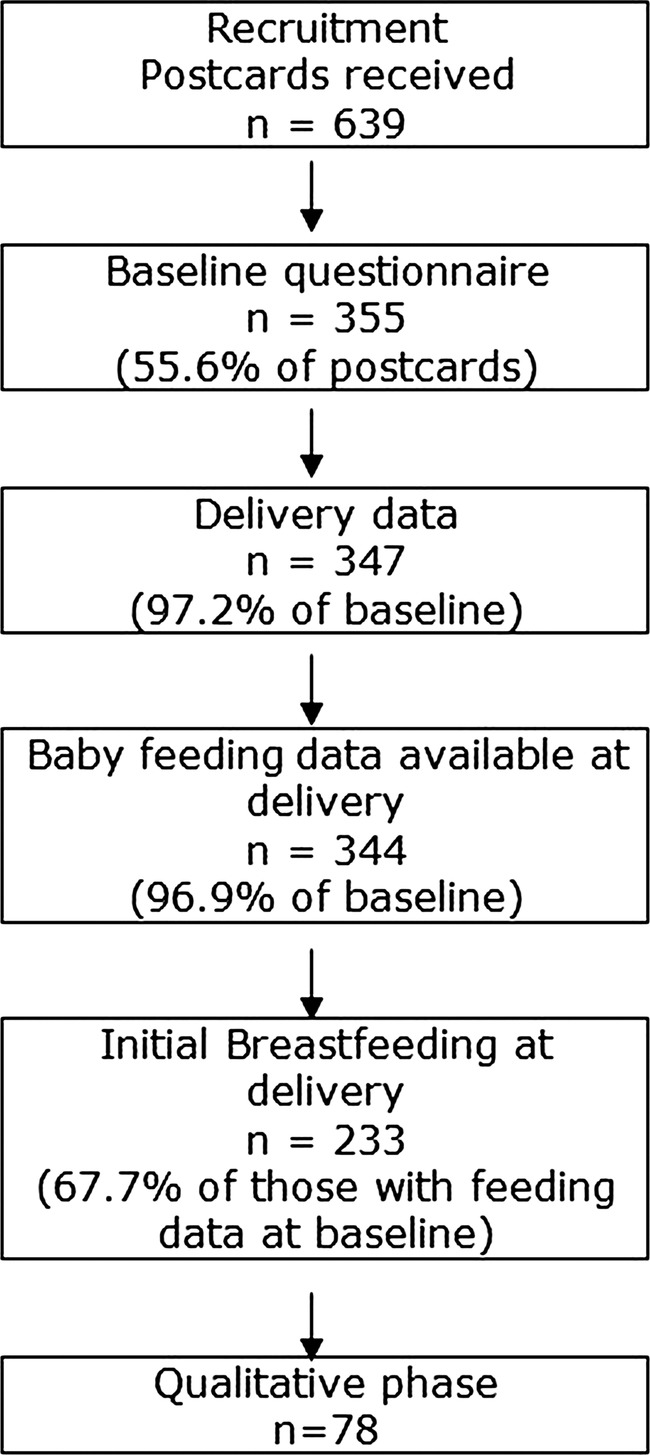
From the total cohort of women at delivery (n=344) 68% (95% CI 63% to 73%) of women had started breastfeeding at discharge. Significant predictors of initiating breastfeeding were older age, parity, greater intention to breastfeed from a Theory of Planned Behaviour (TPB)-based questionnaire, higher Iowa Infant Feeding Assessment Scale (IIFAS) score as well as living with a husband or partner. For the final model, the AUROC was 0.967. For those who initiated breastfeeding (n=233), the strongest predictors of stopping were low intention to breastfeed from TPB, low IIFAS score and non-managerial/professional occupations.
The findings from this study will be used to inform the protocol for an intervention study to encourage and support prolonged breastfeeding as intentions appear to be a key intervention focus for initiation. The predictive models could be used to identify women at high risk of not initiating and also women at high risk of stopping for interventions to improve the longevity of breastfeeding.
利用人口统计学、心理学和产科变量来构建母乳喂养开始和停止的预测模型。
前瞻性队列研究。
英国邓迪市九井医院的产妇。
孕期通过问卷调查获取人口统计学数据和心理测量结果。分娩细节、出生时和出院时的喂养方式均从英国邓迪九井医院数据库获取。通过短信每隔两周对母乳喂养的女性进行随访,直到 16 周或母乳喂养停止,以确定喂养方式和喂养意图。
妊娠 30 周以上、年龄在 16 岁及以上、居住在邓迪、在九井医院预订分娩且能讲英语的孕妇。
母乳喂养的开始和停止。
在分娩时的总队列中(n=344),68%(95%CI,63%至 73%)的女性在出院时开始母乳喂养。从基于计划行为理论(TPB)的问卷中表现出更强母乳喂养意图、年龄较大、产次较多、爱荷华婴儿喂养评估量表(IIFAS)评分较高以及与丈夫或伴侣同住的女性更有可能开始母乳喂养。对于最终模型,AUROC 为 0.967。对于那些开始母乳喂养的女性(n=233),TPB 中母乳喂养意图较低、IIFAS 评分较低以及非管理/专业职业是停止母乳喂养的最强预测因素。
本研究的结果将用于为一项干预研究提供方案,以鼓励和支持延长母乳喂养时间,因为母乳喂养意图似乎是启动母乳喂养的关键干预焦点。预测模型可用于识别未开始母乳喂养的高风险女性,以及高风险停止母乳喂养的女性,以改善母乳喂养的持续时间。