Departments of Biomedical Sciences, College of Medicine, Seoul National University, Seoul 110-799, Korea.
Sci Rep. 2013;3:2296. doi: 10.1038/srep02296.
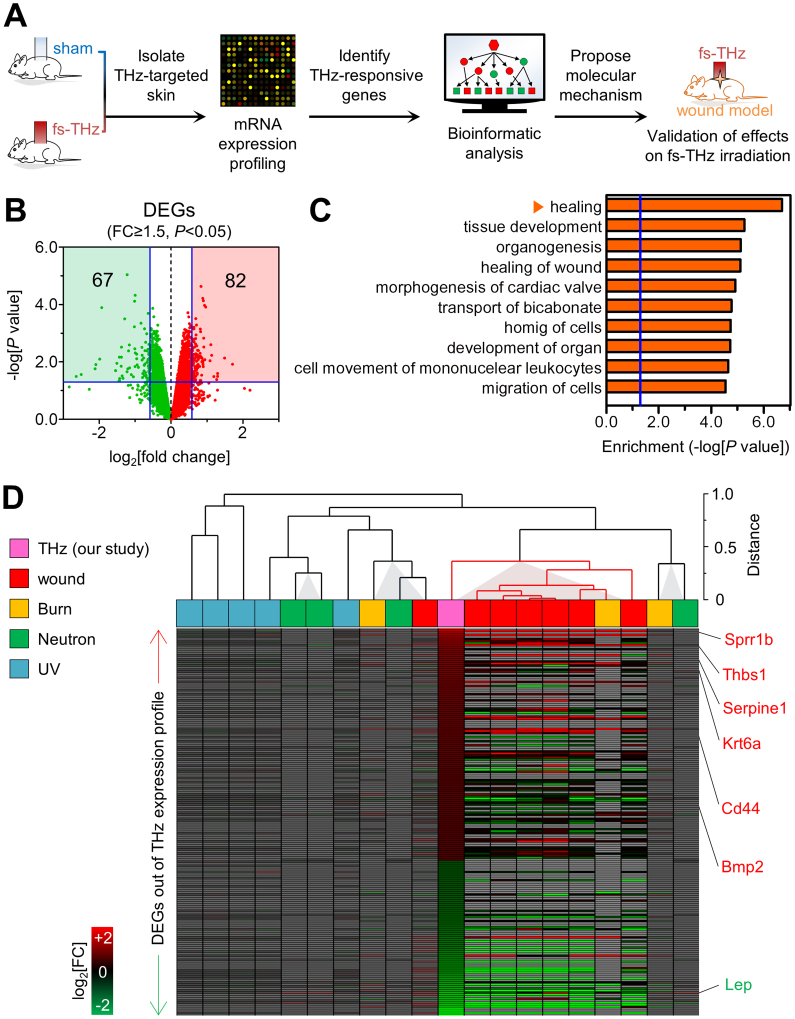
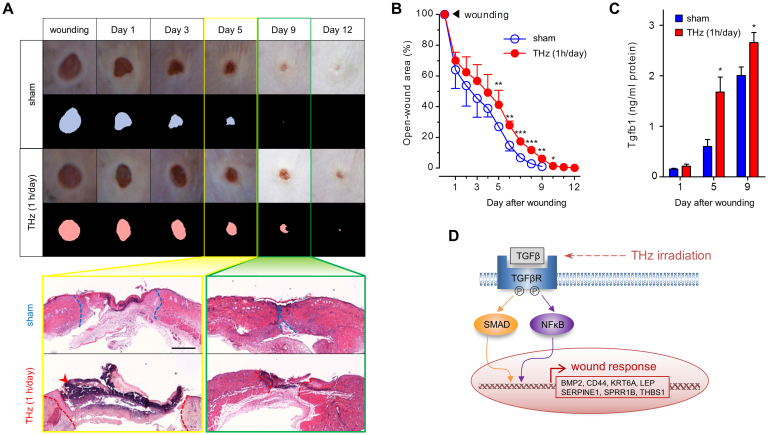
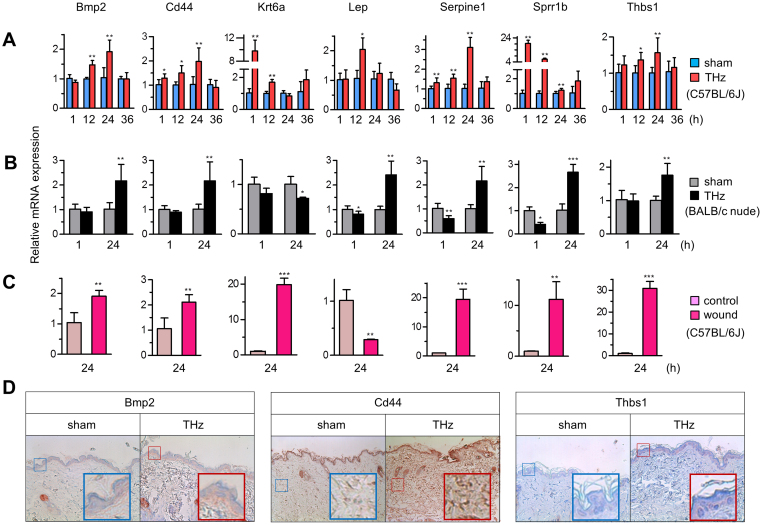
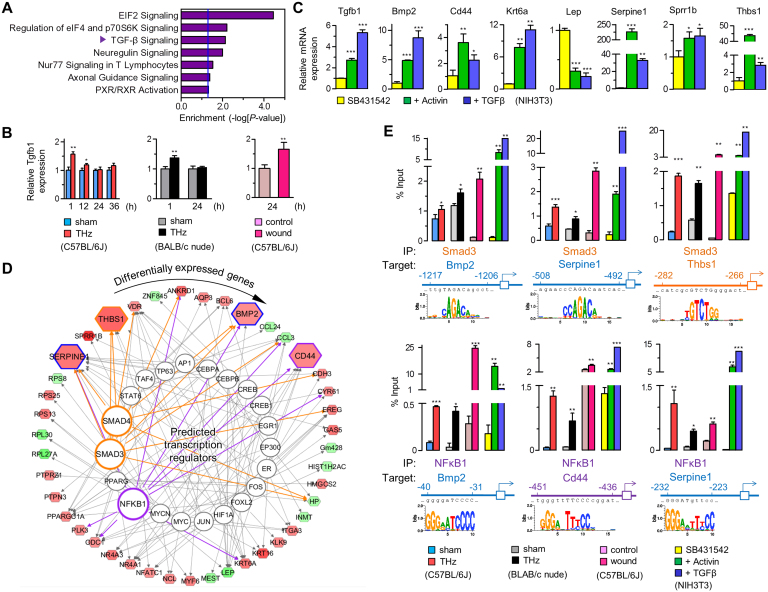
Terahertz (THz) technology has emerged for biomedical applications such as scanning, molecular spectroscopy, and medical imaging. Although a thorough assessment to predict potential concerns has to precede before practical utilization of THz source, the biological effect of THz radiation is not yet fully understood with scant related investigations. Here, we applied a femtosecond-terahertz (fs-THz) pulse to mouse skin to evaluate non-thermal effects of THz radiation. Analysis of the genome-wide expression profile in fs-THz-irradiated skin indicated that wound responses were predominantly mediated by transforming growth factor-beta (TGF-β) signaling pathways. We validated NFκB1- and Smad3/4-mediated transcriptional activation in fs-THz-irradiated skin by chromatin immunoprecipitation assay. Repeated fs-THz radiation delayed the closure of mouse skin punch wounds due to up-regulation of TGF-β. These findings suggest that fs-THz radiation initiate a wound-like signal in skin with increased expression of TGF-β and activation of its downstream target genes, which perturbs the wound healing process in vivo.
太赫兹(THz)技术已经应用于生物医学领域,如扫描、分子光谱学和医学成像。尽管在实际利用太赫兹源之前必须进行全面评估以预测潜在问题,但太赫兹辐射的生物学效应尚未得到充分理解,相关研究甚少。在这里,我们应用飞秒太赫兹(fs-THz)脉冲照射小鼠皮肤,以评估太赫兹辐射的非热效应。对 fs-THz 照射皮肤的全基因组表达谱进行分析表明,伤口反应主要由转化生长因子-β(TGF-β)信号通路介导。我们通过染色质免疫沉淀分析验证了 NFκB1 和 Smad3/4 介导的 fs-THz 照射皮肤中的转录激活。重复的 fs-THz 辐射由于 TGF-β的上调而延迟了小鼠皮肤穿孔伤口的闭合。这些发现表明,fs-THz 辐射在皮肤中引发类似于伤口的信号,导致 TGF-β表达增加和其下游靶基因的激活,从而干扰体内的伤口愈合过程。