Cancer Research UK Cambridge Institute, Li Ka Shing Centre, University of Cambridge, Cambridge CB2 0RE, UK.
Cell. 2013 Aug 1;154(3):530-40. doi: 10.1016/j.cell.2013.07.007.
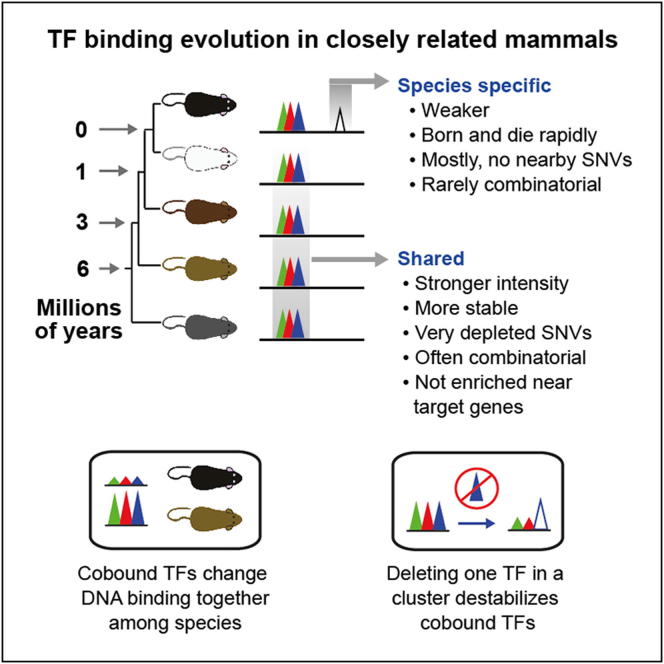
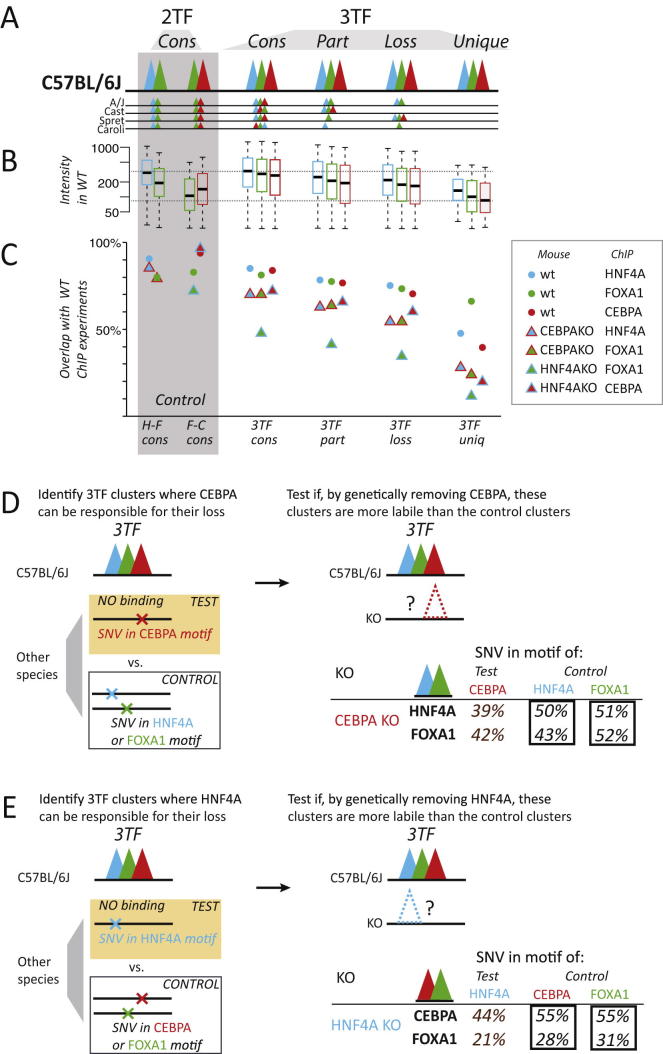
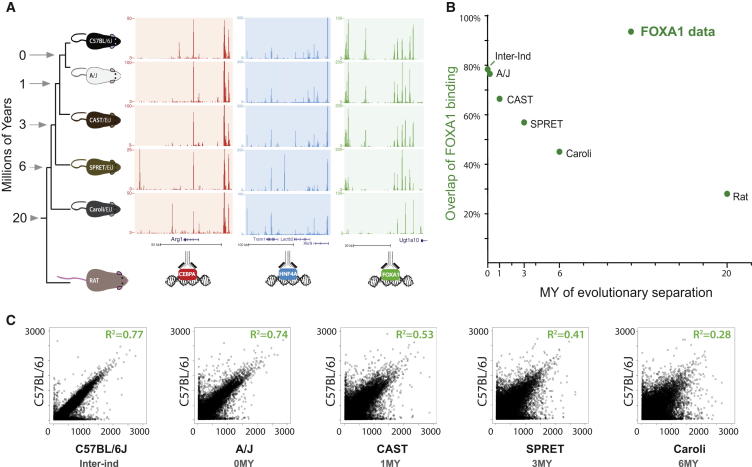
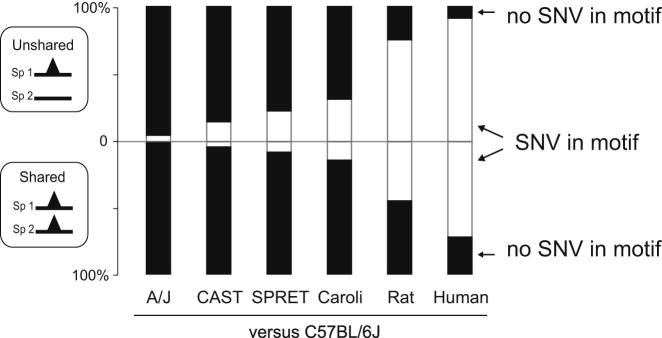
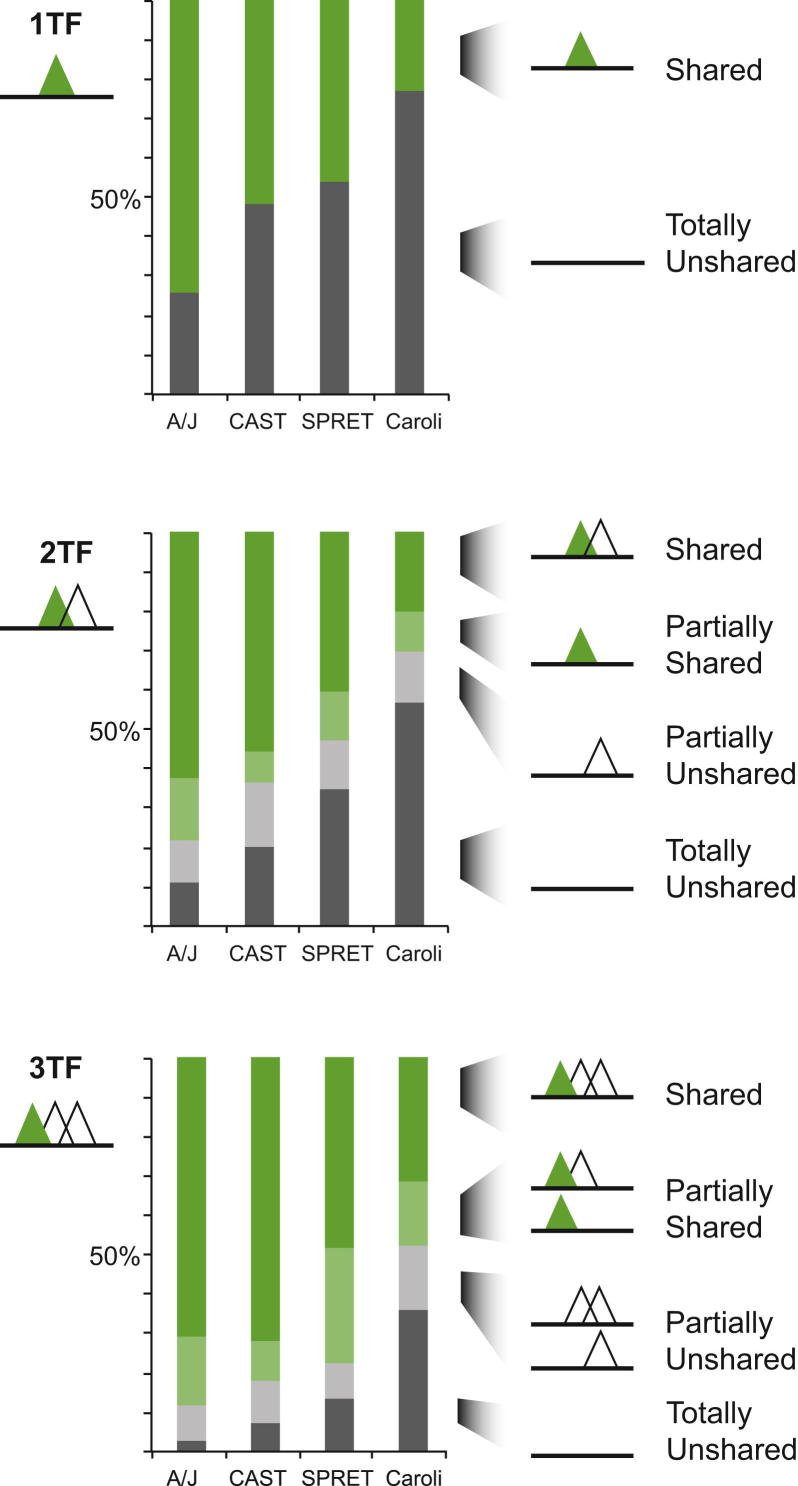
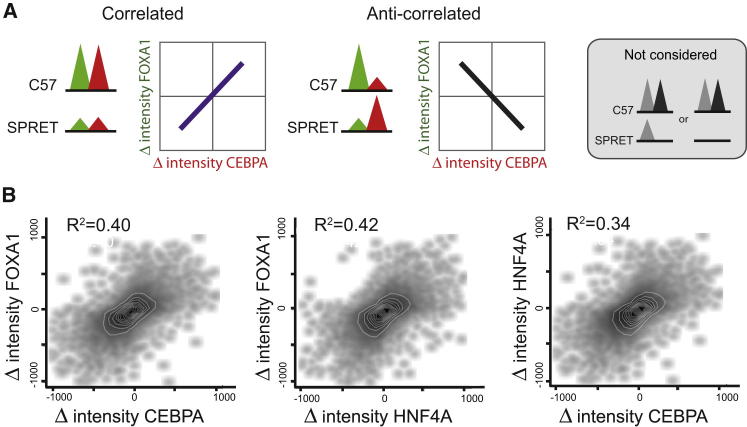
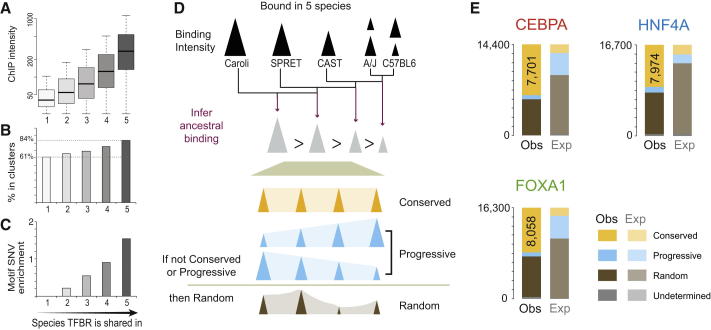
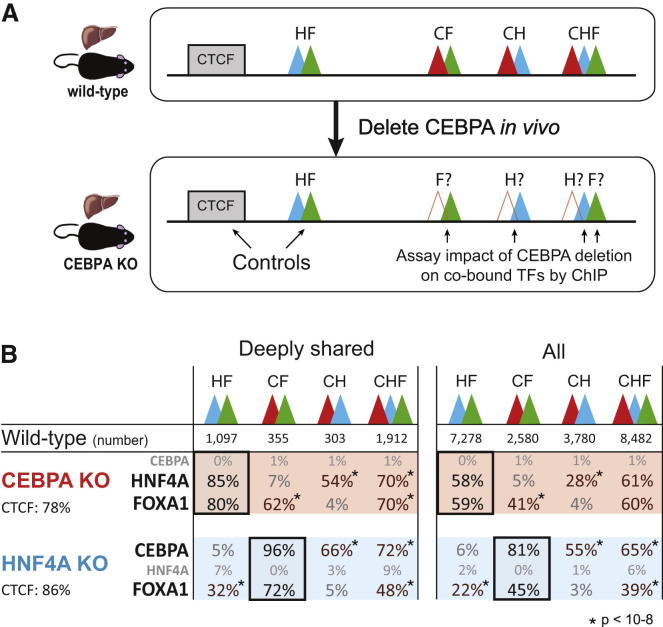
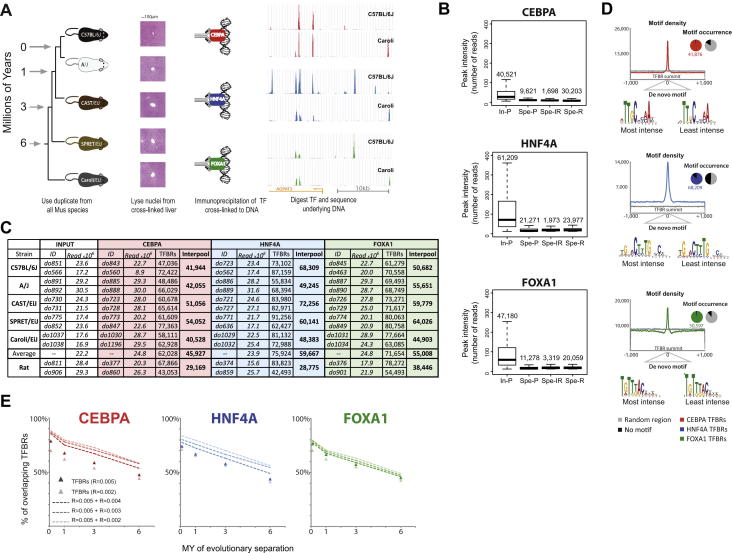
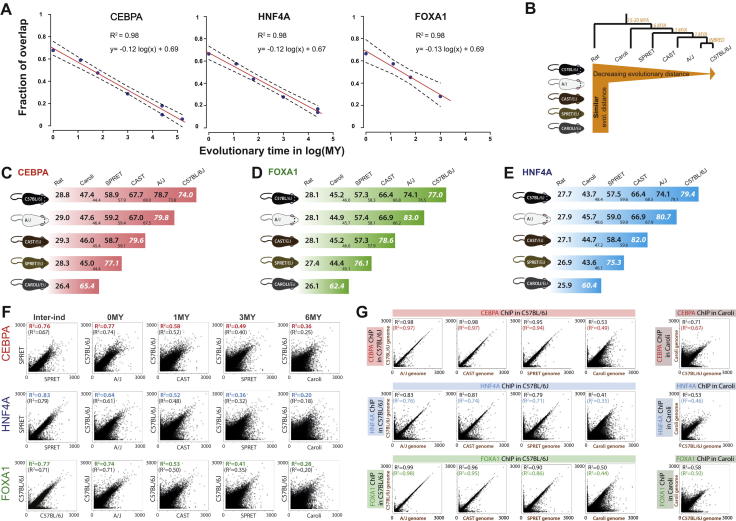
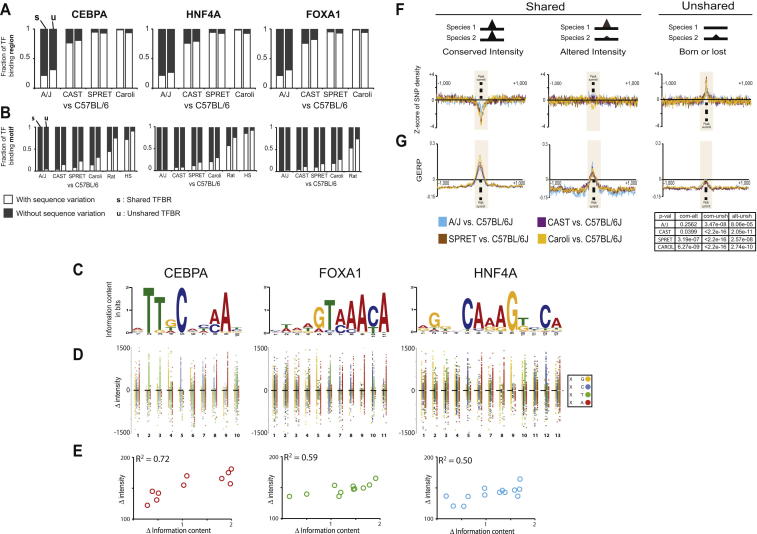
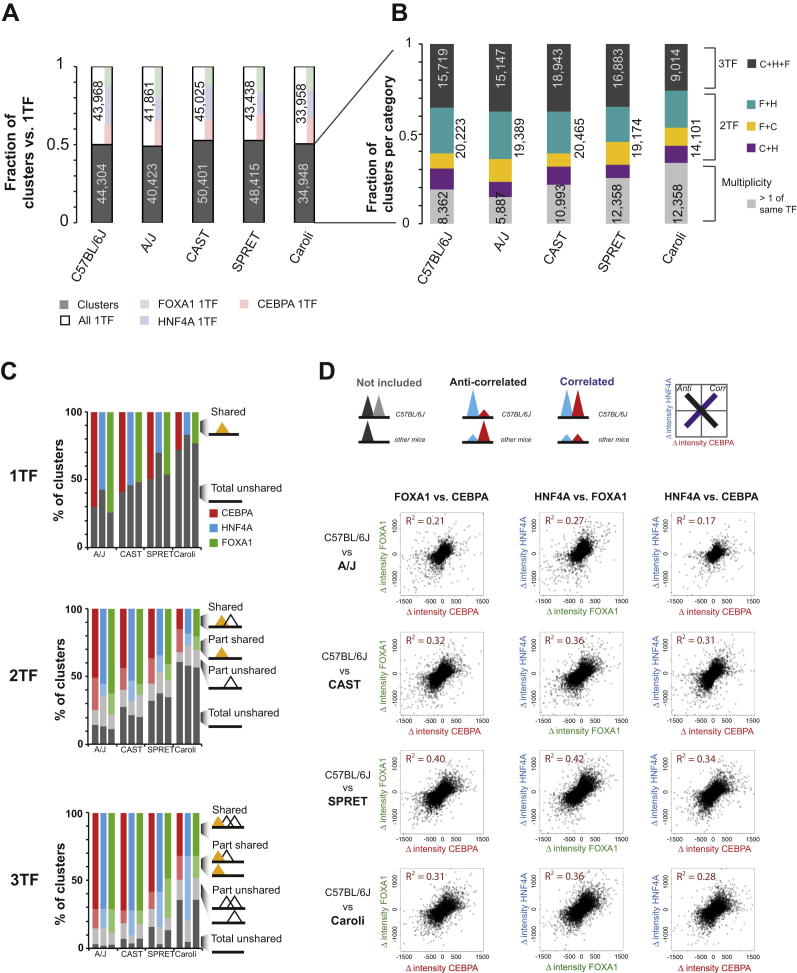
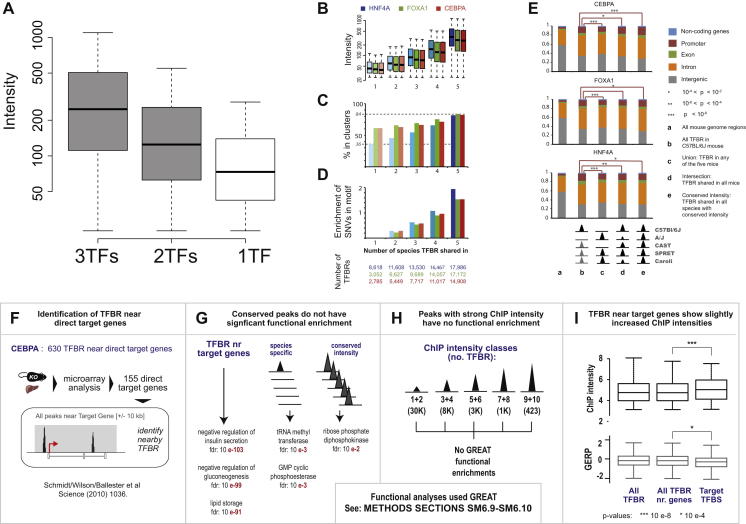
To mechanistically characterize the microevolutionary processes active in altering transcription factor (TF) binding among closely related mammals, we compared the genome-wide binding of three tissue-specific TFs that control liver gene expression in six rodents. Despite an overall fast turnover of TF binding locations between species, we identified thousands of TF regions of highly constrained TF binding intensity. Although individual mutations in bound sequence motifs can influence TF binding, most binding differences occur in the absence of nearby sequence variations. Instead, combinatorial binding was found to be significant for genetic and evolutionary stability; cobound TFs tend to disappear in concert and were sensitive to genetic knockout of partner TFs. The large, qualitative differences in genomic regions bound between closely related mammals, when contrasted with the smaller, quantitative TF binding differences among Drosophila species, illustrate how genome structure and population genetics together shape regulatory evolution.
为了从机制上阐明在密切相关的哺乳动物中改变转录因子(TF)结合的微观进化过程,我们比较了控制六种啮齿动物肝脏基因表达的三个组织特异性 TF 在全基因组范围内的结合情况。尽管物种间 TF 结合位置的整体快速更替,但我们鉴定出了数千个 TF 结合强度受到高度限制的区域。尽管结合序列模体中的单个突变会影响 TF 结合,但大多数结合差异发生在没有附近序列变异的情况下。相反,组合结合对于遗传和进化稳定性具有重要意义;共同结合的 TF 往往会协同消失,并且对伴侣 TF 的遗传敲除敏感。与果蝇物种之间较小的 TF 结合差异相比,密切相关的哺乳动物之间结合的基因组区域存在很大的定性差异,这说明了基因组结构和群体遗传学如何共同塑造调控进化。