Division of Hypothalamic Research, Department of Internal Medicine, University of Texas Southwestern Medical Center at Dallas Dallas, TX, USA.
Front Neurosci. 2013 Jul 31;7:134. doi: 10.3389/fnins.2013.00134. eCollection 2013.
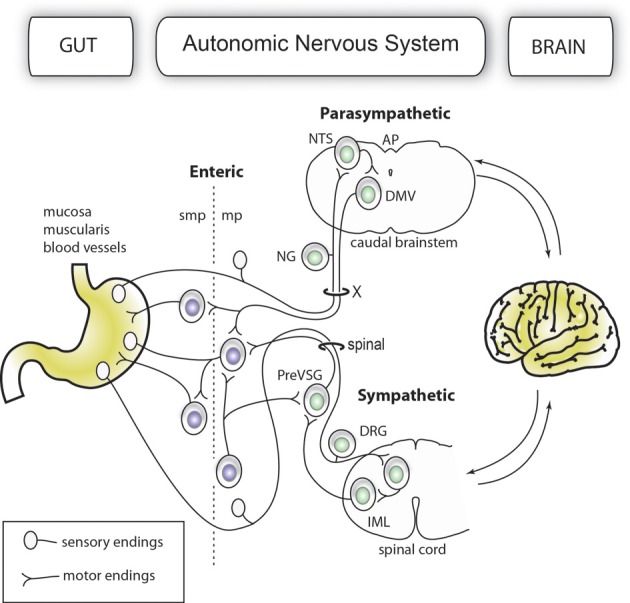
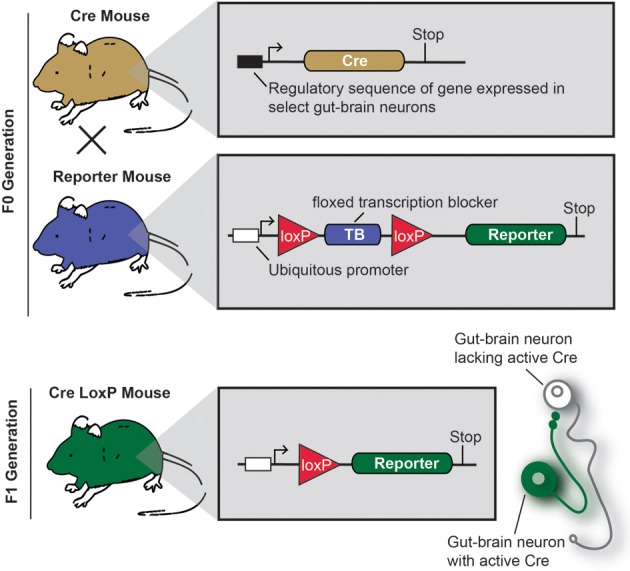
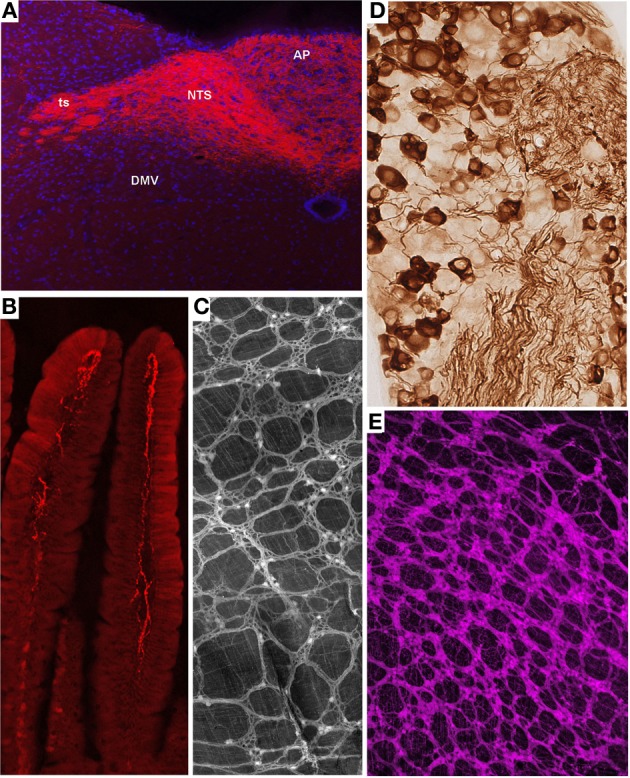
Neurons residing in the gut-brain axis remain understudied despite their important role in coordinating metabolic functions. This lack of knowledge is observed, in part, because labeling gut-brain axis neurons and their connections using conventional neuroanatomical methods is inherently challenging. This article summarizes genetic approaches that enable the labeling of distinct populations of gut-brain axis neurons in living laboratory rodents. In particular, we review the respective strengths and limitations of currently available genetic and viral approaches that permit the marking of gut-brain axis neurons without the need for antibodies or conventional neurotropic tracers. Finally, we discuss how these methodological advances are progressively transforming the study of the healthy and diseased gut-brain axis in the context of its role in chronic metabolic diseases, including diabetes and obesity.
尽管肠道-脑轴中的神经元在协调代谢功能方面起着重要作用,但它们仍然研究不足。这种知识的缺乏部分是由于使用传统的神经解剖学方法对肠道-脑轴神经元及其连接进行标记具有内在的挑战性。本文总结了使活体实验室啮齿动物中不同群体的肠道-脑轴神经元进行标记的遗传方法。特别是,我们回顾了目前可用的遗传和病毒方法各自的优缺点,这些方法允许在不需要抗体或传统神经追踪剂的情况下标记肠道-脑轴神经元。最后,我们讨论了这些方法学上的进步如何在慢性代谢疾病(包括糖尿病和肥胖症)的背景下,逐步改变肠道-脑轴在健康和疾病中的研究。