Department of Chemistry, The University of North Carolina at Chapel Hill, Chapel Hill, North Carolina 27599, USA.
ACS Appl Mater Interfaces. 2013 Aug 28;5(16):7956-64. doi: 10.1021/am402044s. Epub 2013 Aug 5.
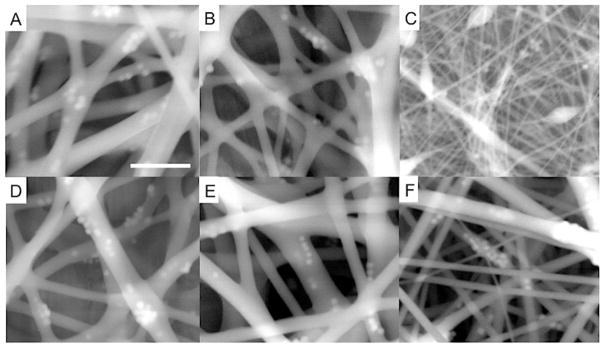
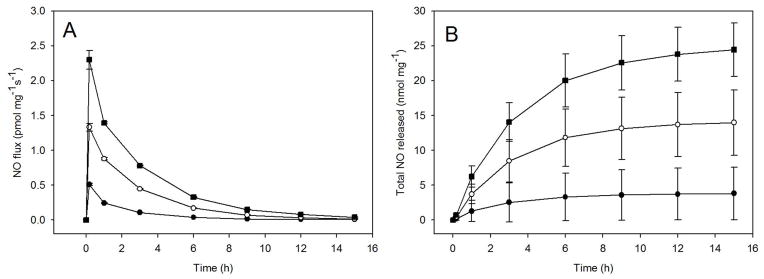
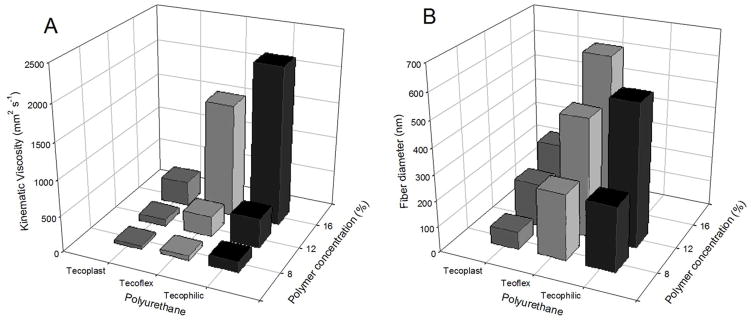
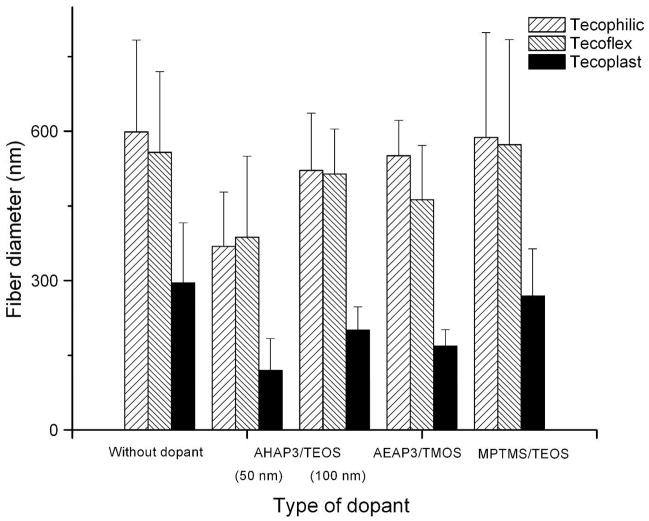
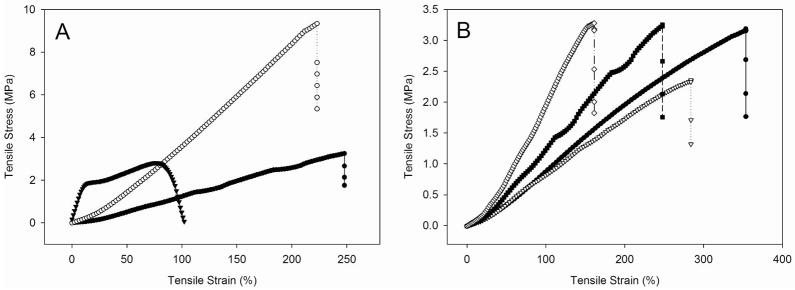
Electrospun polyurethane fibers doped with nitric oxide (NO)-releasing silica particles are presented as novel macromolecular scaffolds with prolonged NO-release and high porosity. Fiber diameter (119-614 nm) and mechanical strength (1.7-34.5 MPa of modulus) were varied by altering polyurethane type and concentration, as well as the NO-releasing particle composition, size, and concentration. The resulting NO-releasing electrospun nanofibers exhibited ~83% porosity with flexible plastic or elastomeric behavior. The use of N-diazeniumdiolate- or S-nitrosothiol-modified particles yielded scaffolds exhibiting a wide range of NO release totals and durations (7.5 nmol mg(-1)-0.12 μmol mg(-1) and 7 h to 2 weeks, respectively). The application of NO-releasing porous materials as coatings for subcutaneous implants may improve tissue biocompatibility by mitigating the foreign body response and promoting cell integration.
掺杂释放一氧化氮(NO)的二氧化硅颗粒的电纺聚氨酯纤维作为新型的高分子支架,具有延长的 NO 释放和高孔隙率。通过改变聚氨酯的类型和浓度,以及释放 NO 的颗粒的组成、大小和浓度,可以改变纤维的直径(119-614nm)和机械强度(模量为 1.7-34.5MPa)。所得到的释放 NO 的电纺纳米纤维具有约 83%的孔隙率,具有柔软的塑料或弹性体的特性。使用 N-二亚氨基二硝酸盐或 S-亚硝硫醇修饰的颗粒可得到具有广泛的 NO 释放总量和持续时间(分别为 7.5nmolmg(-1)-0.12μmolmg(-1)和 7 小时至 2 周)的支架。将释放 NO 的多孔材料作为皮下植入物的涂层应用,可能通过减轻异物反应和促进细胞整合来提高组织的生物相容性。