Department of Ecology and Evolutionary Biology & Microbial Diversity Institute, Yale University.
Genome Biol Evol. 2013;5(9):1675-88. doi: 10.1093/gbe/evt118.
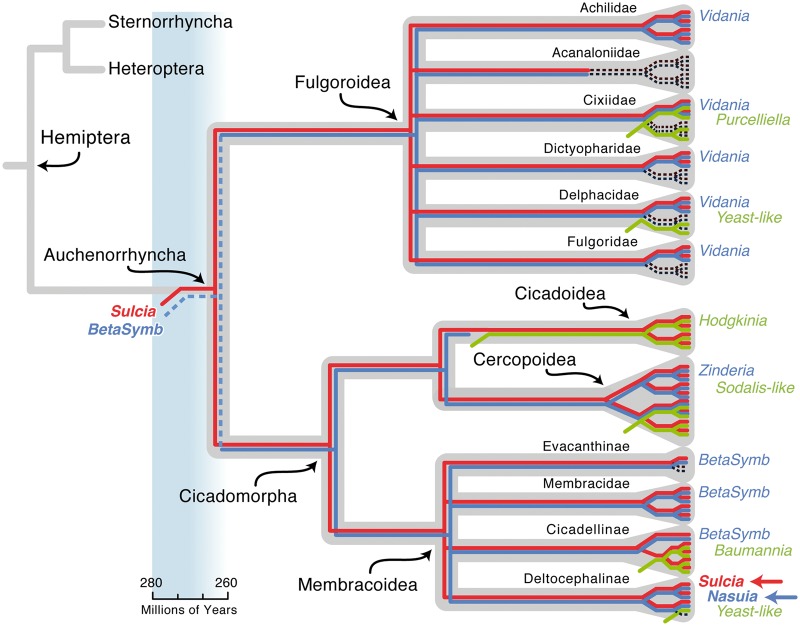
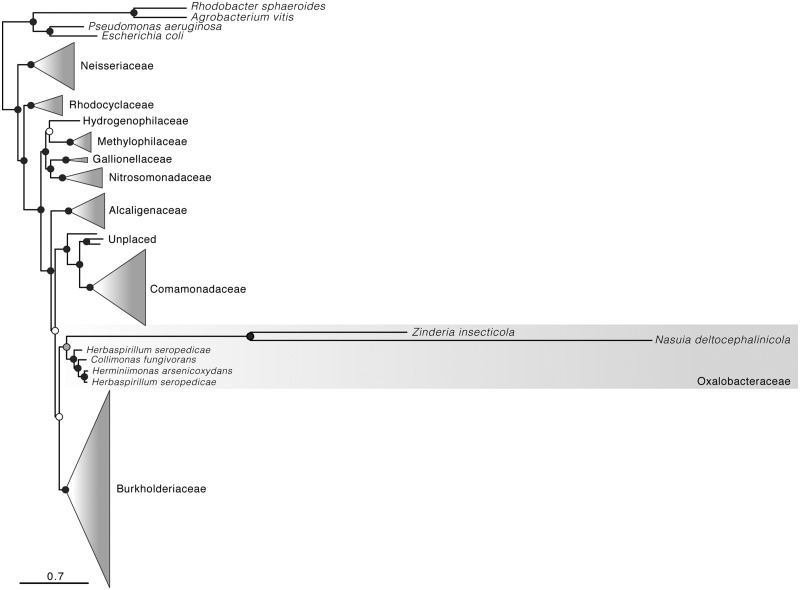
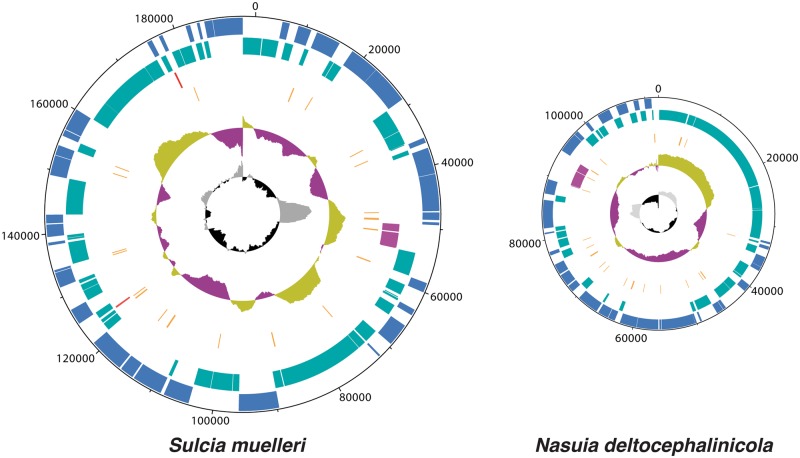
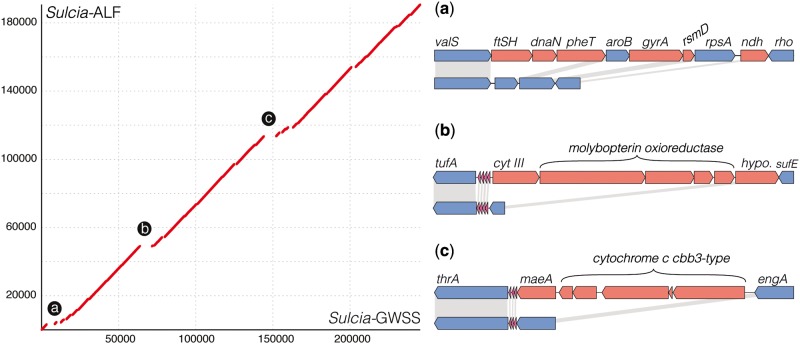
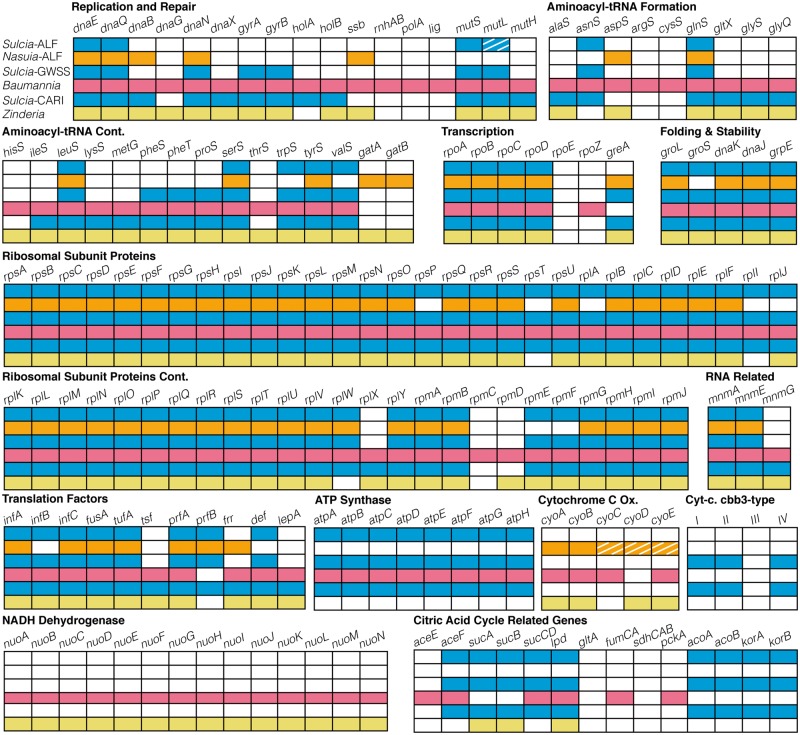
Many insects rely on bacterial symbionts with tiny genomes specialized for provisioning nutrients lacking in host diets. Xylem sap and phloem sap are both deficient as insect diets, but differ dramatically in nutrient content, potentially affecting symbiont genome evolution. For sap-feeding insects, sequenced symbiont genomes are available only for phloem-feeding examples from the suborder Sternorrhyncha and xylem-feeding examples from the suborder Auchenorrhyncha, confounding comparisons. We sequenced genomes of the obligate symbionts, Sulcia muelleri and Nasuia deltocephalinicola, of the phloem-feeding pest insect, Macrosteles quadrilineatus (Auchenorrhyncha: Cicadellidae). Our results reveal that Nasuia-ALF has the smallest bacterial genome yet sequenced (112 kb), and that the Sulcia-ALF genome (190 kb) is smaller than that of Sulcia in other insect lineages. Together, these symbionts retain the capability to synthesize the 10 essential amino acids, as observed for several symbiont pairs from xylem-feeding Auchenorrhyncha. Nasuia retains genes enabling synthesis of two amino acids, DNA replication, transcription, and translation. Both symbionts have lost genes underlying ATP synthesis through oxidative phosphorylation, possibly as a consequence of the enriched sugar content of phloem. Shared genomic features, including reassignment of the UGA codon from Stop to tryptophan, and phylogenetic results suggest that Nasuia-ALF is most closely related to Zinderia, the betaproteobacterial symbiont of spittlebugs. Thus, Nasuia/Zinderia and Sulcia likely represent ancient associates that have co-resided in hosts since the divergence of leafhoppers and spittlebugs >200 Ma, and possibly since the origin of the Auchenorrhyncha, >260 Ma.
许多昆虫依赖于具有专门提供宿主饮食中缺乏营养的微小基因组的细菌共生体。木质部汁液和韧皮部汁液都是昆虫饮食中的缺陷,但在营养成分上有很大的差异,这可能会影响共生体基因组的进化。对于以汁液为食的昆虫,只有亚目半翅目(Sternorrhyncha)的韧皮部取食者和亚目同翅目(Auchenorrhyncha)的木质部取食者的共生体基因组序列可供测序,这使得比较变得复杂。我们对韧皮部取食害虫麦长管蚜(Macrosteles quadrilineatus,同翅目:叶蝉科)的专性共生体苏丽菌(Sulcia muelleri)和纳苏菌(Nasuia deltocephalinicola)进行了基因组测序。我们的研究结果表明,纳苏菌-ALF 拥有迄今测序的最小细菌基因组(112kb),而苏丽菌-ALF 基因组(190kb)小于其他昆虫谱系中的苏丽菌基因组。这两种共生体共同保留了合成 10 种必需氨基酸的能力,就像木质部取食的同翅目昆虫中的几个共生体对一样。纳苏菌保留了合成两种氨基酸、DNA 复制、转录和翻译的基因。这两种共生体都失去了通过氧化磷酸化合成 ATP 的基因,这可能是韧皮部糖分丰富的结果。共有基因组特征,包括从终止密码子 UGA 重新分配到色氨酸,以及系统发育结果表明,纳苏菌-ALF 与β变形菌的共生体 Zinderia 最为密切相关,后者是沫蝉的共生体。因此,纳苏菌/金杆菌和苏丽菌可能代表了自 2 亿多年前叶蝉和沫蝉分化以来一直存在于宿主中的古老共生体,甚至可能自 2.6 亿多年前同翅目起源以来就一直存在。