Berg Sarah A, Sentir Alena M, Cooley Benjamin S, Engleman Eric A, Chambers R Andrew
Laboratory for Translational Neuroscience of Dual Diagnosis and Development, Institute of Psychiatric Research and Training Program in Addiction Psychiatry, Indiana University Department of Psychiatry, Indianapolis, IN, USA.
Addict Biol. 2014 Nov;19(6):1020-31. doi: 10.1111/adb.12082. Epub 2013 Aug 6.
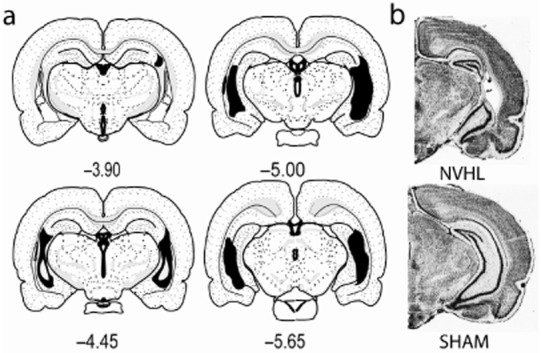
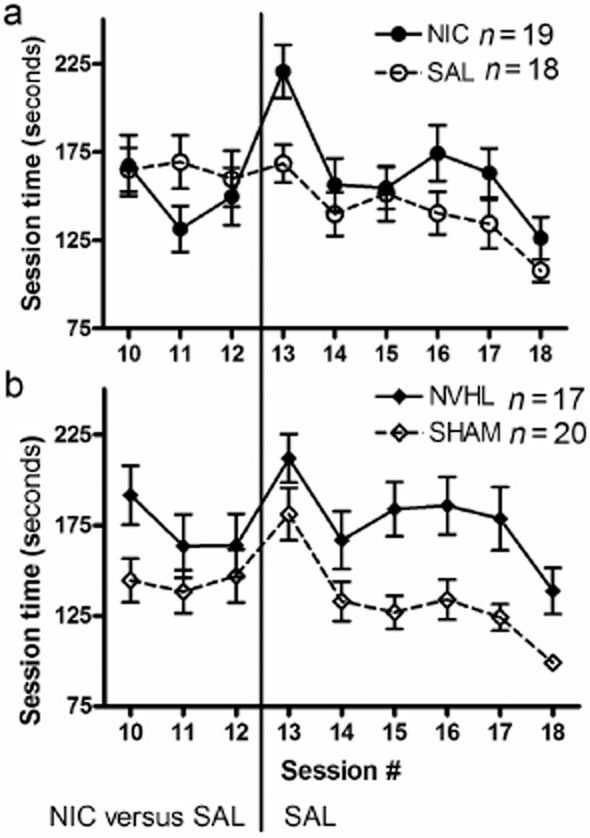
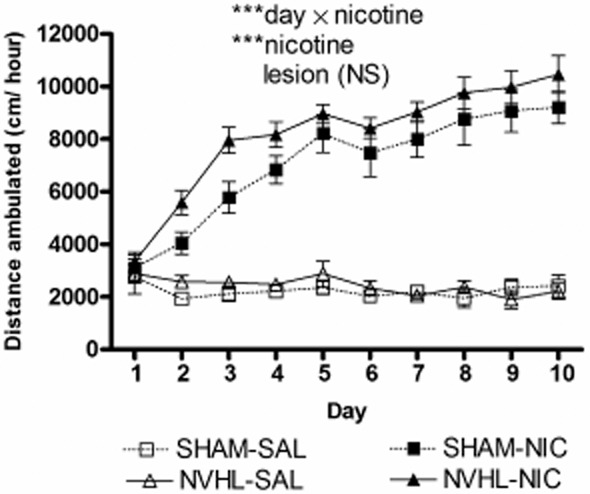
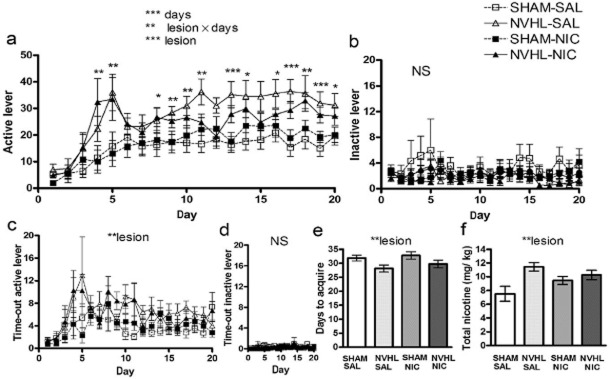
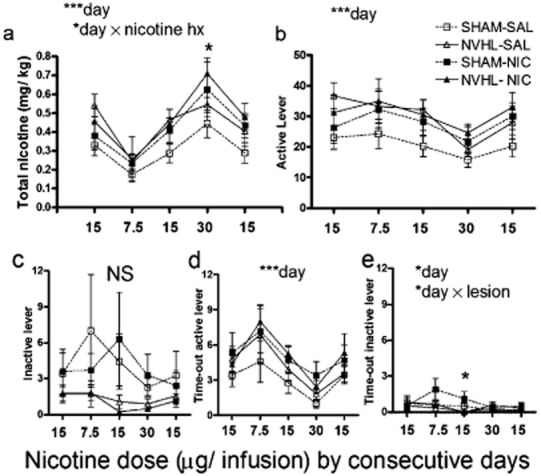
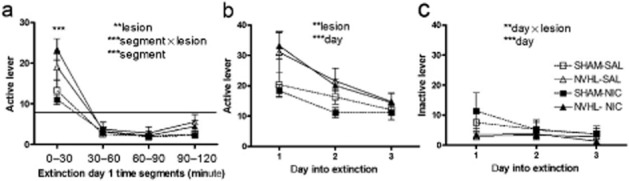
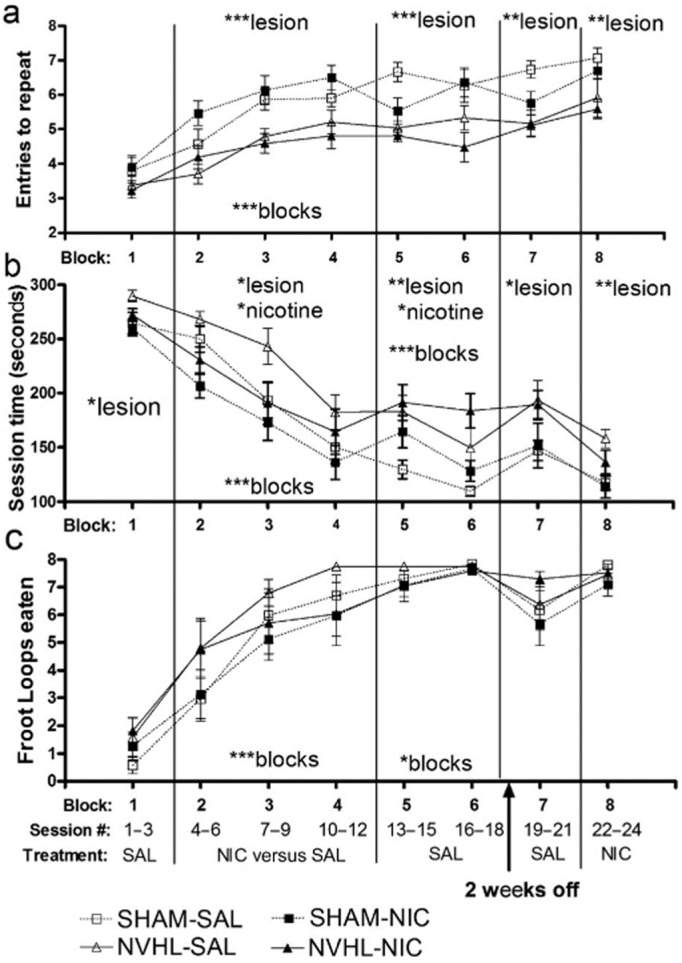
Nicotine dependence is the leading cause of death in the United States. However, research on high rates of nicotine use in mental illness has primarily explained this co-morbidity as reflecting nicotine's therapeutic benefits, especially for cognitive symptoms, equating smoking with 'self-medication'. We used a leading neurodevelopmental model of mental illness in rats to prospectively test the alternative possibility that nicotine dependence pervades mental illness because nicotine is simply more addictive in mentally ill brains that involve developmental hippocampal dysfunction. Neonatal ventral hippocampal lesions (NVHL) have previously been demonstrated to produce post-adolescent-onset, pharmacological, neurobiological and cognitive-deficit features of schizophrenia. Here, we show that NVHLs increase adult nicotine self-administration, potentiating acquisition-intake, total nicotine consumed and drug seeking. Behavioral sensitization to nicotine in adolescence prior to self-administration is not accentuated by NVHLs in contrast to increased nicotine self-administration and behavioral sensitization documented in adult NVHL rats, suggesting periadolescent neurodevelopmental onset of nicotine addiction vulnerability in the NVHL model. Delivering a nicotine regimen approximating the exposure used in the sensitization and self-administration experiments (i.e. as a treatment) to adult rats did not specifically reverse NVHL-induced cortical-hippocampal-dependent cognitive deficits and actually worsened cognitive efficiency after nicotine treatment stopped, generating deficits that resemble those due to NVHLs. These findings represent the first prospective evidence demonstrating a causal link between disease processes in schizophrenia and nicotine addiction. Developmental cortical-temporal limbic dysfunction in mental illness may thus amplify nicotine's reinforcing effects and addiction risk and severity, even while producing cognitive deficits that are not specifically or substantially reversible with nicotine.
尼古丁依赖是美国的主要死因。然而,关于精神疾病中尼古丁高使用率的研究主要将这种共病现象解释为反映了尼古丁的治疗益处,尤其是对认知症状的益处,将吸烟等同于“自我治疗”。我们使用大鼠精神疾病的一种主要神经发育模型,前瞻性地测试了另一种可能性,即尼古丁依赖在精神疾病中普遍存在,是因为在涉及发育性海马功能障碍的患病大脑中,尼古丁更容易成瘾。先前已证明,新生鼠腹侧海马损伤(NVHL)会导致青少年期后出现精神分裂症的药理学、神经生物学和认知缺陷特征。在此,我们表明,NVHL会增加成年大鼠的尼古丁自我给药量,增强获取摄入量、总尼古丁消耗量和觅药行为。与成年NVHL大鼠中记录的尼古丁自我给药增加和行为敏化相比,自我给药前青少年期对尼古丁的行为敏化不会因NVHL而加剧,这表明在NVHL模型中,尼古丁成瘾易感性在青春期前后神经发育阶段开始出现。对成年大鼠给予接近敏化和自我给药实验中所用暴露量的尼古丁方案(即作为一种治疗),并没有特异性地逆转NVHL诱导的皮质-海马依赖性认知缺陷,而且在停止尼古丁治疗后,实际上还会使认知效率恶化,产生类似于NVHL导致的缺陷。这些发现代表了首个前瞻性证据,证明精神分裂症的疾病过程与尼古丁成瘾之间存在因果关系。因此,精神疾病中发育性皮质-颞叶边缘功能障碍可能会放大尼古丁的强化作用以及成瘾风险和严重程度,即使同时产生的认知缺陷无法通过尼古丁特异性或实质性地逆转。