Chapman Wendy W, Hillert Dieter, Velupillai Sumithra, Kvist Maria, Skeppstedt Maria, Chapman Brian E, Conway Mike, Tharp Melissa, Mowery Danielle L, Deleger Louise
Division of Biomedical Informatics, University of California, San Diego, La Jolla, CA, USA.
Stud Health Technol Inform. 2013;192:677-81.
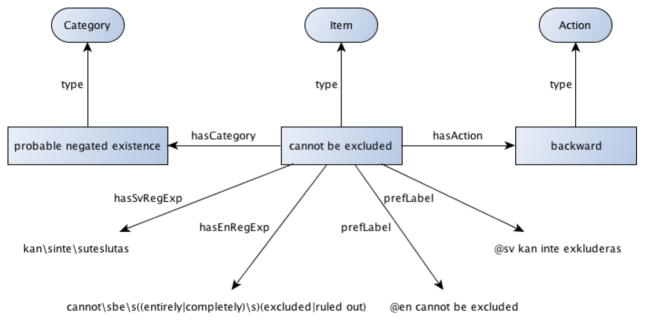
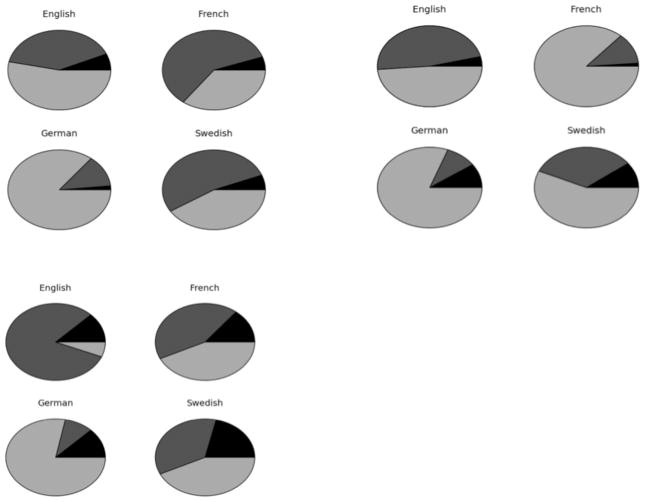
We translated an existing English negation lexicon (NegEx) to Swedish, French, and German and compared the lexicon on corpora from each language. We observed Zipf's law for all languages, i.e., a few phrases occur a large number of times, and a large number of phrases occur fewer times. Negation triggers "no" and "not" were common for all languages; however, other triggers varied considerably. The lexicon is available in OWL and RDF format and can be extended to other languages. We discuss the challenges in translating negation triggers to other languages and issues in representing multilingual lexical knowledge.
我们将现有的英语否定词词典(NegEx)翻译成瑞典语、法语和德语,并在每种语言的语料库上对该词典进行了比较。我们观察到所有语言都遵循齐普夫定律,即少数短语出现的次数很多,而大量短语出现的次数较少。否定触发词“no”和“not”在所有语言中都很常见;然而,其他触发词差异很大。该词典以OWL和RDF格式提供,并且可以扩展到其他语言。我们讨论了将否定触发词翻译成其他语言时面临的挑战以及表示多语言词汇知识时存在的问题。