Neuroimaging Center, Department of Neuroscience, University Medical Center Groningen/University of Groningen, Groningen, The Netherlands.
PLoS One. 2013 Jul 26;8(7):e69606. doi: 10.1371/journal.pone.0069606. Print 2013.
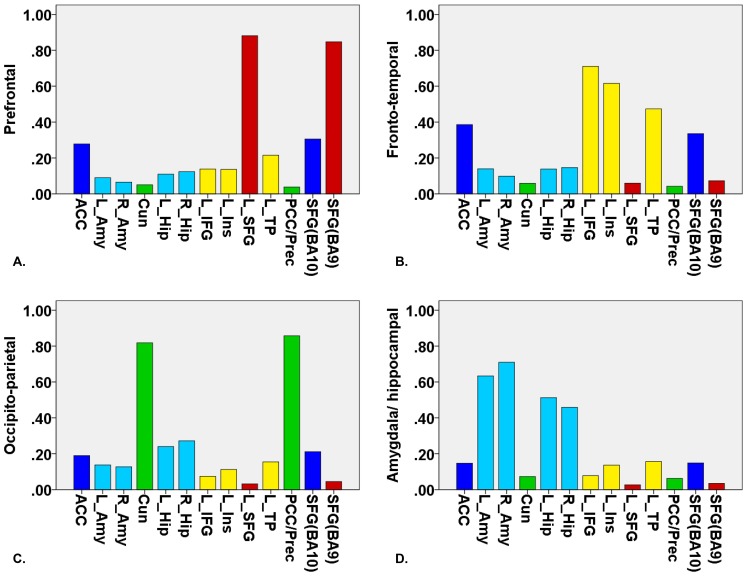
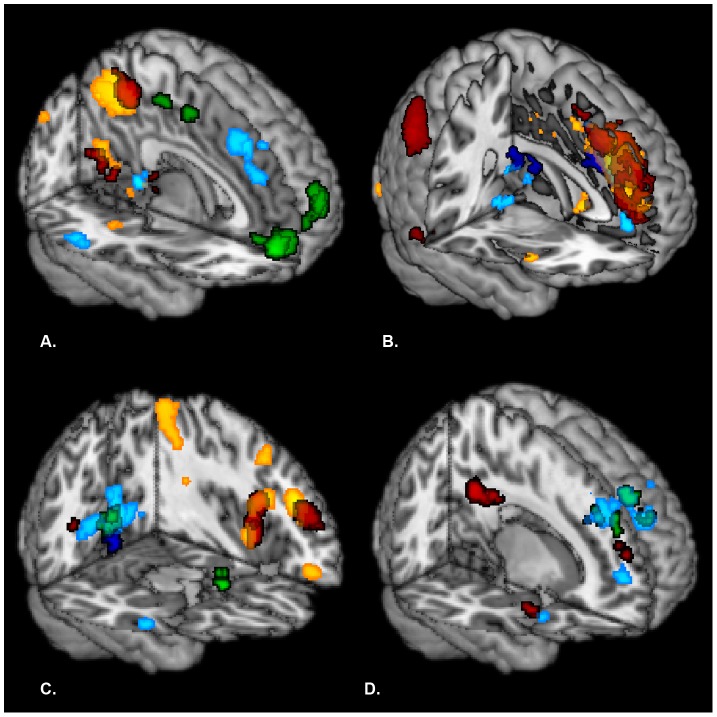
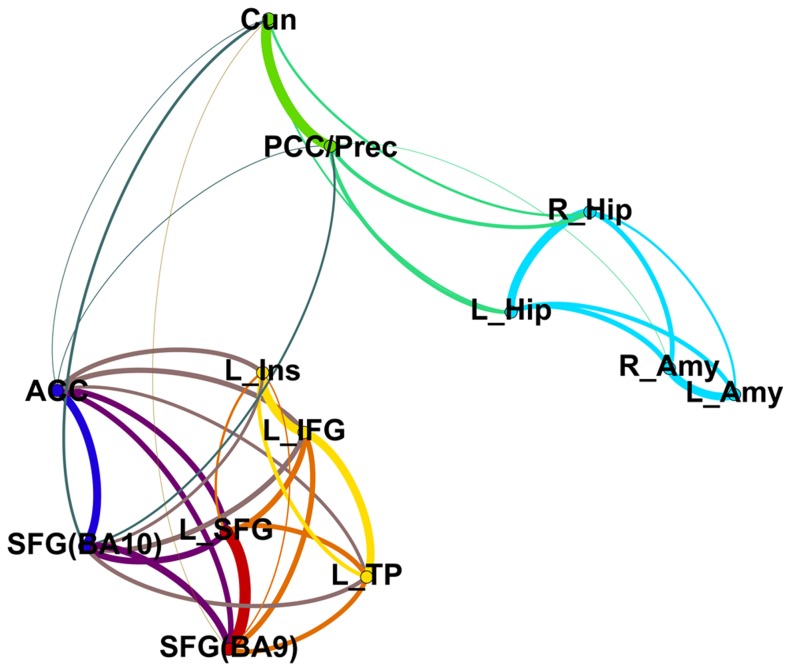
Neuroticism is a robust personality trait that constitutes a risk factor for psychopathology, especially anxiety disorders and depression. High neurotic individuals tend to be more self-critical and are overly sensitive to criticism by others. Hence, we used a novel resting-state paradigm to investigate the effect of criticism on functional brain connectivity and associations with neuroticism. Forty-eight participants completed the NEO Personality Inventory Revised (NEO-PI-R) to assess neuroticism. Next, we recorded resting state functional magnetic resonance imaging (rsfMRI) during two sessions. We manipulated the second session before scanning by presenting three standardized critical remarks through headphones, in which the subject was urged to please lie still in the scanner. A seed-based functional connectivity method and subsequent clustering were used to analyse the resting state data. Based on the reviewed literature related to criticism, we selected brain regions associated with self-reflective processing and stress-regulation as regions of interest. The findings showed enhanced functional connectivity between the clustered seed regions and brain areas involved in emotion processing and social cognition during the processing of criticism. Concurrently, functional connectivity was reduced between these clusters and brain structures related to the default mode network and higher-order cognitive control. Furthermore, individuals scoring higher on neuroticism showed altered functional connectivity between the clustered seed regions and brain areas involved in the appraisal, expression and regulation of negative emotions. These results may suggest that the criticized person is attempting to understand the beliefs, perceptions and feelings of the critic in order to facilitate flexible and adaptive social behavior. Furthermore, multiple aspects of emotion processing were found to be affected in individuals scoring higher on neuroticism during the processing of criticism, which may increase their sensitivity to negative social-evaluation.
神经质是一种强有力的人格特质,构成了精神病理学的风险因素,尤其是焦虑障碍和抑郁症。高神经质的个体往往更自我批评,对他人的批评过于敏感。因此,我们使用一种新的静息态范式来研究批评对功能脑连接的影响及其与神经质的关系。48 名参与者完成了 NEO 人格量表修订版(NEO-PI-R)以评估神经质。接下来,我们在两次会议期间记录了静息状态功能磁共振成像(rsfMRI)。我们通过耳机在第二次会议扫描前呈现了三条标准化的批评意见,来操纵第二次会议,敦促被试在扫描仪中保持静止。我们使用基于种子的功能连接方法和随后的聚类来分析静息状态数据。基于与批评相关的文献综述,我们选择了与自我反思处理和应激调节相关的大脑区域作为感兴趣区域。研究结果表明,在处理批评时,聚类种子区域与情绪处理和社会认知相关的大脑区域之间的功能连接增强。同时,这些簇与默认模式网络和高级认知控制相关的大脑结构之间的功能连接减少。此外,神经质得分较高的个体在聚类种子区域与涉及负面情绪的评价、表达和调节的大脑区域之间的功能连接发生改变。这些结果可能表明,被批评的人试图理解批评者的信念、感知和感受,以促进灵活和适应性的社会行为。此外,在处理批评时,神经质得分较高的个体的多个情绪处理方面受到影响,这可能增加他们对负面社会评价的敏感性。