Department of Psychiatry, University of Wisconsin, Madison, 6001 Research Park Boulevard, Madison, WI 53711, USA.
Neurosci Biobehav Rev. 2012 Jan;36(1):479-501. doi: 10.1016/j.neubiorev.2011.08.005. Epub 2011 Aug 25.
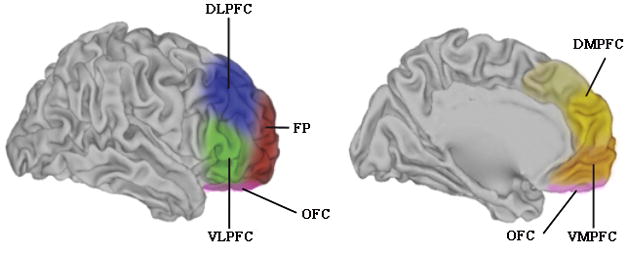
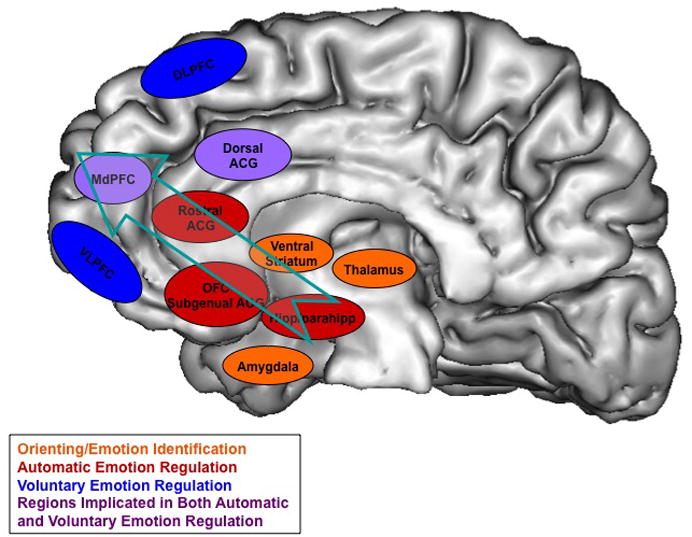
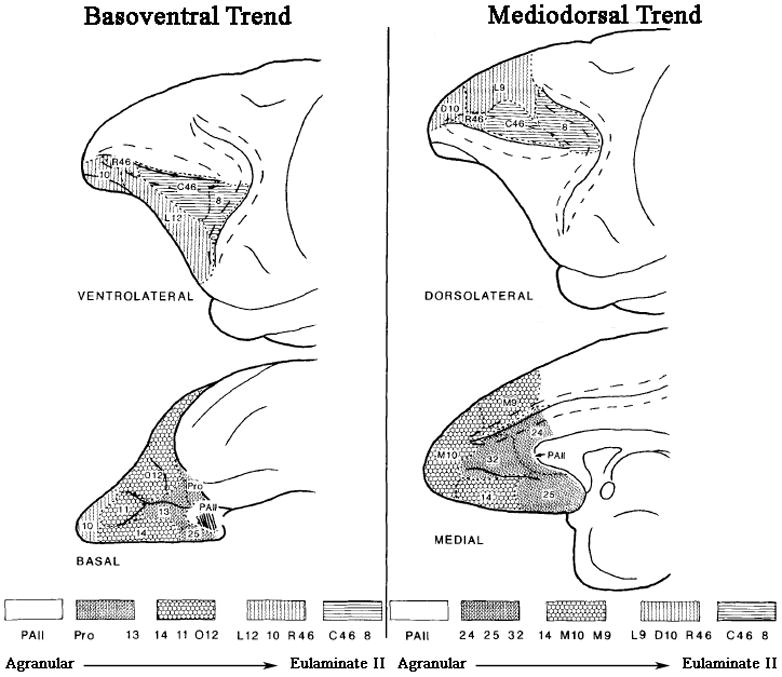
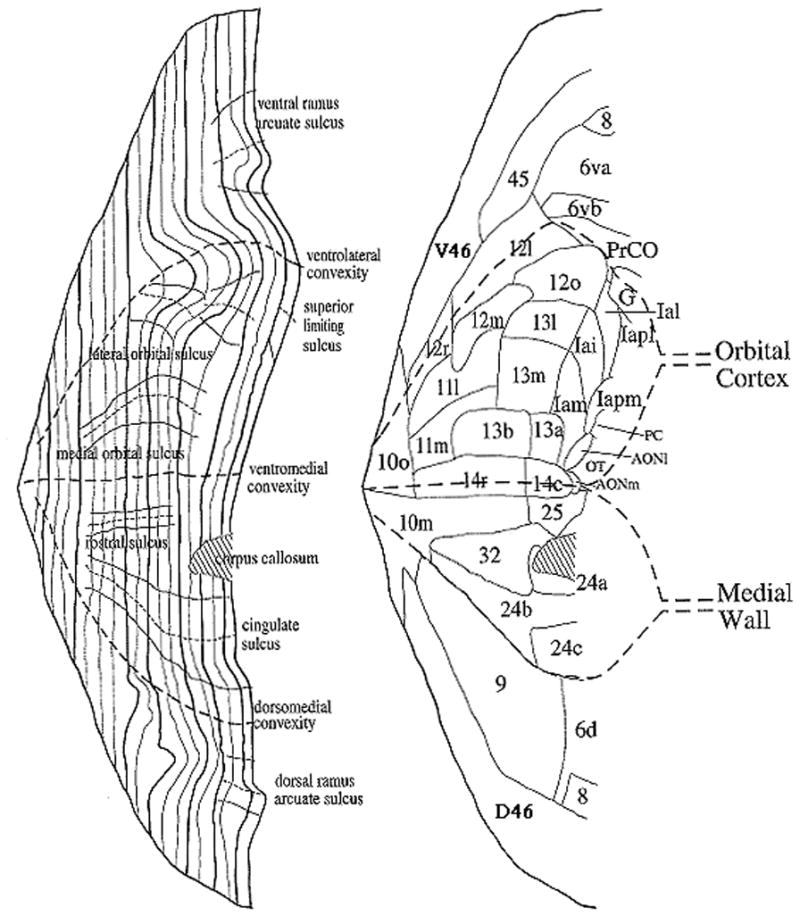
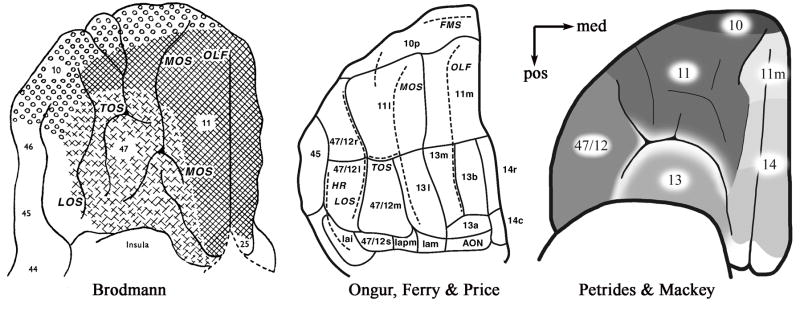
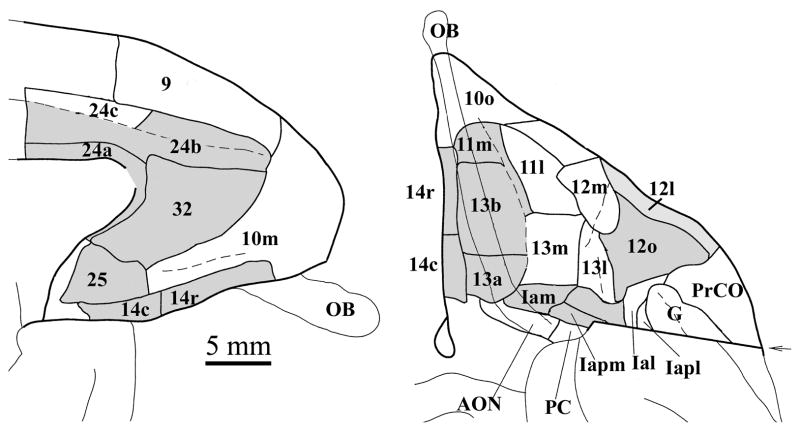
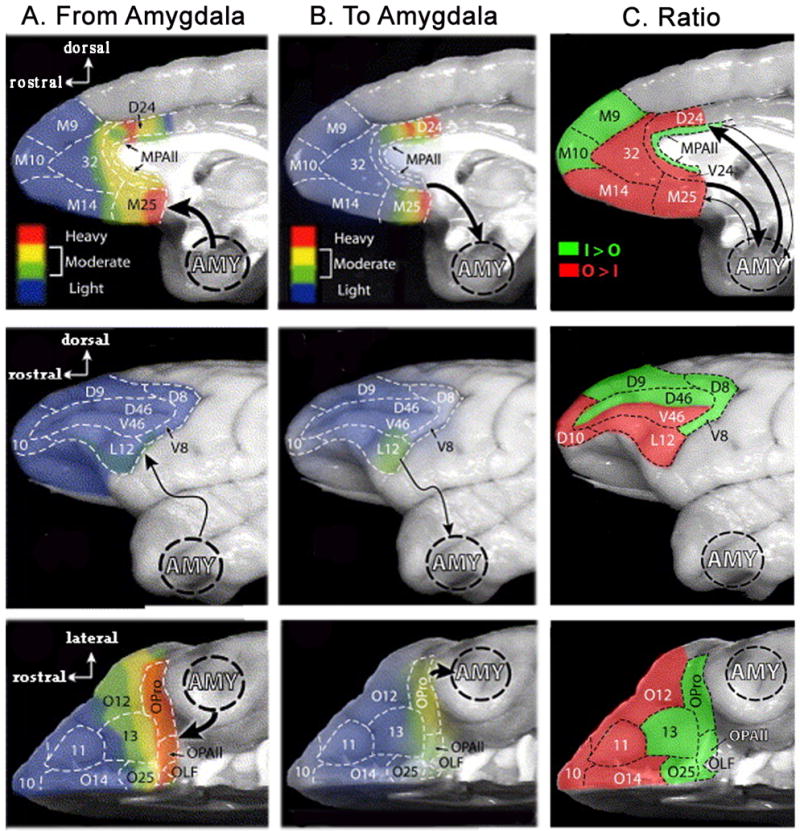
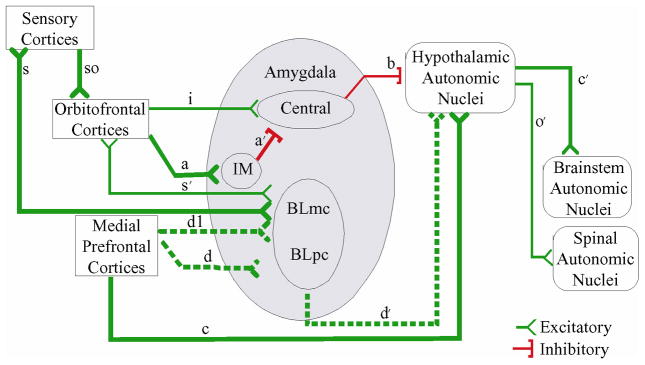
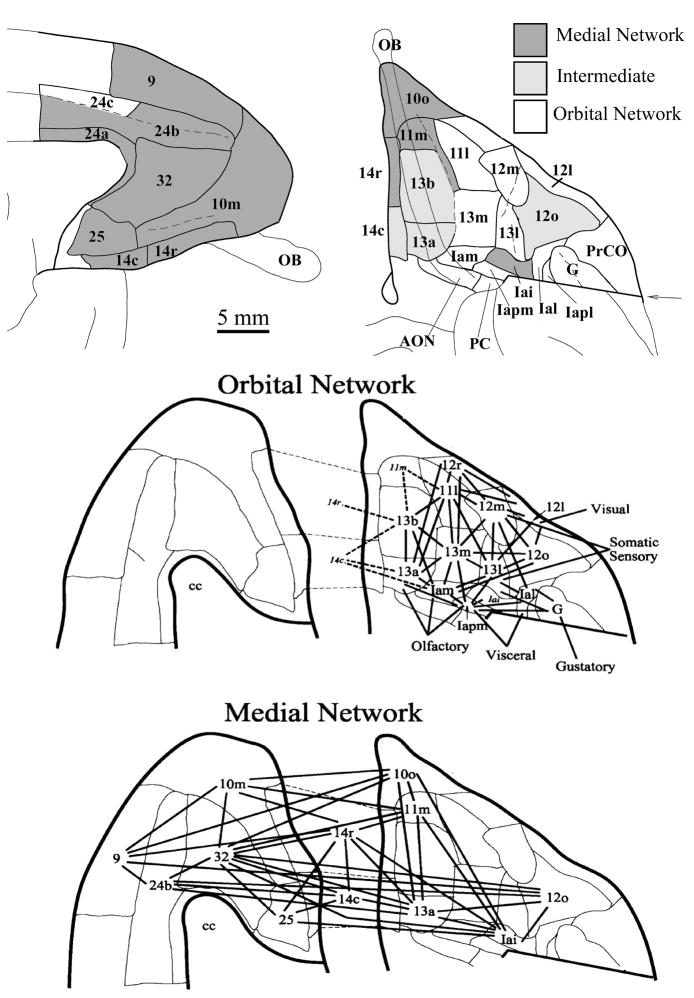
Psychological research increasingly indicates that emotional processes interact with other aspects of cognition. Studies have demonstrated both the ability of emotional stimuli to influence a broad range of cognitive operations, and the ability of humans to use top-down cognitive control mechanisms to regulate emotional responses. Portions of the prefrontal cortex appear to play a significant role in these interactions. However, the manner in which these interactions are implemented remains only partially elucidated. In the present review we describe the anatomical connections between ventral and dorsal prefrontal areas as well as their connections with limbic regions. Only a subset of prefrontal areas are likely to directly influence amygdalar processing, and as such models of prefrontal control of emotions and models of emotional regulation should be constrained to plausible pathways of influence. We also focus on how the specific pattern of feedforward and feedback connections between these regions may dictate the nature of information flow between ventral and dorsal prefrontal areas and the amygdala. These patterns of connections are inconsistent with several commonly expressed assumptions about the nature of communications between emotion and cognition.
心理学研究越来越多地表明,情绪过程与认知的其他方面相互作用。研究表明,情绪刺激既能够影响广泛的认知操作,也能够使人类利用自上而下的认知控制机制来调节情绪反应。前额叶皮层的某些部分似乎在这些相互作用中起着重要作用。然而,这些相互作用的实施方式仍未完全阐明。在本综述中,我们描述了腹侧和背侧前额叶区域之间的解剖连接,以及它们与边缘区域的连接。只有一部分前额叶区域可能直接影响杏仁核的处理,因此情绪的前额叶控制模型和情绪调节模型应该受到影响的可能途径的限制。我们还重点关注这些区域之间的特定前馈和反馈连接模式如何决定腹侧和背侧前额叶区域与杏仁核之间信息流的性质。这些连接模式与关于情绪和认知之间通信性质的几个常见假设不一致。