Department of Anatomy and Cytoneurobiology, Medical College of Soochow University, Suzhou, China.
PLoS One. 2013 Jul 29;8(7):e70306. doi: 10.1371/journal.pone.0070306. Print 2013.
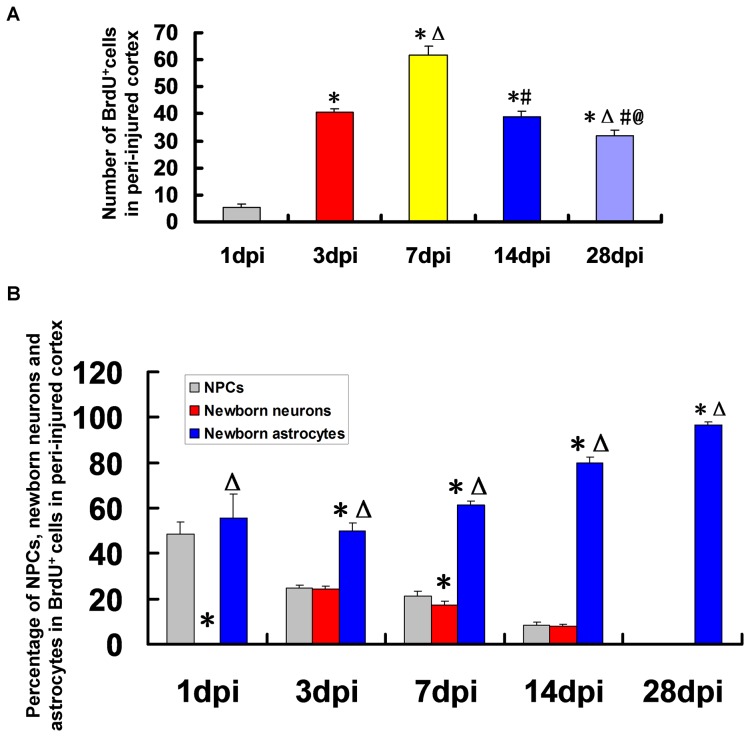
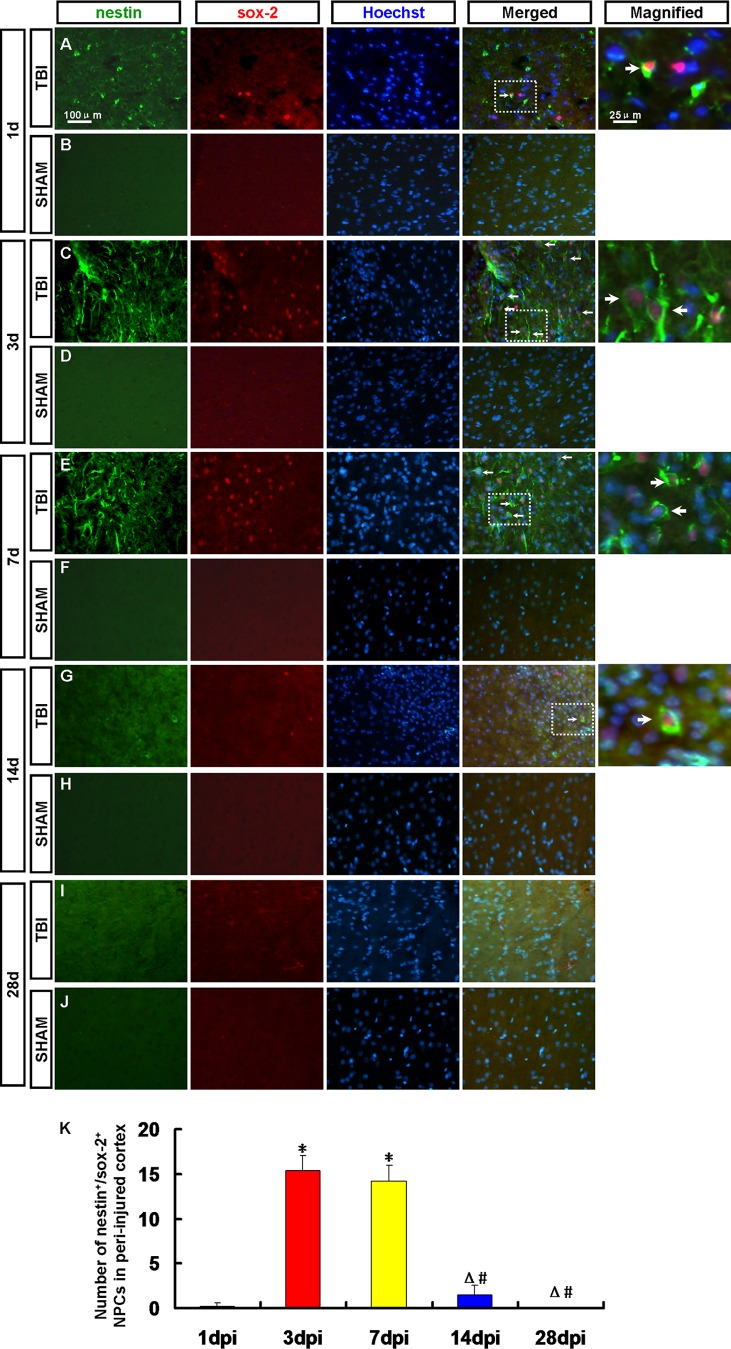
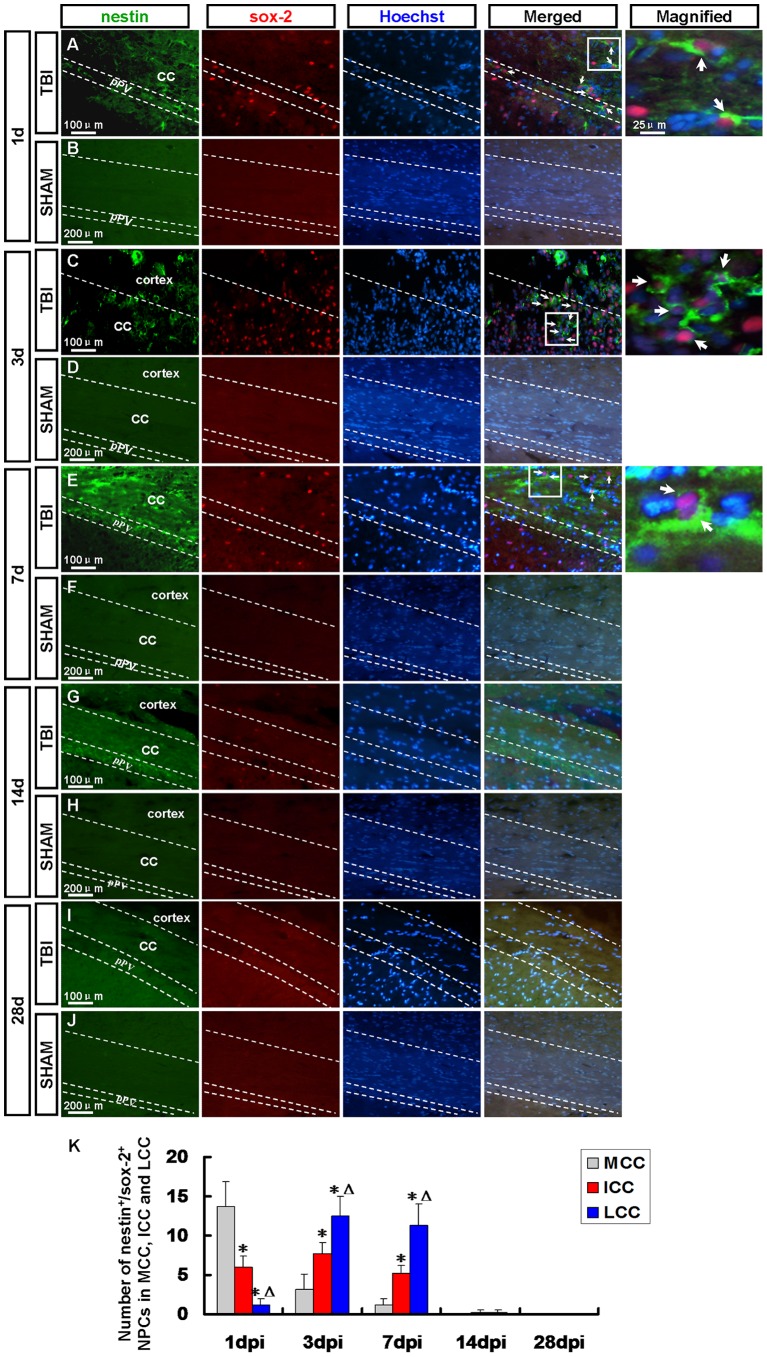
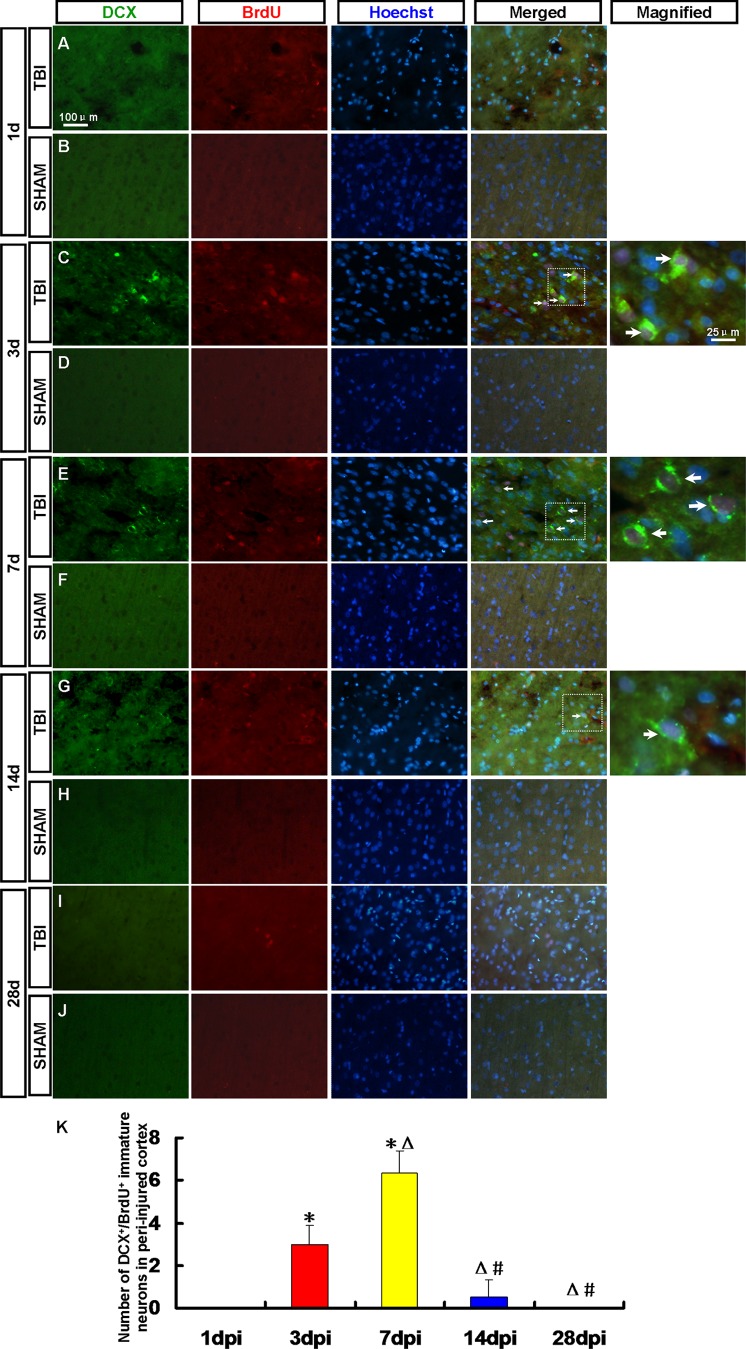
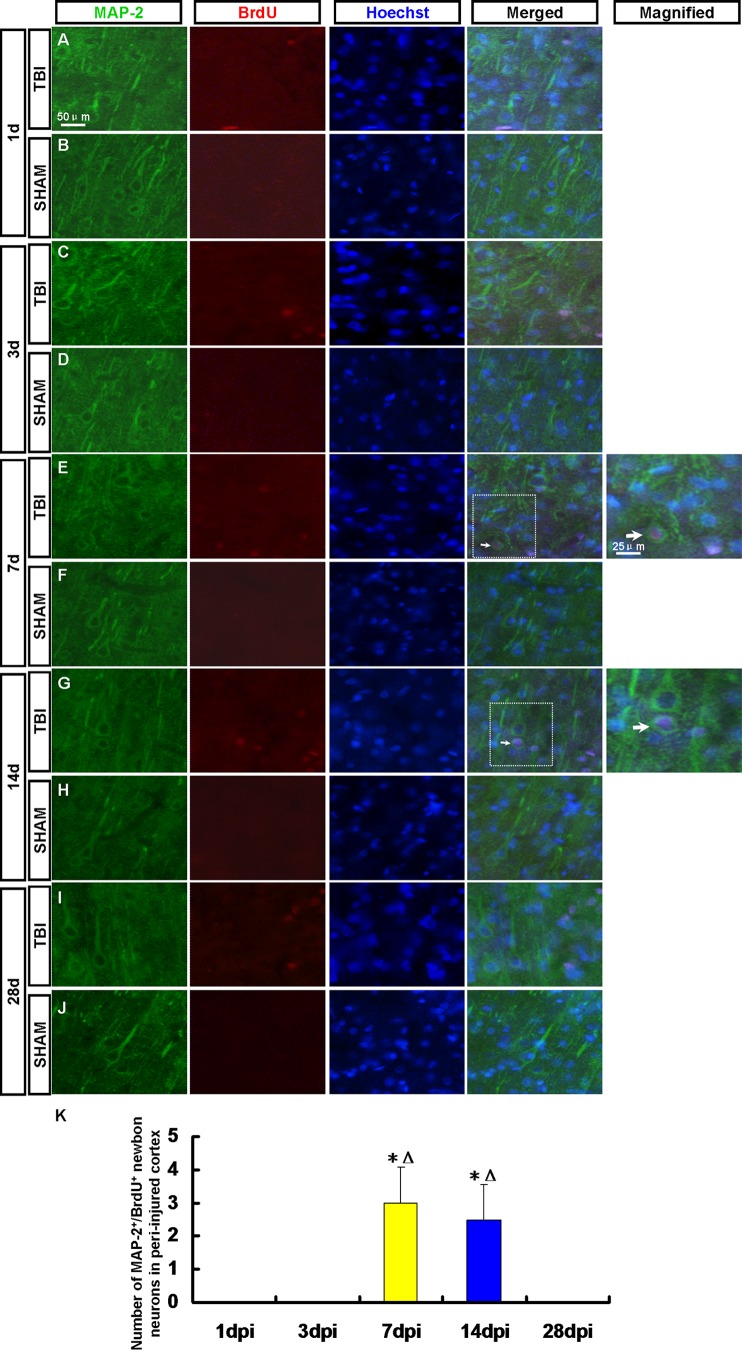
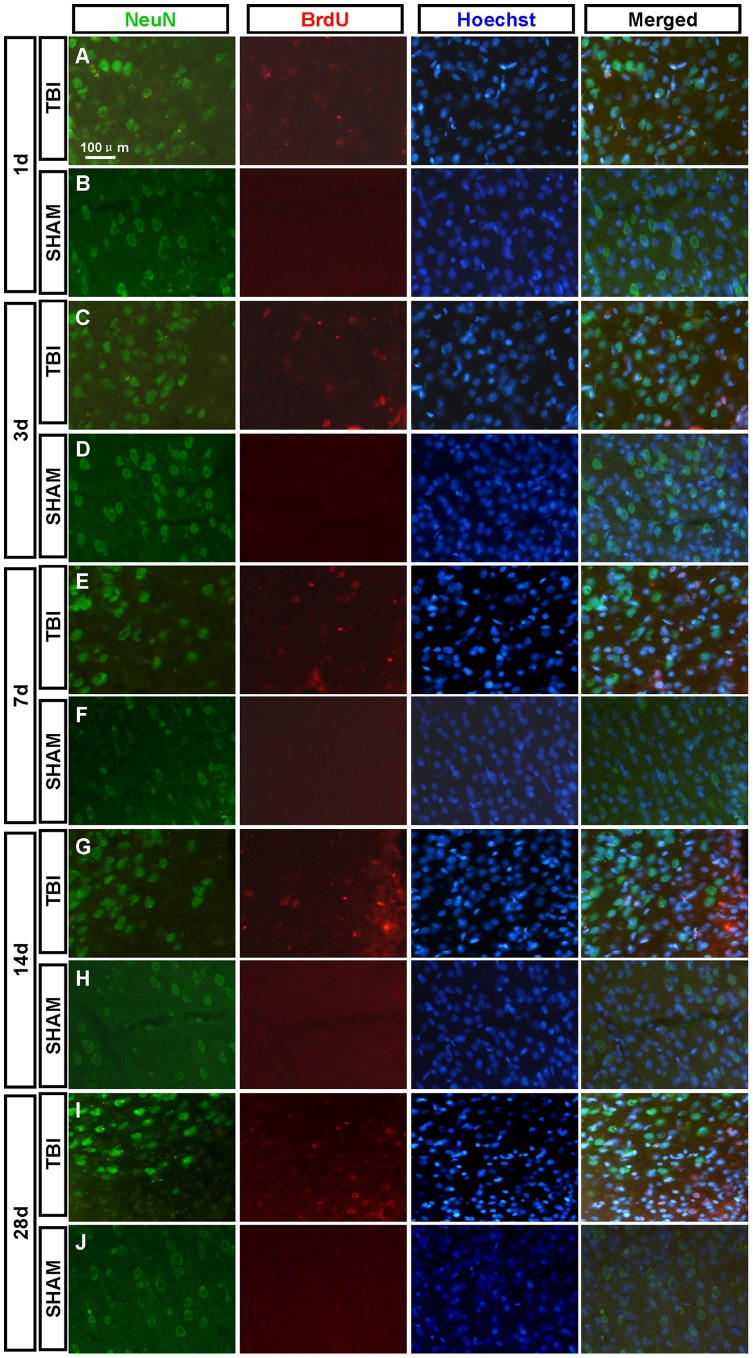
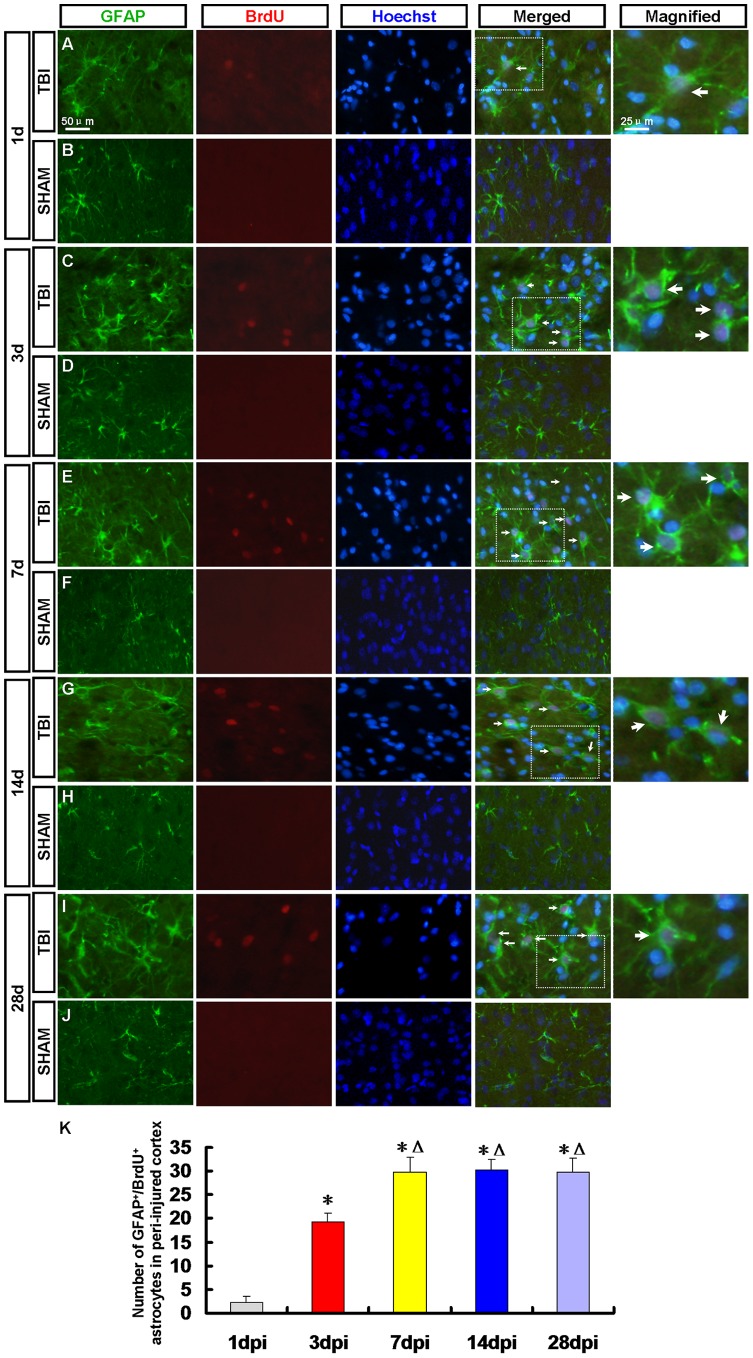
Focal and diffuse neuronal loss happened after traumatic brain injury (TBI). With little in the way of effective repair, recent interest has focused on endogenic neural progenitor cells (NPCs) as a potential method for regeneration. Whether endogenic neural regeneration happened in the cortex of adult rat after TBI remains to be determined. In this study, rats were divided into a sham group and a TBI group, and the rat model of medium TBI was induced by controlled cortical impact. Rats were injected with BrdU at 1 to 7 days post-injury (dpi) to allow identification of differentiated cells and sacrificed at 1, 3, 7, 14 and 28 dpi for immunofluorescence. Results showed nestin(+)/sox-2(+) NPCs and GFAP(+)/sox-2(+) radial glial (RG)-like cells emerged in peri-injured cortex at 1, 3, 7, 14 dpi and peaked at 3 dpi. The number of GFAP(+)/sox-2(+) cells was less than that of nestin(+)/sox-2(+) cells. Nestin(+)/sox-2(+) cells from posterior periventricle (pPV) immigrated into peri-injured cortex through corpus callosum (CC) were found. DCX(+)/BrdU(+) newborn immature neurons in peri-injured cortex were found only at 3, 7, 14 dpi. A few MAP-2(+)/BrdU(+) newborn neurons in peri-injured cortex were found only at 7 and 14 dpi. NeuN(+)/BrdU(+) mature neurons were not found in peri-injured cortex at 1, 3, 7, 14 and 28 dpi. While GFAP(+)/BrdU(+) astrocytes emerged in peri-injured cortex at 1, 3, 7, 14, 28 dpi and peaked at 7 dpi then kept in a stable state. In the corresponding time point, the percentage of GFAP(+)/BrdU(+) astrocytes in BrdU(+) cells was more than that of NPCs or newborn neurons. No CNP(+)/BrdU(+) oligodendrocytes were found in peri-injured cortex. These findings suggest that NPCs from pPV and reactive RG-like cells emerge in peri-injured cortex of adult rats after TBI. It can differentiate into immature neurons and astrocytes, but the former fail to grow up to mature neurons.
创伤性脑损伤(TBI)后会发生局灶性和弥漫性神经元丢失。由于有效的修复方法很少,最近的研究兴趣集中在内源性神经祖细胞(NPC)上,将其作为再生的一种潜在方法。TBI 后成年大鼠皮质内是否发生内源性神经再生仍有待确定。在这项研究中,将大鼠分为假手术组和 TBI 组,通过皮质撞击控制诱导中型 TBI 大鼠模型。在损伤后 1 至 7 天(dpi)给大鼠注射 BrdU,以识别分化细胞,并在 1、3、7、14 和 28 dpi 处死进行免疫荧光染色。结果显示,损伤周围皮质在 1、3、7、14 dpi 出现巢蛋白(+)/ Sox-2(+)NPC 和 GFAP(+)/ Sox-2(+)放射状胶质(RG)样细胞,在 3dpi 时达到高峰。GFAP(+)/ Sox-2(+)细胞数量少于巢蛋白(+)/ Sox-2(+)细胞。发现来自后脑室周(pPV)的巢蛋白(+)/ Sox-2(+)细胞通过胼胝体(CC)迁移到损伤周围皮质。在损伤周围皮质仅在 3、7、14 dpi 时发现 DCX(+)/ BrdU(+)新生未成熟神经元。在损伤周围皮质仅在 7 和 14 dpi 时发现少量 MAP-2(+)/ BrdU(+)新生神经元。在 1、3、7、14 和 28 dpi 时,损伤周围皮质中未发现 NeuN(+)/ BrdU(+)成熟神经元。GFAP(+)/ BrdU(+)星形胶质细胞在损伤周围皮质中在 1、3、7、14、28 dpi 时出现,并在 7dpi 时达到高峰,然后保持稳定状态。在相应的时间点,GFAP(+)/ BrdU(+)星形胶质细胞在 BrdU(+)细胞中的百分比大于 NPC 或新生神经元。在损伤周围皮质中未发现 CNP(+)/ BrdU(+)少突胶质细胞。这些发现表明,TBI 后成年大鼠损伤周围皮质中 pPV 的 NPC 和反应性 RG 样细胞出现。它可以分化为不成熟的神经元和星形胶质细胞,但前者不能发育成熟为成熟神经元。