Tissue Array Research Program & Applied Molecular Pathology Lab, Laboratory of Pathology, Center for Cancer Research, National Cancer Institute, National Institutes of Health, Bethesda, MD 20892, USA.
J Transl Med. 2013 Aug 8;11:185. doi: 10.1186/1479-5876-11-185.
Hypoxia inducible factor-1 alpha (HIF-1α), induced by tumor hypoxia, regulates tumor cell metabolism and metastasis by up-regulation of c-Met, carbonic anhydrase 9 (CA9) and glucose transporter 1 (GLUT1). The prognostic significance of hypoxia and metabolic markers is not clearly defined in cervical cancer. Here, we have examined the primary players in the hypoxia signaling pathway, by immunohistochemistry, but confirming their interactions, as well as defining which proteins are associated with outcome.
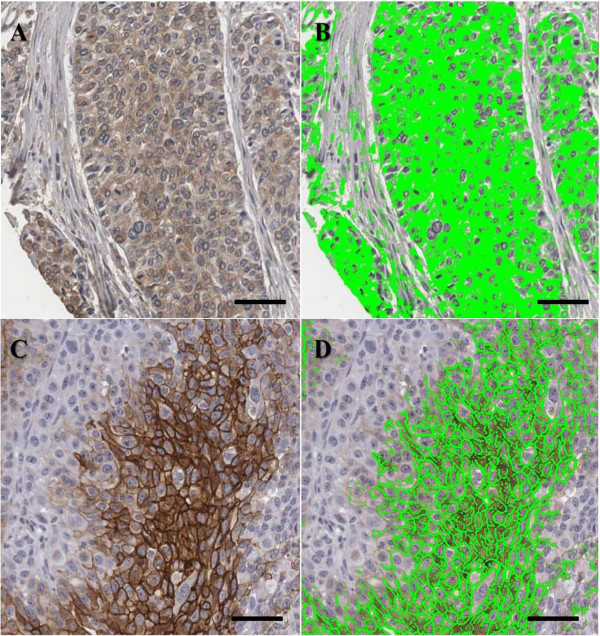
The study subjects were comprised of cervical intraepithelial neoplasia (CIN, n = 209), carcinoma in situ (CIS, n = 74), cervical cancer (n = 179), and matched nonadjacent normal tissues (n = 357). Immunohistochemistry (IHC) was performed to identify HIF-1α, c-Met, CA9, and GLUT1. IHC scoring was performed using automated digital image analysis and the association of hypoxic markers with prognostic outcome was evaluated.
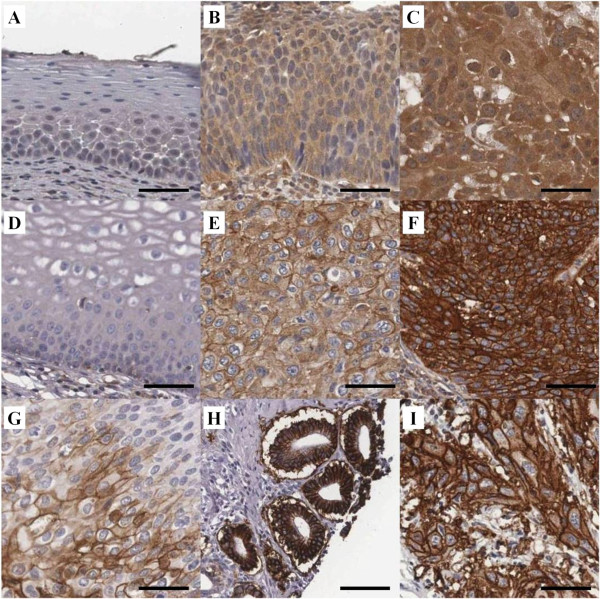
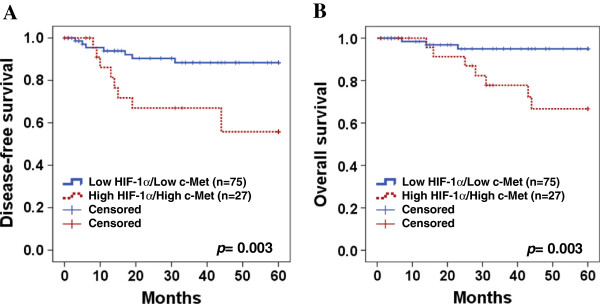
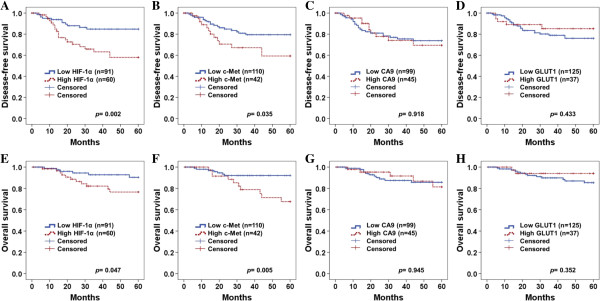
HIF-1α, c-Met, CA9 and GLUT1 expression were higher in cervical cancer than in CIN and normal cervix (all P < 0.001). Among these markers, expression of HIF-1α and c-Met were significantly different in FIGO stage (P < 0.001 and P = 0.019, respectively) and patients with lymph node metastasis (P < 0.001 and P = 0.010, respectively). HIF-1α expression was correlated with c-Met expression in cervical cancer (P < 0.001). High expression of HIF-1α and c-Met showed worse 5-year overall survival rate (P = 0.047 and P = 0.005, respectively) than low expression group, but CA9 and GLUT1 did not show significant survival difference. After adjusting the prognostic covariates, c-Met was found to be an independent risk factor (HR=3.27; 95% CI, 1.05-10.23, P = 0.041) for overall survival in cervical cancer.
We demonstrate that c-Met correlates with HIF-1α and is a poor prognostic factor in survival in cervical cancer.
肿瘤缺氧诱导的缺氧诱导因子-1α(HIF-1α)通过上调 c-Met、碳酸酐酶 9(CA9)和葡萄糖转运蛋白 1(GLUT1)来调节肿瘤细胞代谢和转移。缺氧和代谢标志物在宫颈癌中的预后意义尚不清楚。在这里,我们通过免疫组织化学检查了缺氧信号通路中的主要参与者,但确认了它们的相互作用,以及确定哪些蛋白质与结果相关。
研究对象包括宫颈上皮内瘤变(CIN,n=209)、原位癌(CIS,n=74)、宫颈癌(n=179)和匹配的非相邻正常组织(n=357)。进行免疫组织化学(IHC)以鉴定 HIF-1α、c-Met、CA9 和 GLUT1。使用自动数字图像分析进行 IHC 评分,并评估缺氧标志物与预后结果的关联。
HIF-1α、c-Met、CA9 和 GLUT1 的表达在宫颈癌中高于 CIN 和正常宫颈(均 P<0.001)。在这些标志物中,HIF-1α 和 c-Met 的表达在 FIGO 分期(P<0.001 和 P=0.019)和有淋巴结转移的患者中差异有统计学意义(P<0.001 和 P=0.010)。在宫颈癌中,HIF-1α 的表达与 c-Met 的表达相关(P<0.001)。HIF-1α 和 c-Met 高表达的 5 年总生存率(P=0.047 和 P=0.005)低于低表达组,但 CA9 和 GLUT1 未显示出显著的生存差异。调整预后协变量后,c-Met 被发现是宫颈癌总生存率的独立危险因素(HR=3.27;95%CI,1.05-10.23,P=0.041)。
我们证明 c-Met 与 HIF-1α 相关,并且是宫颈癌生存中的不良预后因素。