Department of Health Studies, University of Stavanger, Stavanger, Norway.
BMJ Open. 2013 Aug 7;3(8):e003506. doi: 10.1136/bmjopen-2013-003506.
Although international studies have documented that patients' transitions between care providers are associated with the risk of adverse events and uncoordinated care, research directed towards the quality and safety of transitional care between primary and secondary health and care services, especially for the elderly receiving care from multiple healthcare providers due to complex health problems, is lacking. This study investigates how different aspects of transitional care can explain the quality and safety of elderly healthcare services in Norway. The overall aim of the study was to explore different aspects of transitional care of the elderly, in different contexts and how they might explain the quality and safety of care.
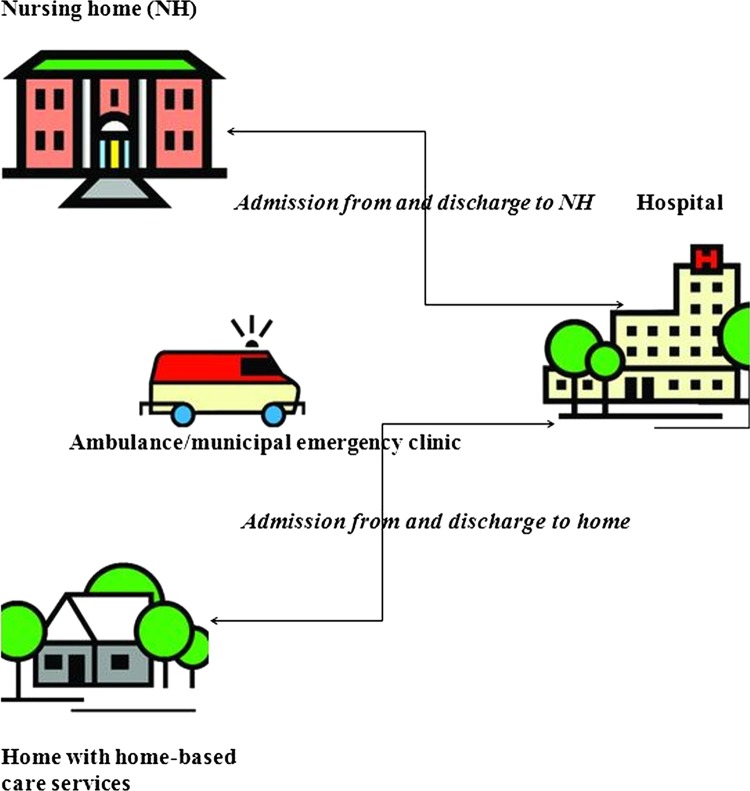
The study applies a case study design. Two cases are chosen: one city-based hospital and one rural hospital with associated nursing homes and home-based nursing services. Admission and discharge to/from hospital to/from nursing homes or home-based nursing services constitute the main focal areas of the study, including the patient, next-of-kin and the professional perspective. The qualitative methods employed include participant observation, individual interviews and document analysis. To ensure trustworthiness in the data analysis, we will apply analyst triangulation and member checks. A total impression of the data material will first be created in a systematic text condensation approach. Second, the qualitative data analysis will involve in-depth analyses of two specific themes: the risk perspective and the patient perspective in transitional care.
The study is approved by the Norwegian Regional Committees for Medical and Health Research Ethics. The study is based on informed written consent, and informants can withdraw from the study at any point in time. Interview and observation data material will be managed confidentially.
It will be disseminated at research conferences, in peer-reviewed journals and through public presentations to people outside the academic community.
尽管国际研究已经证明,患者在医疗保健提供者之间的过渡与不良事件和不协调的护理相关,但针对初级和二级卫生保健服务之间过渡护理的质量和安全性的研究,特别是针对因复杂健康问题而由多个医疗保健提供者提供护理的老年人的研究仍然缺乏。本研究调查了过渡护理的不同方面如何解释挪威老年人医疗保健服务的质量和安全性。该研究的总体目标是探讨老年人过渡护理的不同方面,以及它们在不同背景下如何解释护理的质量和安全性。
本研究采用案例研究设计。选择了两个案例:一个基于城市的医院和一个具有相关疗养院和家庭护理服务的农村医院。入院和出院到/从医院到/从疗养院或家庭护理服务是该研究的主要焦点领域,包括患者、亲属和专业人员的观点。所采用的定性方法包括参与观察、个人访谈和文件分析。为了确保数据分析的可信度,我们将应用分析师三角测量和成员检查。首先,将通过系统文本浓缩方法创建对数据材料的总体印象。其次,定性数据分析将涉及两个特定主题的深入分析:过渡护理中的风险视角和患者视角。
该研究得到了挪威地区医学和健康研究伦理委员会的批准。该研究基于知情书面同意,并且告知者可以在任何时候退出研究。访谈和观察数据材料将被保密管理。
将在研究会议、同行评议期刊以及向学术界以外的人士进行公开演讲中进行传播。