Takinami Yoshihiko, Yoshimatsu Shinya, Uchiumi Takaoki, Toyosaki-Maeda Tomoko, Morita Atsushi, Ishihara Takeshi, Yamane Shoji, Fukuda Isao, Okamoto Hiroyuki, Numata Yoshito, Fukui Naoshi
Shionogi Pharmaceutical Research Center, Shionogi and Co., Ltd., Osaka, Japan.
Biomark Insights. 2013 Jul 29;8:85-95. doi: 10.4137/BMI.S11966. Print 2013.
As osteoarthritis (OA) is a highly heterogeneous disease in terms of progression, establishment of prognostic biomarkers would be highly beneficial for treatment. The present study was performed to identify novel biomarkers capable of predicting the progression of knee OA.
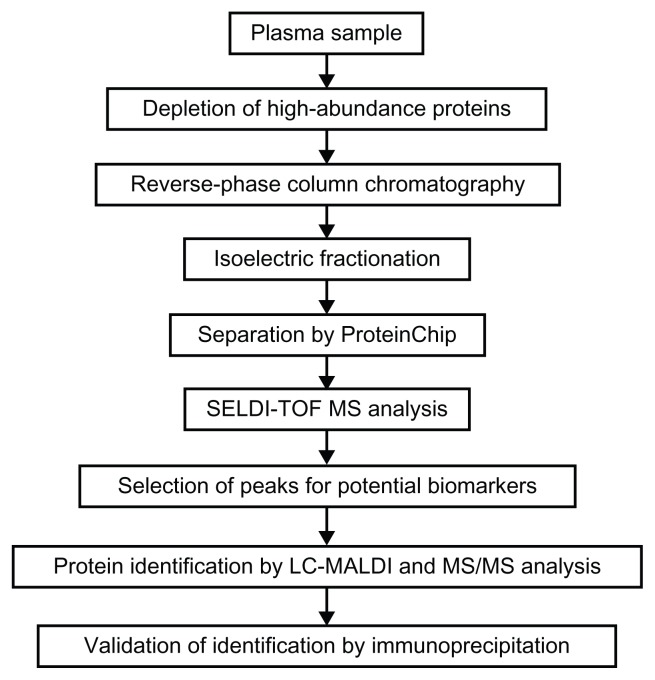
A total of 69 plasma samples (OA patients undergoing radiographic progression, n = 25; nonprogression, n = 33; healthy donors, n = 11) were analyzed by surface-enhanced laser desorption/ionization time-of-flight mass spectrometry (SELDI-TOF MS), and ion peaks of interest were identified by liquid chromatography and matrix-assisted laser desorption/ionization (MALDI)-TOF MS. The identities of these proteins were further validated by immunoprecipitation combined with SELDI-TOF MS analysis.
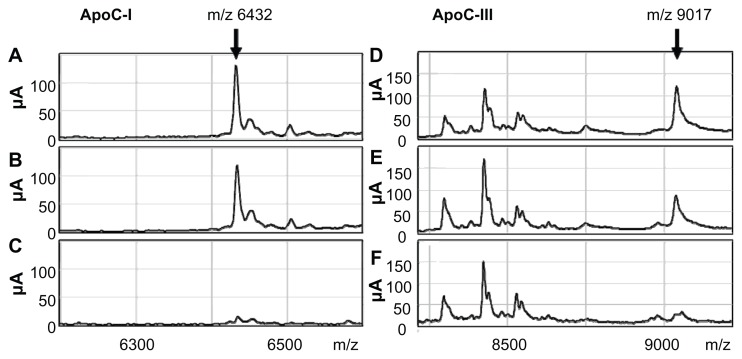
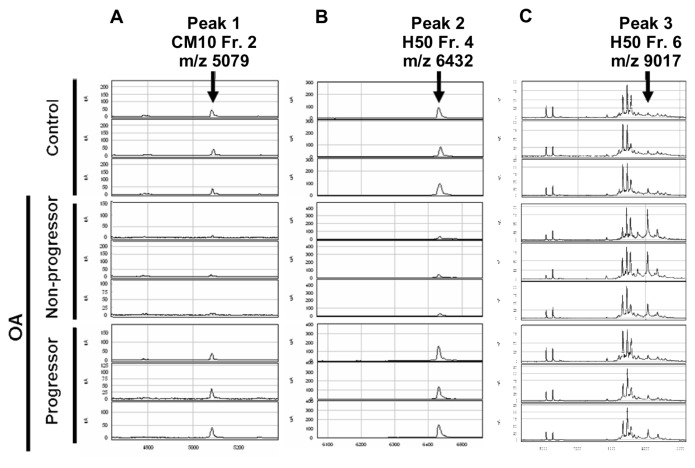
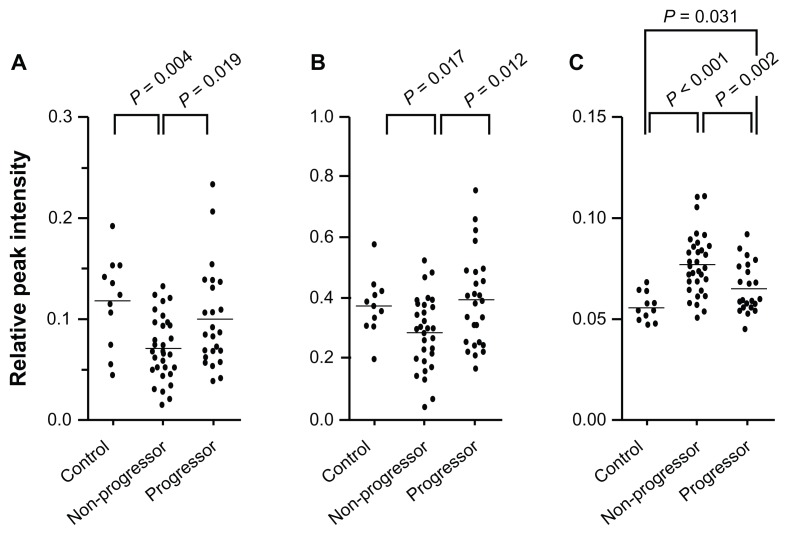
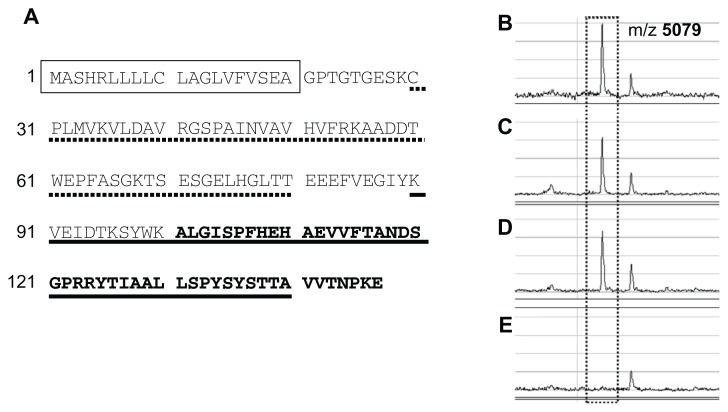
SELDI-TOF MS analysis indicated that the intensities of 3 ion peaks differed significantly between progressors and nonprogressors. Subsequent analyses indicated that these peaks corresponded to apolipoprotein C-I, C-III, and an N-terminal truncated form of transthyretin, respectively. The identities of these proteins were confirmed by the loss of ion peaks in SELDI-TOF MS spectra by immunoprecipitation using specific antibodies for the respective proteins.
Three potential biomarkers were identified whose serum levels differed significantly between OA progressors and nonprogressors. These biomarkers are expected to be prognostic biomarkers for knee OA and to facilitate the development of novel disease-modifying treatments for OA.
由于骨关节炎(OA)在疾病进展方面是一种高度异质性疾病,因此建立预后生物标志物将对治疗非常有益。本研究旨在识别能够预测膝关节OA进展的新型生物标志物。
通过表面增强激光解吸/电离飞行时间质谱(SELDI-TOF MS)分析了总共69份血浆样本(经历影像学进展的OA患者,n = 25;无进展患者,n = 33;健康供体,n = 11),并通过液相色谱和基质辅助激光解吸/电离(MALDI)-TOF MS鉴定了感兴趣的离子峰。通过免疫沉淀结合SELDI-TOF MS分析进一步验证了这些蛋白质的身份。
SELDI-TOF MS分析表明,进展者和无进展者之间3个离子峰的强度存在显著差异。随后的分析表明,这些峰分别对应载脂蛋白C-I、C-III和转甲状腺素蛋白的N端截短形式。通过使用针对各自蛋白质特异性抗体的免疫沉淀,SELDI-TOF MS光谱中离子峰的消失证实了这些蛋白质的身份。
鉴定出三种潜在的生物标志物,其血清水平在OA进展者和无进展者之间存在显著差异。这些生物标志物有望成为膝关节OA的预后生物标志物,并有助于开发针对OA的新型疾病修饰治疗方法。