Laboratório de Biologia Molecular e Filogeografia, Instituto de Biotecnologia Aplicada à Agropecuária, Universidade Federal de Viçosa, Viçosa (MG), Brazil.
PLoS One. 2013 Jul 31;8(7):e70039. doi: 10.1371/journal.pone.0070039. Print 2013.
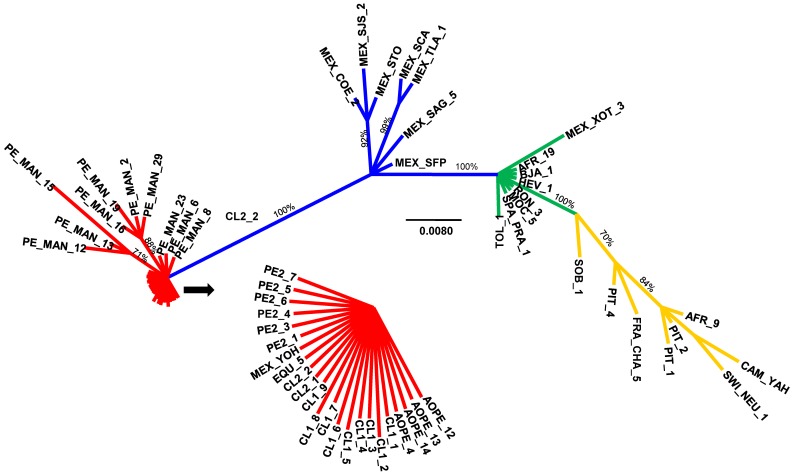
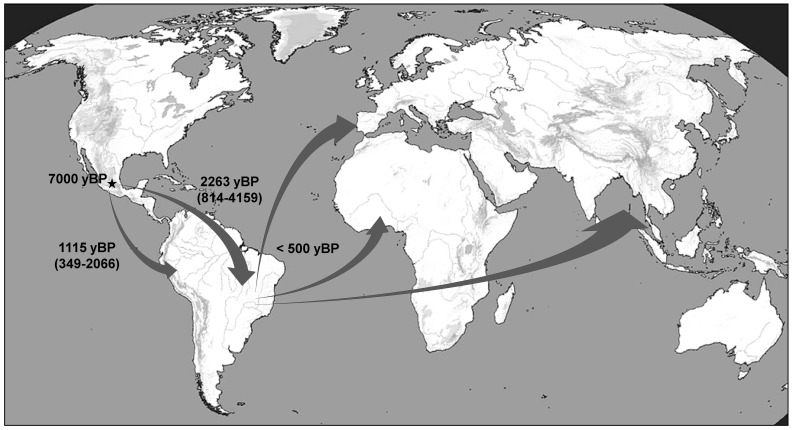
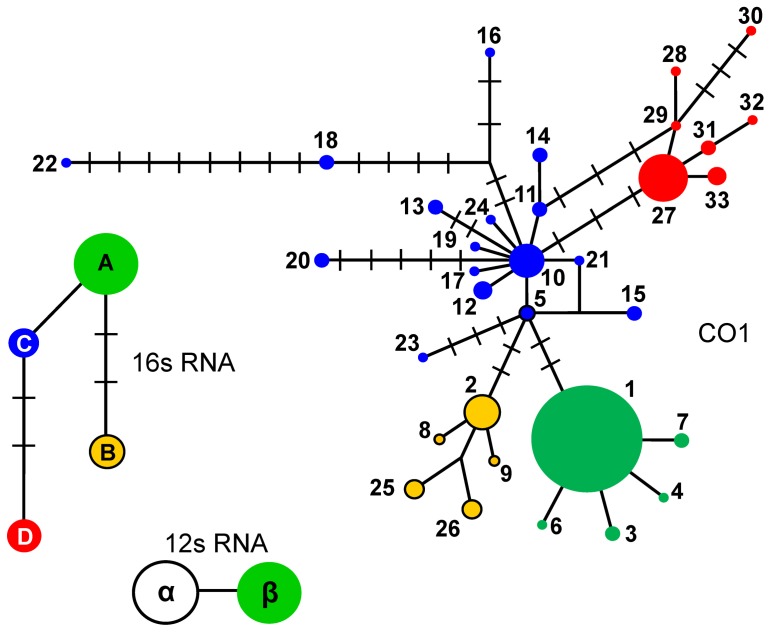
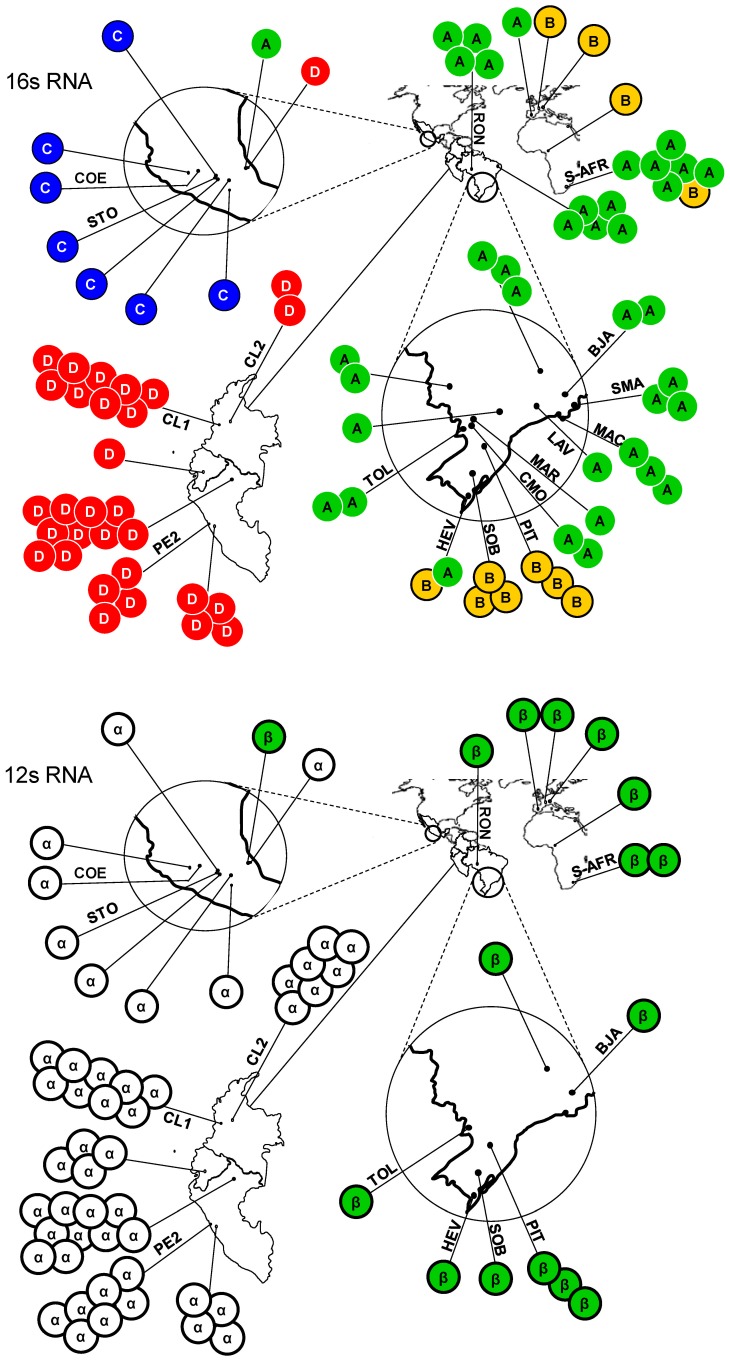
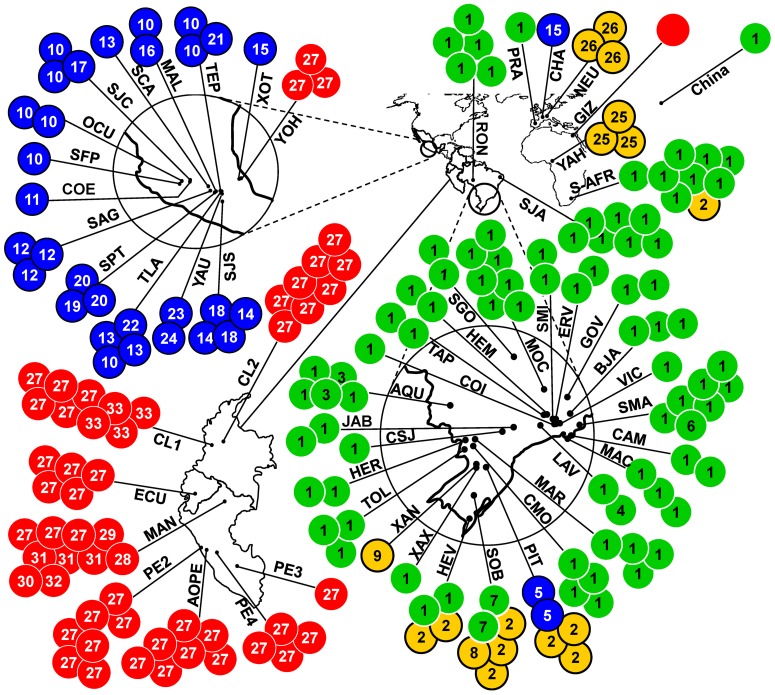
An unprecedented global transfer of agricultural resources followed the discovery of the New World; one consequence of this process was that staple food plants of Neotropical origin, such as the common bean (Phaseolus vulgaris), soon expanded their ranges overseas. Yet many pests and diseases were also transported. Acanthoscelides obtectus is a cosmopolitan seed predator associated with P. vulgaris. Codispersal within the host seed seems to be an important determinant of the ability of A. obtectus to expand its range over long distances. We examined the phylogeographic structure of A. obtectus by (a) sampling three mitochondrial gene sequences (12s rRNA, 16s rRNA, and the gene that encodes cytochrome c oxidase subunit I (COI)) throughout most of the species' range and (b) exploring its late evolutionary history. Our findings indicate a Mesoamerican origin for the current genealogical lineages of A. obtectus. Each of the two major centers of genetic diversity of P. vulgaris (the Andes and Mesoamerica) contains a highly differentiated lineage of the bean beetle. Brazil has two additional, closely related lineages, both of which predate the Andean lineage and have the Mesoamerican lineage as their ancestor. The cosmopolitan distribution of A. obtectus has resulted from recent expansions of the two Brazilian lineages. We present additional evidence for both pre-Columbian and post-Columbian range expansions as likely events that shaped the current distribution of A. obtectus worldwide.
新大陆的发现引发了前所未有的全球农业资源转移;这一过程的结果之一是,来自新热带地区的主食植物,如普通菜豆(Phaseolus vulgaris),很快就在海外扩大了它们的分布范围。然而,许多害虫和疾病也随之传播。Acanthoscelides obtectus 是一种与 P. vulgaris 相关的世界性种子捕食者。在宿主种子内的共同分散似乎是 A. obtectus 远距离扩展其分布范围的重要决定因素。我们通过以下方法研究了 A. obtectus 的系统地理结构:(a)在物种分布范围的大部分地区采样三个线粒体基因序列(12s rRNA、16s rRNA 和编码细胞色素 c 氧化酶亚基 I(COI)的基因);(b)探索其晚期进化历史。我们的研究结果表明,A. obtectus 当前的系统发育谱系起源于中美洲。P. vulgaris 的两个主要遗传多样性中心(安第斯山脉和中美洲)都包含 A. obtectus 的一个高度分化的谱系。巴西还有另外两个密切相关的谱系,它们都早于安第斯谱系,并且以中美洲谱系为祖先。A. obtectus 的世界性分布是由于两个巴西谱系的近期扩张造成的。我们提供了更多的证据,证明了前哥伦布时期和后哥伦布时期的扩张都是可能的事件,这些事件塑造了 A. obtectus 在全球的分布。