Department of Molecular Cell Biology, University of California Merced, Merced, California, United States of America.
PLoS One. 2013 Jul 25;8(7):e70210. doi: 10.1371/journal.pone.0070210. Print 2013.
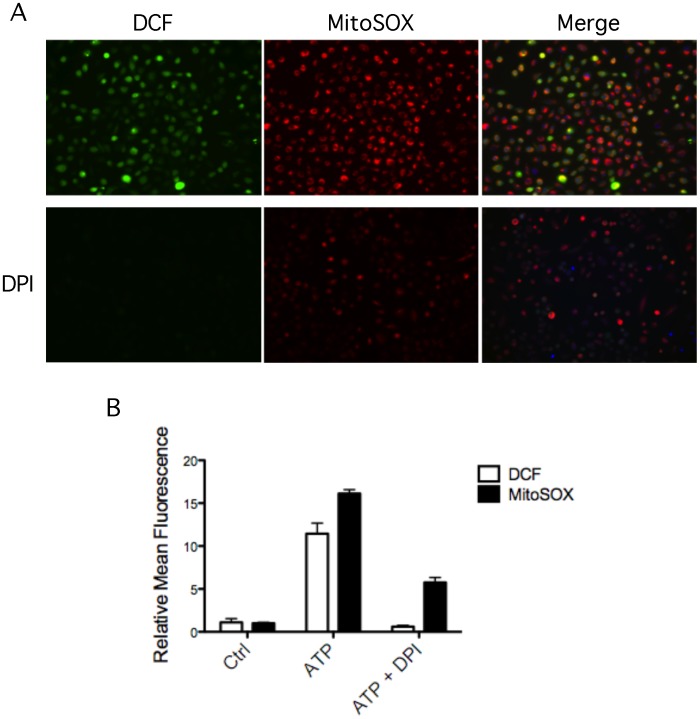
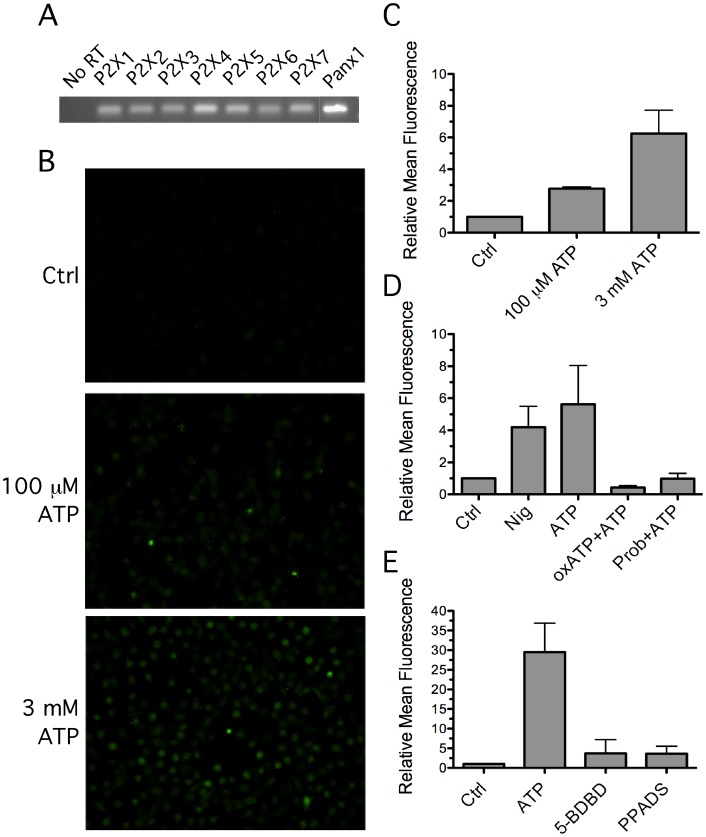
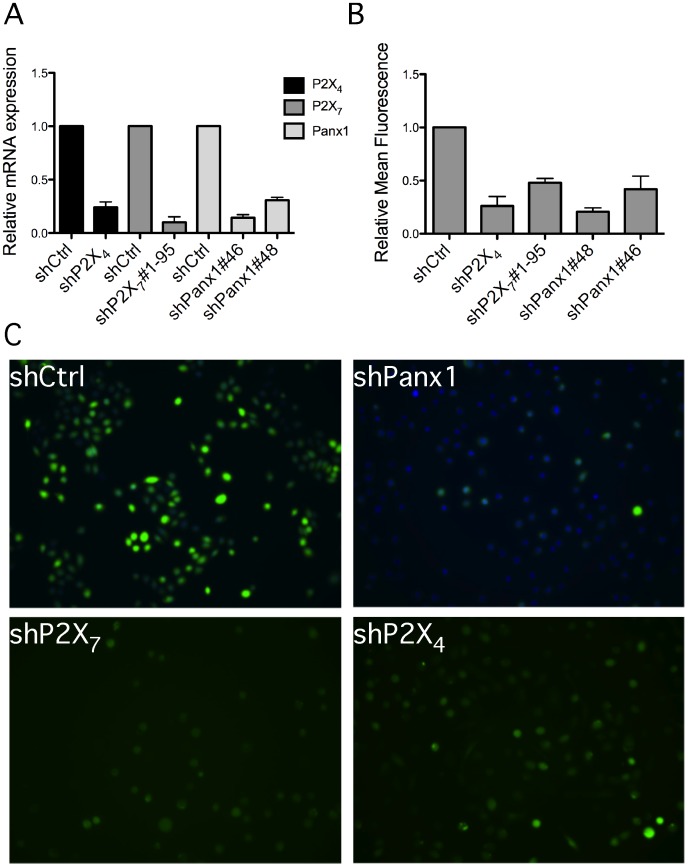
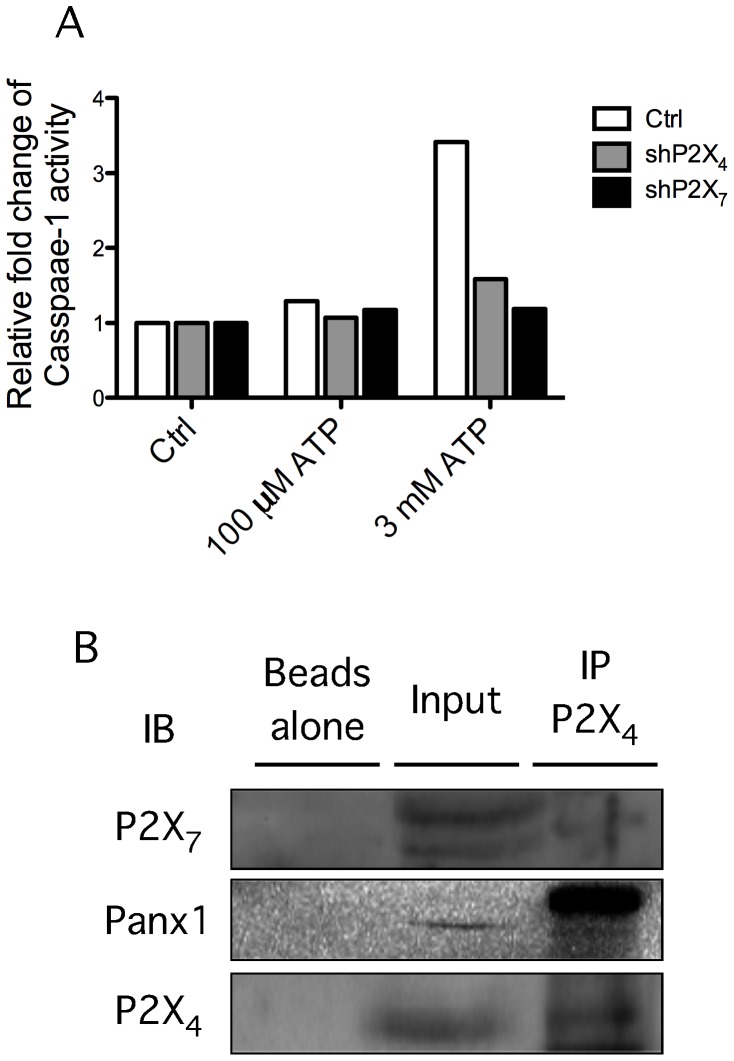
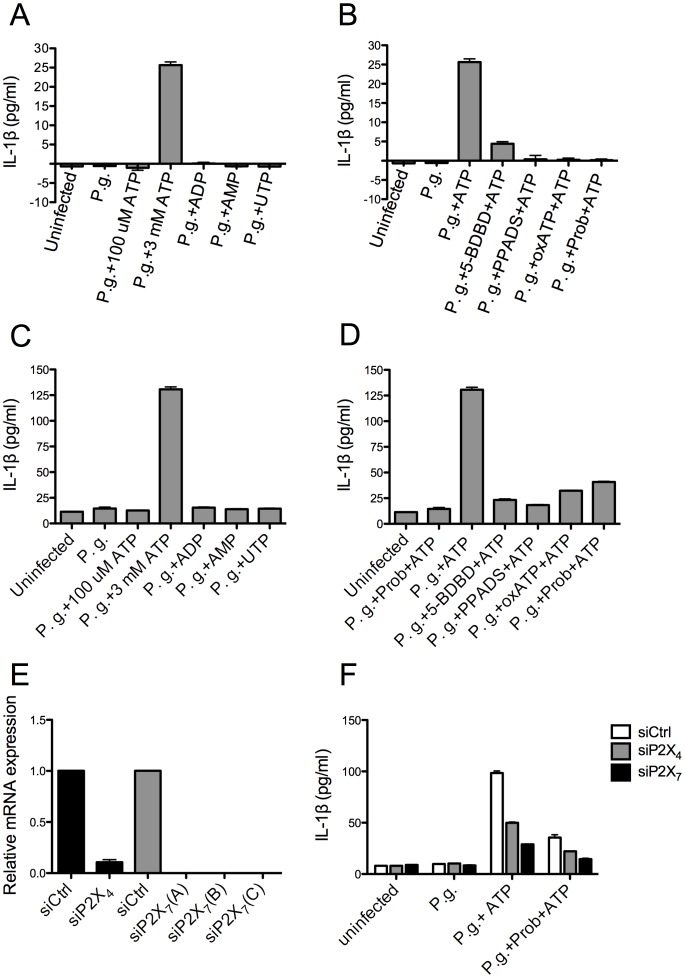
We have previously reported that Porphyromonas gingivalis infection of gingival epithelial cells (GEC) requires an exogenous danger signal such as ATP to activate an inflammasome and caspase-1, thereby inducing secretion of interleukin (IL)-1β. Stimulation with extracellular ATP also stimulates production of reactive oxygen species (ROS) in GEC. However, the mechanism by which ROS is generated in response to ATP, and the role that different purinergic receptors may play in inflammasome activation, is still unclear. In this study, we revealed that the purinergic receptor P2X(4) is assembled with the receptor P2X(7) and its associated pore, pannexin-1. ATP induces ROS production through a complex consisting of the P2X(4), P2X(7), and pannexin-1. P2X(7)-mediated ROS production can activate the NLRP3 inflammasome and caspase-1. Furthermore, separate depletion or inhibition of P2X(4), P2X(7), or pannexin-1 complex blocks IL-1β secretion in P. gingivalis-infected GEC following ATP treatment. However, activation via P2X(4) alone induces ROS generation but not inflammasome activation. These results suggest that ROS is generated through stimulation of a P2X(4)/P2X(7)/pannexin-1 complex, and reveal an unexpected role for P2X(4), which acts as a positive regulator of inflammasome activation during microbial infection.
我们之前曾报道过,牙龈卟啉单胞菌(Porphyromonas gingivalis)感染牙龈上皮细胞(gingival epithelial cells,GEC)需要外源性危险信号,如 ATP,来激活炎症小体和半胱天冬酶-1,从而诱导白细胞介素(interleukin,IL)-1β的分泌。细胞外 ATP 的刺激也会刺激 GEC 中活性氧(reactive oxygen species,ROS)的产生。然而,ROS 如何对 ATP 作出反应,以及不同嘌呤能受体在炎症小体激活中可能发挥的作用,仍不清楚。在这项研究中,我们揭示了嘌呤能受体 P2X(4)与受体 P2X(7)及其相关孔道连接蛋白-1(pannexin-1)组装在一起。ATP 通过包含 P2X(4)、P2X(7)和连接蛋白-1 的复合物诱导 ROS 的产生。P2X(7)介导的 ROS 产生可以激活 NLRP3 炎症小体和半胱天冬酶-1。此外,在 P. gingivalis 感染的 GEC 中,用 ATP 处理后,单独耗尽或抑制 P2X(4)、P2X(7)或连接蛋白-1 复合物可阻断 IL-1β的分泌。然而,仅通过 P2X(4)的激活诱导 ROS 的产生,但不诱导炎症小体的激活。这些结果表明,ROS 是通过刺激 P2X(4)/P2X(7)/连接蛋白-1 复合物产生的,并揭示了 P2X(4)的一个意想不到的作用,它在微生物感染期间作为炎症小体激活的正调节剂发挥作用。