• 文献检索
  • 文档翻译
  • 深度研究
  • 学术资讯
  • Suppr Zotero 插件Zotero 插件
  • 邀请有礼
  • 套餐&价格
  • 历史记录
应用&插件
Suppr Zotero 插件Zotero 插件浏览器插件Mac 客户端Windows 客户端微信小程序
定价
高级版会员购买积分包购买API积分包
服务
文献检索文档翻译深度研究API 文档MCP 服务
关于我们
关于 Suppr公司介绍联系我们用户协议隐私条款
关注我们

Suppr 超能文献

核心技术专利:CN118964589B侵权必究
粤ICP备2023148730 号-1Suppr @ 2026

文献检索

告别复杂PubMed语法,用中文像聊天一样搜索,搜遍4000万医学文献。AI智能推荐,让科研检索更轻松。

立即免费搜索

文件翻译

保留排版,准确专业,支持PDF/Word/PPT等文件格式,支持 12+语言互译。

免费翻译文档

深度研究

AI帮你快速写综述,25分钟生成高质量综述,智能提取关键信息,辅助科研写作。

立即免费体验

印度东北部阿萨姆邦迪马哈索县比亚特部落的动物治疗用途的本土知识。

Indigenous knowledge of zootherapeutic use among the Biate tribe of Dima Hasao District, Assam, Northeastern India.

机构信息

North Cachar Hills Community Resource Management Society-NCHCRMS-NERCoRMP, Sarkari Bagan, Haflong, Dima Hasao, India.

出版信息

J Ethnobiol Ethnomed. 2013 Aug 12;9:56. doi: 10.1186/1746-4269-9-56.

DOI:10.1186/1746-4269-9-56
PMID:23938109
原文链接:https://pmc.ncbi.nlm.nih.gov/articles/PMC3751812/
Abstract

BACKGROUND

The present study addresses the use of zootherapy in the traditional healthcare system of the Biate tribe of Dima Hasao district, Assam, India. It sought to identify the different species used for zootherapeutic use with the detailed methods of usages to create awareness and contribute to the conservation and sustainable utilization of the resources.

METHOD

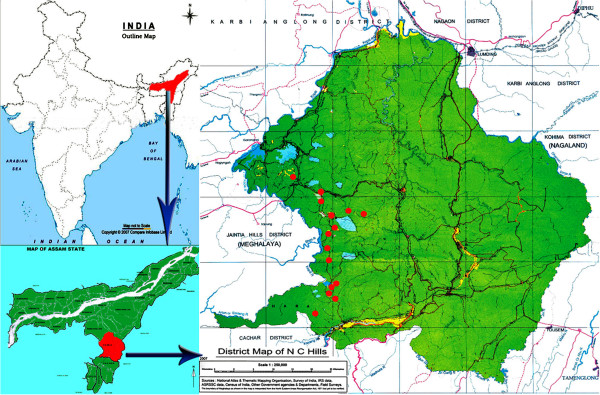
15 Biate villages within the district of Dima Hasao were surveyed through semi-structured questionnaires and informal interviews. Detailed information on the uses of each animal was recorded. Species were identified using standard literature. Fidelity level (FL) was calculated to demonstrate the percentage of respondents claiming the use of a certain animal for the same major purposes.

RESULT

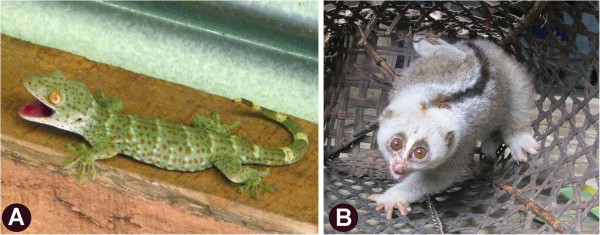
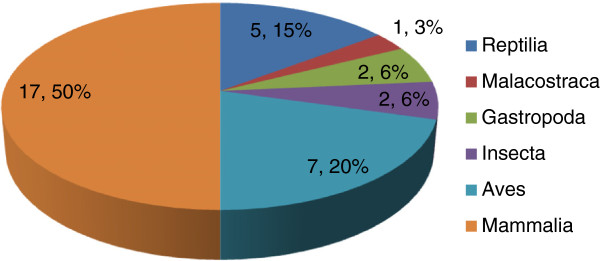
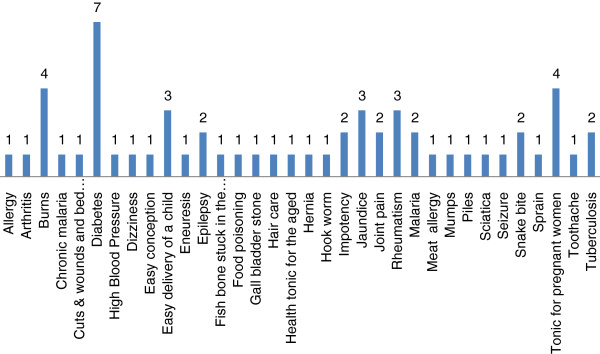
The study documents 34 species for the treatment of about 34 different ailments. The largest number of species reported was mammals with17 species. Maximum number of species has been reported for the treatment of diabetes and its high fidelity levels warrants in-depth studies to establish its pharmacological activity. The usages documented herein are unique to the Biate tribe. Very often, these animals are hunted and sold openly at the local markets in the lure of quick money. A 300 gm live Gekko gecko may fetch a sum of 2,50,000 Indian Rupees (INR), and smoked meat of Hoolock hoolock cost approximately 250-300 INR per kg. Animals are also hunted for its hide. The unrestricted hunting of species like Capricornis sumatraensis has almost wiped out the population within the district. Some species are also reared as pets while some are used for display as a sign of expertise in hunting. The present study has documented the usage of at least 15 animals listed in the IUCN Red List.

CONCLUSION

The study illustrates the in-depth knowledge of the Biate tribe on zootherapy. Systematic investigation to identify the active ingredient may lead to the development of new drugs, which would prompt protection of these valuable resources.

摘要

背景

本研究探讨了印度阿萨姆邦迪马哈索县比亚特部落传统医疗体系中的动物疗法。本研究旨在确定用于动物疗法的不同物种,并详细记录其使用方法,以提高人们的认识,并为保护和可持续利用这些资源做出贡献。

方法

通过半结构式问卷和非正式访谈,对迪马哈索区的 15 个比亚特村庄进行了调查。详细记录了每种动物的使用情况。利用标准文献对物种进行了鉴定。计算保真度水平(FL),以展示声称使用某种动物治疗相同主要疾病的受访者的百分比。

结果

本研究记录了 34 种物种,用于治疗约 34 种不同的疾病。报告的物种数量最多的是哺乳动物,有 17 种。报告的物种数量最多的是用于治疗糖尿病,其高保真度水平表明需要进行深入研究以确定其药理活性。本文记录的用途是比亚特部落特有的。这些动物经常被猎杀并在当地市场上公开出售,以获取快速的金钱收益。一只 300 克活的壁虎可能卖到 25 万印度卢比(INR),而烟熏的大狐猴肉每公斤约 250-300 INR。动物的皮毛也被用于捕猎。在该地区,无限制地捕猎像苏门答腊野山羊这样的物种几乎导致其数量减少。一些物种也被饲养作为宠物,而另一些则被用于展示狩猎技能。本研究记录了至少 15 种被列入 IUCN 红色名录的物种的使用情况。

结论

本研究说明了比亚特部落对动物疗法的深入了解。系统的调查以确定有效成分可能会导致新药物的开发,从而促使对这些宝贵资源的保护。
https://cdn.ncbi.nlm.nih.gov/pmc/blobs/7f06/3751812/61ff95d03dd3/1746-4269-9-56-7.jpg
https://cdn.ncbi.nlm.nih.gov/pmc/blobs/7f06/3751812/d7ee3c4c2792/1746-4269-9-56-1.jpg
https://cdn.ncbi.nlm.nih.gov/pmc/blobs/7f06/3751812/9b19a721005e/1746-4269-9-56-2.jpg
https://cdn.ncbi.nlm.nih.gov/pmc/blobs/7f06/3751812/c1453047e756/1746-4269-9-56-3.jpg
https://cdn.ncbi.nlm.nih.gov/pmc/blobs/7f06/3751812/9218f31d26a5/1746-4269-9-56-4.jpg
https://cdn.ncbi.nlm.nih.gov/pmc/blobs/7f06/3751812/d6c0a57950f0/1746-4269-9-56-5.jpg
https://cdn.ncbi.nlm.nih.gov/pmc/blobs/7f06/3751812/e715eaec618d/1746-4269-9-56-6.jpg
https://cdn.ncbi.nlm.nih.gov/pmc/blobs/7f06/3751812/61ff95d03dd3/1746-4269-9-56-7.jpg
https://cdn.ncbi.nlm.nih.gov/pmc/blobs/7f06/3751812/d7ee3c4c2792/1746-4269-9-56-1.jpg
https://cdn.ncbi.nlm.nih.gov/pmc/blobs/7f06/3751812/9b19a721005e/1746-4269-9-56-2.jpg
https://cdn.ncbi.nlm.nih.gov/pmc/blobs/7f06/3751812/c1453047e756/1746-4269-9-56-3.jpg
https://cdn.ncbi.nlm.nih.gov/pmc/blobs/7f06/3751812/9218f31d26a5/1746-4269-9-56-4.jpg
https://cdn.ncbi.nlm.nih.gov/pmc/blobs/7f06/3751812/d6c0a57950f0/1746-4269-9-56-5.jpg
https://cdn.ncbi.nlm.nih.gov/pmc/blobs/7f06/3751812/e715eaec618d/1746-4269-9-56-6.jpg
https://cdn.ncbi.nlm.nih.gov/pmc/blobs/7f06/3751812/61ff95d03dd3/1746-4269-9-56-7.jpg

相似文献

1
Indigenous knowledge of zootherapeutic use among the Biate tribe of Dima Hasao District, Assam, Northeastern India.印度东北部阿萨姆邦迪马哈索县比亚特部落的动物治疗用途的本土知识。
J Ethnobiol Ethnomed. 2013 Aug 12;9:56. doi: 10.1186/1746-4269-9-56.
2
Ethnozoological study of animals based medicine used by traditional healers and indigenous inhabitants in the adjoining areas of Gibbon Wildlife Sanctuary, Assam, India.印度阿萨姆邦基邦野生生物保护区毗邻地区传统治疗师和土着居民所用动物源药物的民族动物学研究。
J Ethnobiol Ethnomed. 2017 Jun 30;13(1):39. doi: 10.1186/s13002-017-0167-6.
3
A study on use of animals as traditional medicine by Sukuma Tribe of Busega District in North-western Tanzania.坦桑尼亚西北部布塞加区苏库马部落将动物用作传统药物的研究。
J Ethnobiol Ethnomed. 2015 May 7;11:38. doi: 10.1186/s13002-015-0001-y.
4
Traditional zootherapeutic studies in India: a review.印度传统动物疗法研究综述
J Ethnobiol Ethnomed. 2008 Jul 18;4:17. doi: 10.1186/1746-4269-4-17.
5
Zootherapeutic uses of wildmeat and associated products in the semiarid region of Brazil: general aspects and challenges for conservation.巴西半干旱地区野生动物肉类及其相关产品的动物治疗用途:一般方面和保护挑战。
J Ethnobiol Ethnomed. 2018 Sep 17;14(1):60. doi: 10.1186/s13002-018-0259-y.
6
Documentation and quantitative analysis of local ethnozoological knowledge among traditional healers of Theni district, Tamil Nadu, India.印度泰米尔纳德邦特尼地区传统治疗师的当地民族动物学知识的记录与定量分析。
J Ethnopharmacol. 2014 May 28;154(1):116-30. doi: 10.1016/j.jep.2014.03.028. Epub 2014 Mar 28.
7
Rich yet undocumented ethnozoological practices of socio-culturally diverse indigenous communities of Sikkim Himalaya, India.印度锡金喜马拉雅地区社会文化多样的原住民社区丰富但鲜为人知的民族动物学实践。
J Ethnopharmacol. 2020 Mar 1;249:112386. doi: 10.1016/j.jep.2019.112386. Epub 2019 Nov 12.
8
Traditional knowledge on zootherapeutic uses by the Saharia tribe of Rajasthan, India.印度拉贾斯坦邦萨哈里亚部落关于动物疗法用途的传统知识。
J Ethnobiol Ethnomed. 2007 Jun 5;3:25. doi: 10.1186/1746-4269-3-25.
9
Ethnozoological study of animals used by traditional healers in Silent Valley of Kerala, India.印度喀拉拉邦寂静谷传统医生所用动物的民族动物学研究。
J Ethnopharmacol. 2015 Mar 13;162:296-305. doi: 10.1016/j.jep.2014.12.055. Epub 2015 Jan 5.
10
Indigenous knowledge of medicinal plants used by the Reang tribe of Tripura state of India.印度特里普拉邦雷昂部落使用药用植物的本土知识。
J Ethnopharmacol. 2014 Feb 27;152(1):135-41. doi: 10.1016/j.jep.2013.12.037. Epub 2014 Jan 7.

引用本文的文献

1
Healing from the wild: an ethnozoological exploration of animal-based medicine in Jhargram, West Bengal, India.来自荒野的治愈:对印度西孟加拉邦贾尔贡基于动物的医学的民族动物学探索。
J Ethnobiol Ethnomed. 2025 May 14;21(1):32. doi: 10.1186/s13002-025-00760-w.
2
What is the state of the art on traditional medicine interventions for zoonotic diseases in the Indian subcontinent? A scoping review of the peer-reviewed evidence base.针对印度次大陆人畜共患病的传统医学干预措施的最新研究进展如何?对同行评审证据基础的范围综述。
BMC Complement Med Ther. 2024 Jun 29;24(1):249. doi: 10.1186/s12906-024-04553-8.
3
Ethnopharmacological uses of fauna among the people of central Punjab, Pakistan.

本文引用的文献

1
The trade in medicinal animals in northeastern Brazil.巴西东北部的药用动物贸易。
Evid Based Complement Alternat Med. 2012;2012:126938. doi: 10.1155/2012/126938. Epub 2011 Dec 14.
2
Vertebrates used for medicinal purposes by members of the Nyishi and Galo tribes in Arunachal Pradesh (North-East India).阿萨姆邦(印度东北部)的 Nyishi 和 Galo 部落成员用于药用的脊椎动物。
J Ethnobiol Ethnomed. 2011 Mar 31;7:13. doi: 10.1186/1746-4269-7-13.
3
The faunal drugstore: animal-based remedies used in traditional medicines in Latin America.
巴基斯坦旁遮普省中部人群对动物的民族药理学应用。
Front Vet Sci. 2024 Apr 12;11:1351693. doi: 10.3389/fvets.2024.1351693. eCollection 2024.
4
An Overview of (Nematoda: Angiostrongylidae), an Emerging Cause of Human Angiostrongylosis on the Indian Subcontinent.印度次大陆上人类管圆线虫病的一种新兴病因——(线虫纲:管圆线虫科)概述
Pathogens. 2023 Jun 20;12(6):851. doi: 10.3390/pathogens12060851.
5
Vernacular Taxonomy, Cultural and Ethnopharmacological Applications of Avian and Mammalian Species in the Vicinity of Ayubia National Park, Himalayan Region.喜马拉雅地区阿尤比阿国家公园附近鸟类和哺乳动物物种的乡土分类法、文化及民族药理学应用
Biology (Basel). 2023 Apr 17;12(4):609. doi: 10.3390/biology12040609.
6
Traditional Uses of Animals in the Himalayan Region of Azad Jammu and Kashmir.在自由克什米尔喜马拉雅地区动物的传统用途。
Front Pharmacol. 2022 Jun 29;13:807831. doi: 10.3389/fphar.2022.807831. eCollection 2022.
7
Zootherapeutic uses of animals excreta: the case of elephant dung and urine use in Sayaboury province, Laos.动物粪便的动物治疗用途:以老挝沙耶武里省为例,探讨大象粪便和尿液的使用。
J Ethnobiol Ethnomed. 2021 Oct 28;17(1):62. doi: 10.1186/s13002-021-00484-7.
8
Traditional Usage of Wild Fauna among the Local Inhabitants of Ladakh, Trans-Himalayan Region.跨喜马拉雅地区拉达克当地居民对野生动物的传统利用方式。
Animals (Basel). 2020 Dec 7;10(12):2317. doi: 10.3390/ani10122317.
9
Traditional medicinal animal use by Xhosa and Sotho communities in the Western Cape Province, South Africa.南非西开普省的科萨族和索托族社区的传统药用动物使用情况。
J Ethnobiol Ethnomed. 2019 Jul 9;15(1):34. doi: 10.1186/s13002-019-0311-6.
10
Ethnomedicinal applications of animal species by the local communities of Punjab, Pakistan.巴基斯坦旁遮普地区的当地社区对动物物种的民族医学应用。
J Ethnobiol Ethnomed. 2018 Aug 15;14(1):55. doi: 10.1186/s13002-018-0253-4.
动物药铺:拉丁美洲传统医药中使用的基于动物的疗法。
J Ethnobiol Ethnomed. 2011 Mar 7;7:9. doi: 10.1186/1746-4269-7-9.
4
Man-animal relationships in Central Nepal.尼泊尔中部的人与动物关系。
J Ethnobiol Ethnomed. 2010 Nov 4;6:31. doi: 10.1186/1746-4269-6-31.
5
Animal-based remedies as complementary medicines in the semi-arid region of northeastern Brazil.动物源疗法作为巴西东北部半干旱地区的补充药物。
Evid Based Complement Alternat Med. 2011;2011:179876. doi: 10.1093/ecam/nep134. Epub 2011 Feb 13.
6
Traditional zootherapeutic studies in India: a review.印度传统动物疗法研究综述
J Ethnobiol Ethnomed. 2008 Jul 18;4:17. doi: 10.1186/1746-4269-4-17.
7
Traditional knowledge on zootherapeutic uses by the Saharia tribe of Rajasthan, India.印度拉贾斯坦邦萨哈里亚部落关于动物疗法用途的传统知识。
J Ethnobiol Ethnomed. 2007 Jun 5;3:25. doi: 10.1186/1746-4269-3-25.
8
Traditional medicinal plant knowledge and use by local healers in Sekoru District, Jimma Zone, Southwestern Ethiopia.埃塞俄比亚西南部吉马地区塞科鲁区当地治疗师对传统药用植物的认知与应用
J Ethnobiol Ethnomed. 2007 Jun 4;3:24. doi: 10.1186/1746-4269-3-24.
9
Biodiversity, traditional medicine and public health: where do they meet?生物多样性、传统医学与公共卫生:它们的交集在哪里?
J Ethnobiol Ethnomed. 2007 Mar 21;3:14. doi: 10.1186/1746-4269-3-14.
10
Animals and their products utilized as medicines by the inhabitants surrounding the Ranthambhore National Park, India.印度兰塔姆伯尔国家公园周边居民用作药物的动物及其产品。
J Ethnobiol Ethnomed. 2006 Nov 3;2:46. doi: 10.1186/1746-4269-2-46.