Department of Influenza, State Key Laboratory for Molecular Virology and Genetic Engineering, Chinese National Influenza Center, National Institute for Viral Disease Control and Prevention, Chinese Center for Disease Control and Prevention, Beijing, China.
Infectious Diseases Pathology Branch, the Division of High-Consequence Pathogens and Pathology, the Centers for Disease Control and Prevention, Atlanta, Georgia.
Am J Pathol. 2013 Oct;183(4):1258-1268. doi: 10.1016/j.ajpath.2013.06.023. Epub 2013 Aug 11.
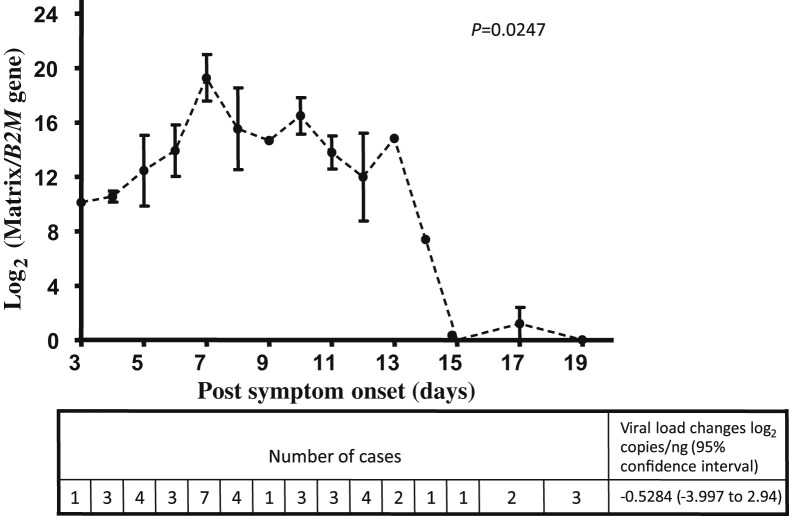
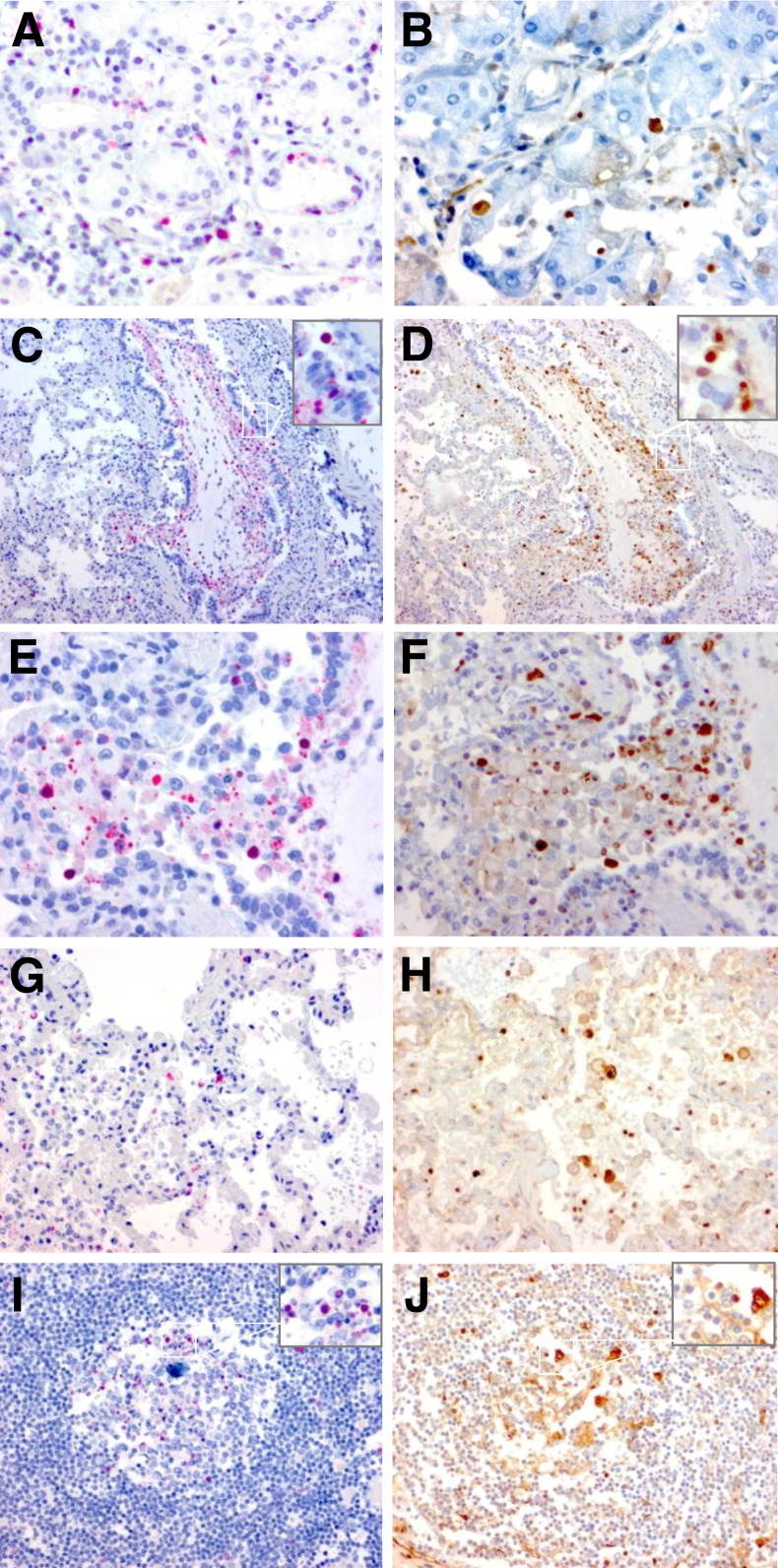
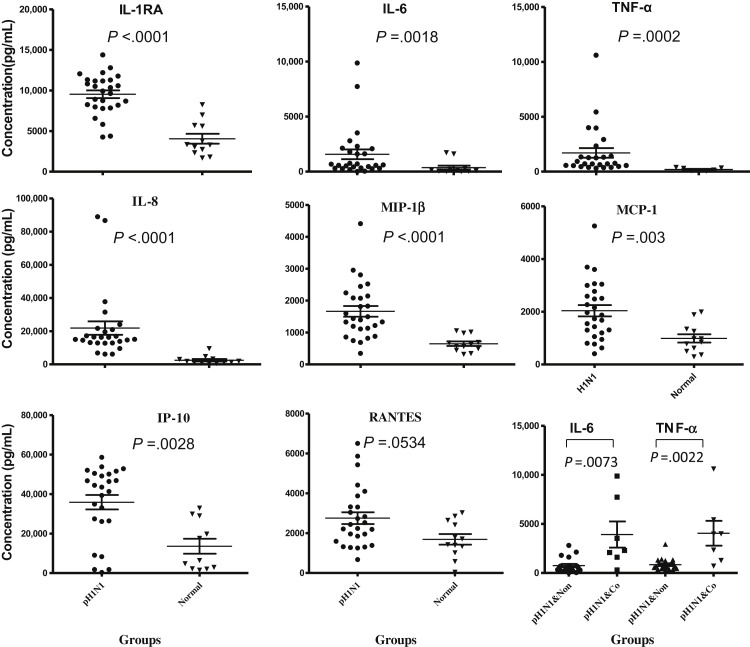
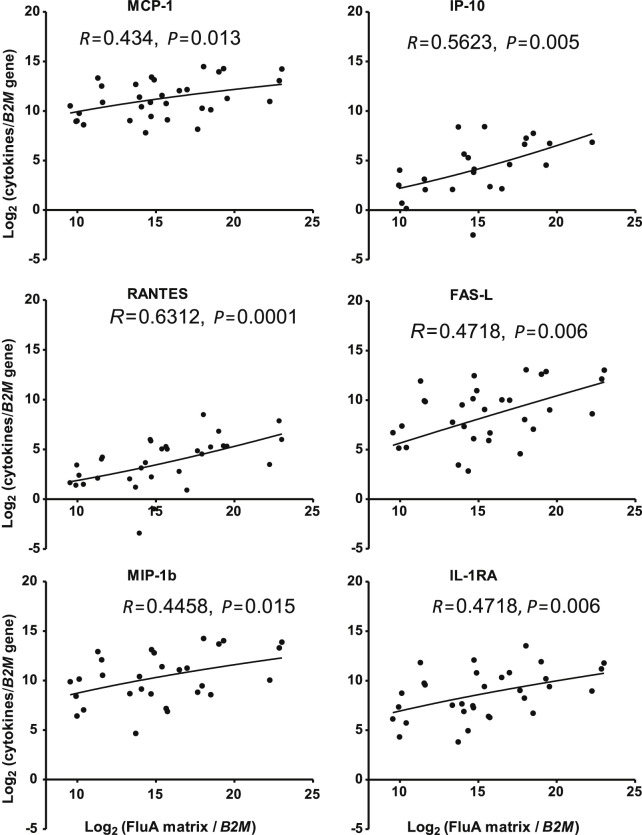
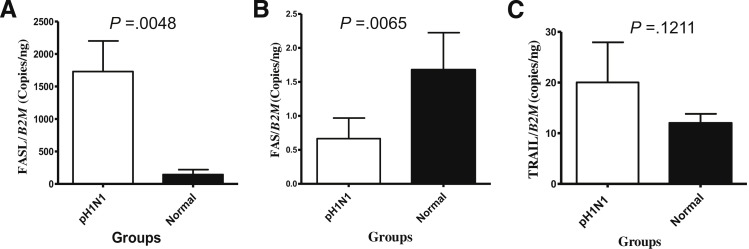
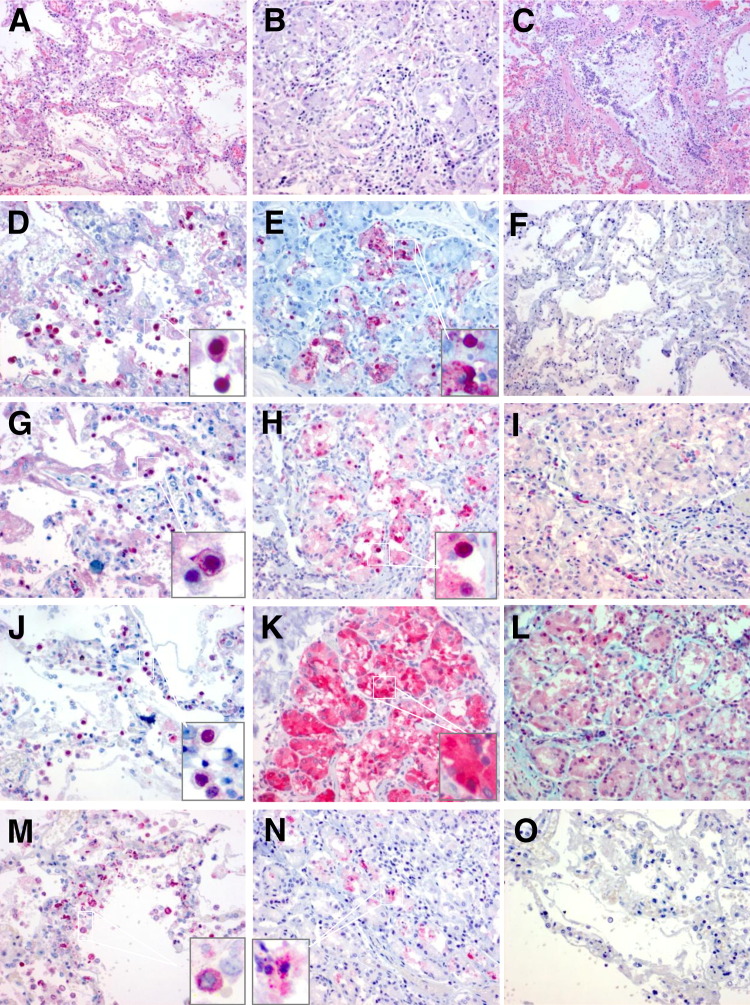
Pathological studies on fatal cases caused by 2009 pandemic influenza H1N1 virus (2009 pH1N1) reported extensive diffuse alveolar damage and virus infection predominantly in the lung parenchyma. However, the host immune response after severe 2009 pH1N1 infection is poorly understood. Herein, we investigated viral load, the immune response, and apoptosis in lung tissues from 50 fatal cases with 2009 pH1N1 virus infection. The results suggested that 7 of the 27 cytokines/chemokines showed remarkably high expression, including IL-1 receptor antagonist protein, IL-6, tumor necrosis factor-α, IL-8, monocyte chemoattractant protein-1, macrophage inflammatory protein 1-β, and interferon-inducible protein-10 in lung tissues of 2009 pH1N1 fatal cases. Viral load, which showed the highest level on day 7 of illness onset and persisted until day 17 of illness, was positively correlated with mRNA levels of IL-1 receptor antagonist protein, monocyte chemoattractant protein-1, macrophage inflammatory protein 1-β, interferon-inducible protein-10, and regulated on activation normal T-cell expressed and secreted. Apoptosis was evident in lung tissues stained by the TUNEL assay. Decreased Fas and elevated FasL mRNA levels were present in lung tissues, and cleaved caspase-3 was frequently seen in pneumocytes, submucosal glands, and lymphoid tissues. The pathogenesis of the 2009 pH1N1 virus infection is associated with viral replication and production of proinflammatory mediators. FasL and caspase-3 are involved in the pathway of 2009 pH1N1 virus-induced apoptosis in lung tissues, and the disequilibrium between the Fas and FasL level in lung tissues could contribute to delayed clearance of the virus and subsequent pathological damages.
对 2009 年大流行流感 H1N1 病毒(2009 pH1N1)引起的致死病例进行的病理学研究报告称,弥漫性肺泡损伤广泛存在,病毒感染主要发生在肺实质中。然而,人们对严重 2009 pH1N1 感染后的宿主免疫反应知之甚少。在此,我们研究了 50 例 2009 pH1N1 病毒感染致死病例的肺组织中的病毒载量、免疫反应和细胞凋亡。结果表明,在 2009 pH1N1 致死病例的肺组织中,有 7 种细胞因子/趋化因子的表达水平显著升高,包括白细胞介素-1 受体拮抗剂蛋白、白细胞介素-6、肿瘤坏死因子-α、白细胞介素-8、单核细胞趋化蛋白-1、巨噬细胞炎性蛋白 1-β和干扰素诱导蛋白-10。病毒载量在发病第 7 天达到最高水平,并持续至发病第 17 天,与白细胞介素-1 受体拮抗剂蛋白、单核细胞趋化蛋白-1、巨噬细胞炎性蛋白 1-β、干扰素诱导蛋白-10和调节激活正常 T 细胞表达和分泌的 mRNA 水平呈正相关。TUNEL 染色显示肺组织中存在明显的细胞凋亡。肺组织中 Fas 降低,FasL 水平升高,肺泡上皮细胞、黏膜下腺和淋巴组织中经常可见裂解的 caspase-3。2009 pH1N1 病毒感染的发病机制与病毒复制和促炎介质的产生有关。FasL 和 caspase-3 参与了肺组织中 2009 pH1N1 病毒诱导的细胞凋亡途径,肺组织中 Fas 和 FasL 水平的失衡可能导致病毒清除延迟和随后的病理损伤。