Department of Molecular Neurobiology, Graduate School of Medicine, Kanazawa University, Kanazawa, Japan.
PLoS One. 2013 Aug 6;8(8):e71252. doi: 10.1371/journal.pone.0071252. Print 2013.
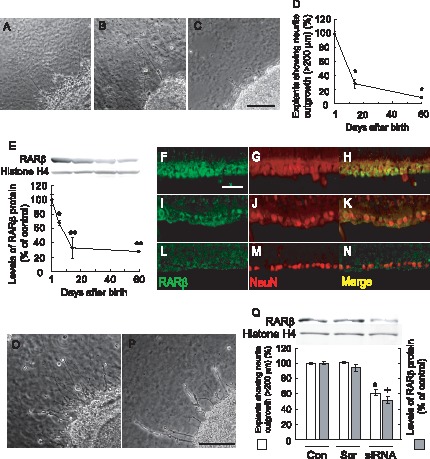
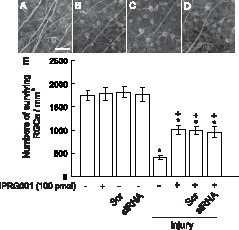
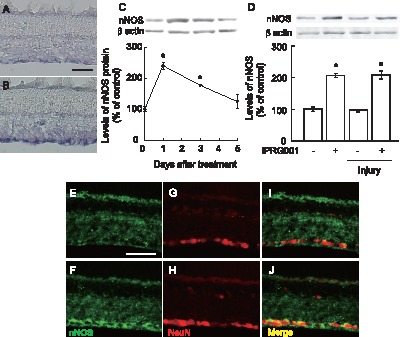
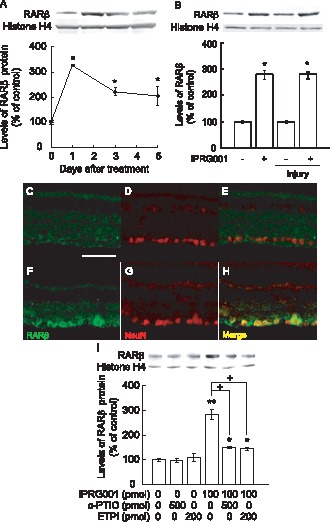
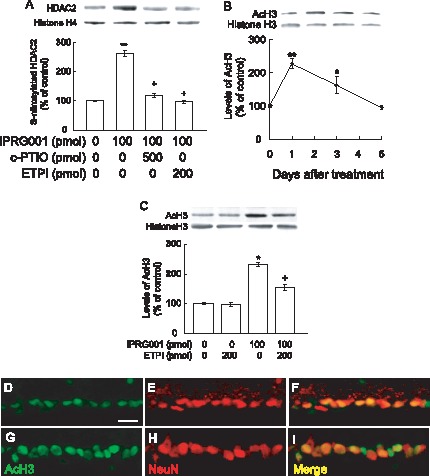
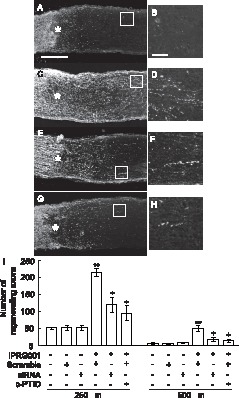
Like other CNS neurons, mature retinal ganglion cells (RGCs) are unable to regenerate their axons after nerve injury due to a diminished intrinsic regenerative capacity. One of the reasons why they lose the capacity for axon regeneration seems to be associated with a dramatic shift in RGCs' program of gene expression by epigenetic modulation. We recently reported that (1R)-isoPropyloxygenipin (IPRG001), a genipin derivative, has both neuroprotective and neurite outgrowth activities in murine RGC-5 retinal precursor cells. These effects were both mediated by nitric oxide (NO)/S-nitrosylation signaling. Neuritogenic activity was mediated by S-nitrosylation of histone deacetylase-2 (HDAC2), which subsequently induced retinoic acid receptor β (RARβ) expression via chromatin remodeling in vitro. RARβ plays important roles of neural growth and differentiation in development. However, the role of RARβ expression during adult rat optic nerve regeneration is not clear. In the present study, we extended this hypothesis to examine optic nerve regeneration by IPRG001 in adult rat RGCs in vivo. We found a correlation between RARβ expression and neurite outgrowth with age in the developing rat retina. Moreover, we found that IPRG001 significantly induced RARβ expression in adult rat RGCs through the S-nitrosylation of HDAC2 processing mechanism. Concomitant with RARβ expression, adult rat RGCs displayed a regenerative capacity for optic axons in vivo by IPRG001 treatment. These neuritogenic effects of IPRG001 were specifically suppressed by siRNA for RARβ. Thus, the dual neuroprotective and neuritogenic actions of genipin via S-nitrosylation might offer a powerful therapeutic tool for the treatment of RGC degenerative disorders.
与其他中枢神经系统神经元一样,成熟的视网膜神经节细胞(RGC)由于内在再生能力下降,在神经损伤后无法再生其轴突。它们失去轴突再生能力的原因之一似乎与 RGC 基因表达程序的表观遗传调节的剧烈转变有关。我们最近报道,(1R)-异丙烯氧基京尼平(IPRG001),一种京尼平衍生物,在鼠 RGC-5 视网膜前体细胞中具有神经保护和神经突生长活性。这些作用均由一氧化氮(NO)/S-亚硝基化信号介导。神经突生成活性由组蛋白去乙酰化酶-2(HDAC2)的 S-亚硝基化介导,随后通过体外染色质重塑诱导视黄酸受体β(RARβ)的表达。RARβ 在神经发育中发挥着重要的神经生长和分化作用。然而,RARβ 在成年大鼠视神经再生过程中的表达作用尚不清楚。在本研究中,我们将这一假设扩展到体内研究 IPRG001 对成年大鼠 RGC 视神经再生的作用。我们发现,在发育中的大鼠视网膜中,RARβ 的表达与神经突生长与年龄呈正相关。此外,我们发现,IPRG001 通过 HDAC2 加工机制的 S-亚硝基化,显著诱导成年大鼠 RGC 中 RARβ 的表达。伴随着 RARβ 的表达,IPRG001 处理后成年大鼠 RGC 表现出视神经轴突的再生能力。IPRG001 的这些神经突生成作用可通过 RARβ 的 siRNA 特异性抑制。因此,京尼平通过 S-亚硝基化的双重神经保护和神经突生成作用,可能为治疗 RGC 退行性疾病提供一种强大的治疗工具。