The Wolfson Centre for Age-Related Diseases, King's College London, Guy's Campus, London SE1 1UL, United Kingdom.
The Wolfson Centre for Age-Related Diseases, King's College London, Guy's Campus, London SE1 1UL, United Kingdom
J Neurosci. 2019 Apr 17;39(16):3013-3027. doi: 10.1523/JNEUROSCI.2922-18.2019. Epub 2019 Feb 13.
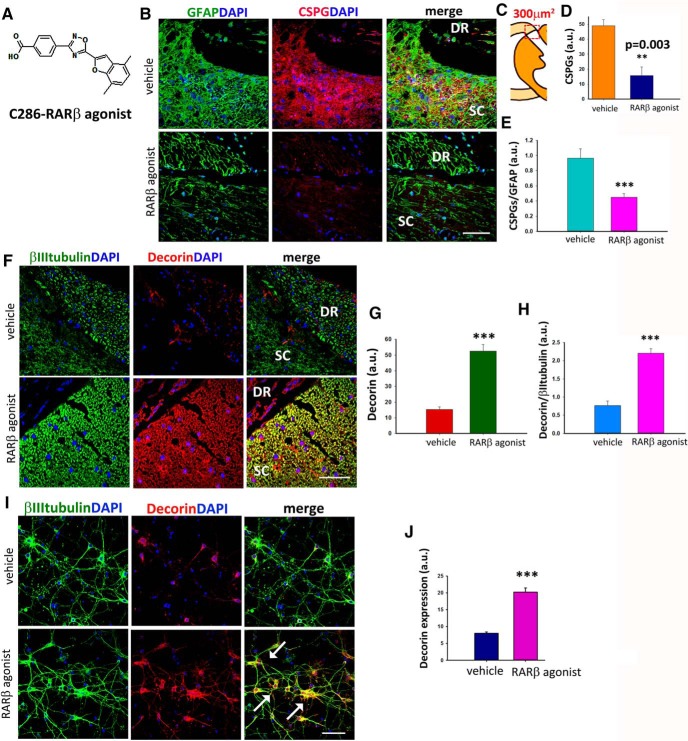
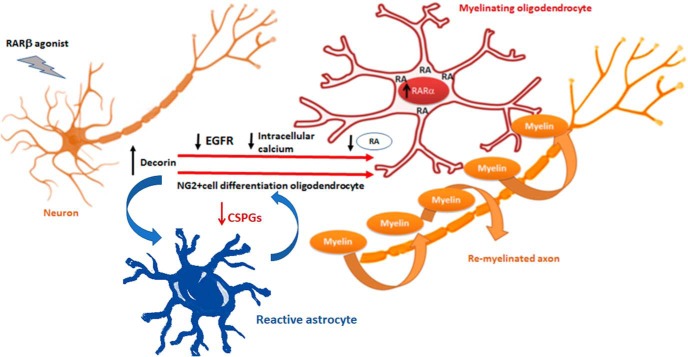
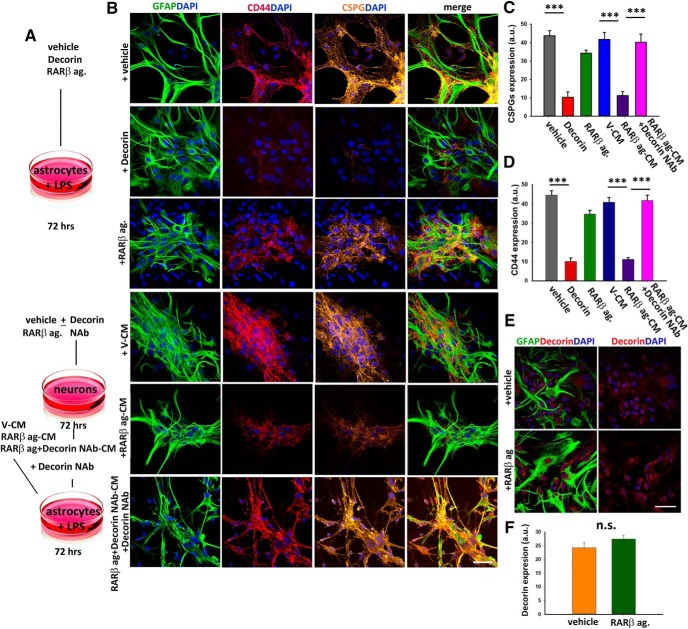
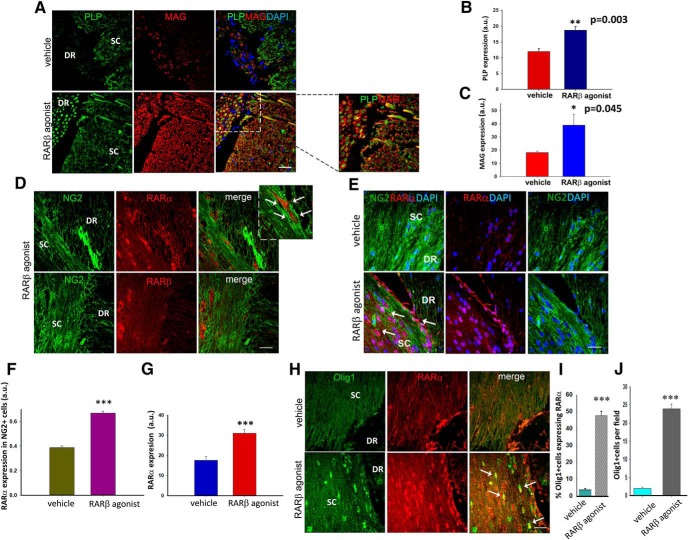
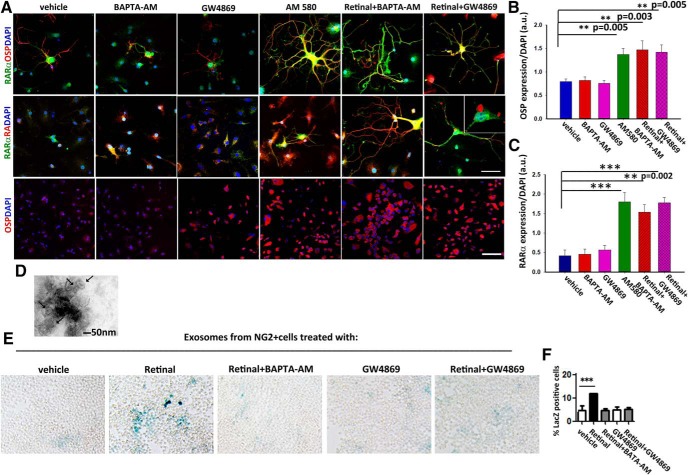
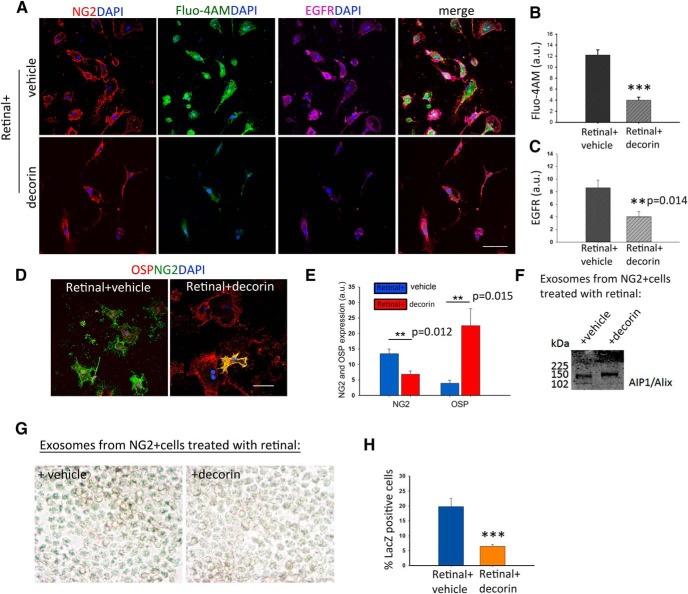
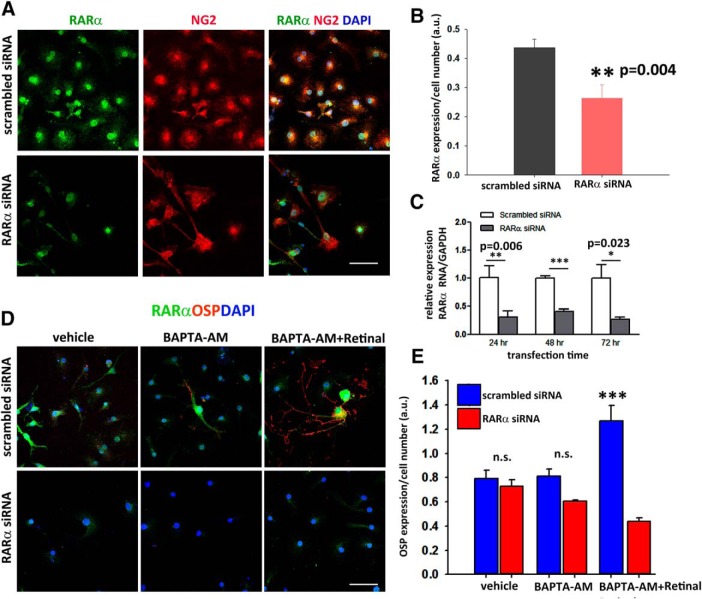
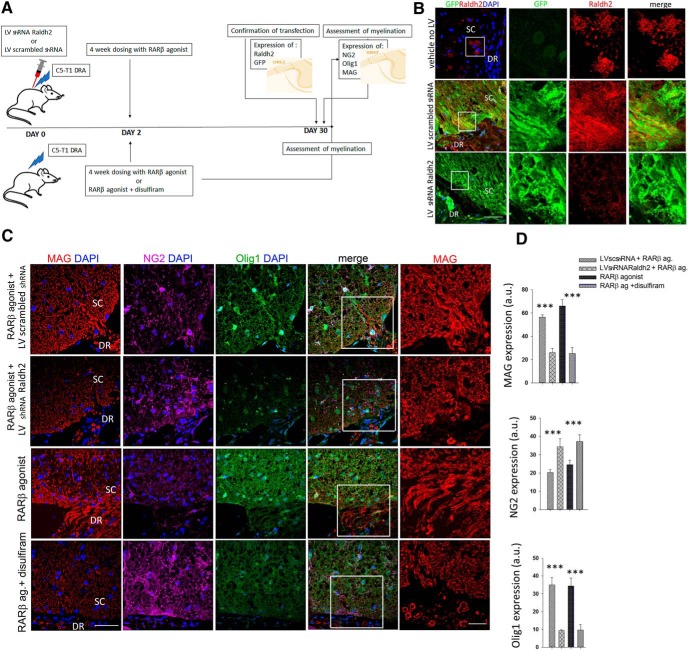
In the CNS, oligodendrocytes are responsible for myelin formation and maintenance. Following spinal cord injury, oligodendrocyte loss and an inhibitory milieu compromise remyelination and recovery. Here, we explored the role of retinoic acid receptor-beta (RARβ) signaling in remyelination. Using a male Sprague Dawley rat model of PNS-CNS injury, we show that oral treatment with a novel drug like RARβ agonist, C286, induces neuronal expression of the proteoglycan decorin and promotes myelination and differentiation of oligodendrocyte precursor cells (NG2 cells) in a decorin-mediated neuron-glia cross talk. Decorin promoted the activation of RARα in NG2 cells by increasing the availability of the endogenous ligand RA. NG2 cells synthesize RA, which is released in association with exosomes. We found that decorin prevents this secretion through regulation of the EGFR-calcium pathway. Using functional and pharmacological studies, we further show that RARα signaling is both required and sufficient for oligodendrocyte differentiation. These findings illustrate that RARβ and RARα are important regulators of oligodendrocyte differentiation, providing new targets for myelination. This study identifies novel therapeutic targets for remyelination after PNS-CNS injury. Pharmacological and knock-down experiments show that the retinoic acid (RA) signaling promotes differentiation of oligodendrocyte precursor cells (OPCs) and remyelination in a cross talk between neuronal RA receptor-beta (RARβ) and RARα in NG2 cells. We show that stimulation of RARα is required for the differentiation of OPCs and we describe for the first time how oral treatment with a RARβ agonist (C286, currently being tested in a Phase 1 trial, ISRCTN12424734) leads to the endogenous synthesis of RA through retinaldehyde dehydrogenase 2 (Raldh2) in NG2 cells and controls exosome-associated-RA intracellular levels through a decorin-Ca pathway. Although RARβ has been implicated in distinct aspects of CNS regeneration, this study identifies a novel function for both RARβ and RARα in remyelination.
在中枢神经系统中,少突胶质细胞负责髓鞘的形成和维持。脊髓损伤后,少突胶质细胞的丧失和抑制性微环境会损害髓鞘的再生和恢复。在这里,我们探索了视黄酸受体-β(RARβ)信号在髓鞘再生中的作用。使用雄性 Sprague Dawley 大鼠周围神经-中枢神经系统损伤模型,我们表明,新型 RARβ激动剂 C286 的口服治疗会诱导神经元表达蛋白聚糖 decorin,并通过 decorin 介导的神经元-神经胶质细胞交叉对话促进少突胶质前体细胞(NG2 细胞)的髓鞘形成和分化。decorin 通过增加内源性配体 RA 的可用性来促进 NG2 细胞中 RARα的激活。NG2 细胞合成 RA,RA 与外体一起释放。我们发现 decorin 通过调节 EGFR-钙途径来阻止这种分泌。通过功能和药理学研究,我们进一步表明 RARα信号对于少突胶质细胞分化是必需且充分的。这些发现表明,RARβ和 RARα是少突胶质细胞分化的重要调节剂,为髓鞘形成提供了新的靶点。这项研究确定了周围神经-中枢神经系统损伤后髓鞘再生的新治疗靶点。药理学和敲低实验表明,视黄酸(RA)信号通过神经元 RA 受体-β(RARβ)和 NG2 细胞中的 RARα之间的交叉对话促进少突胶质前体细胞(OPC)的分化和髓鞘的形成。我们表明,RARα的刺激是 OPC 分化所必需的,并且我们首次描述了如何通过 NG2 细胞中的 RARβ 激动剂(目前正在进行 1 期试验,ISRCTN12424734)口服治疗导致内源性通过视黄醛脱氢酶 2(Raldh2)合成 RA,并通过 decorin-Ca 途径控制外体相关-RA 细胞内水平。虽然 RARβ 已被牵连到中枢神经系统再生的不同方面,但这项研究确定了 RARβ 和 RARα 在髓鞘再生中的新功能。