Bioinformatics and Genomics Laboratory, World Premier International (WPI) Immunology Frontier Research Center (IFReC), Osaka University, 3-1 Yamadaoka, Suita, 565-0871 Osaka, Japan. Tel.: +81 6 6879 4269; Fax: +81 6 6879 4272;
Brief Funct Genomics. 2013 Nov;12(6):489-98. doi: 10.1093/bfgp/elt028. Epub 2013 Aug 12.
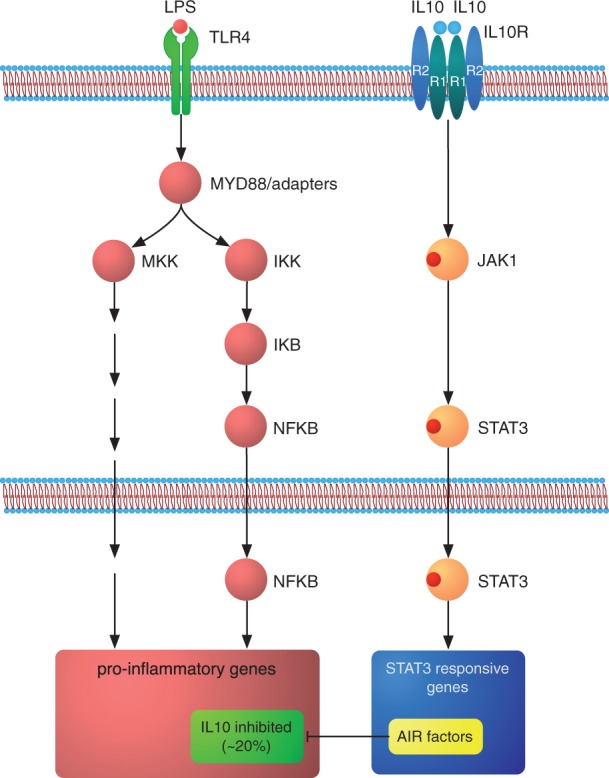
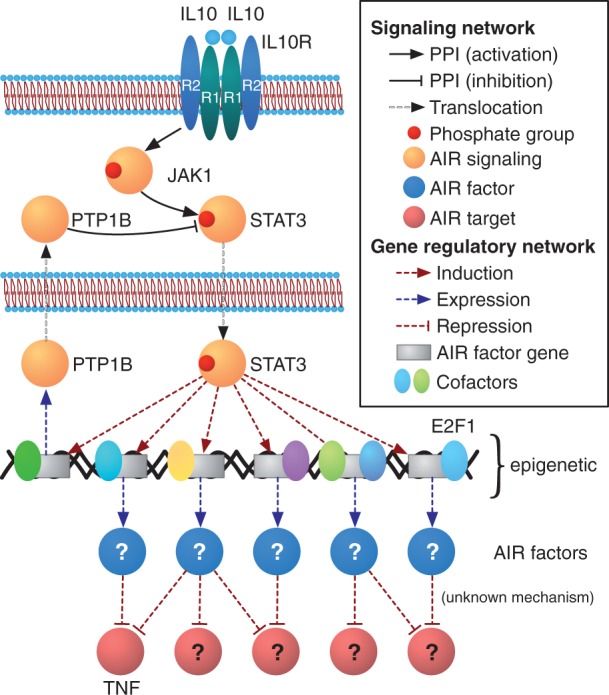
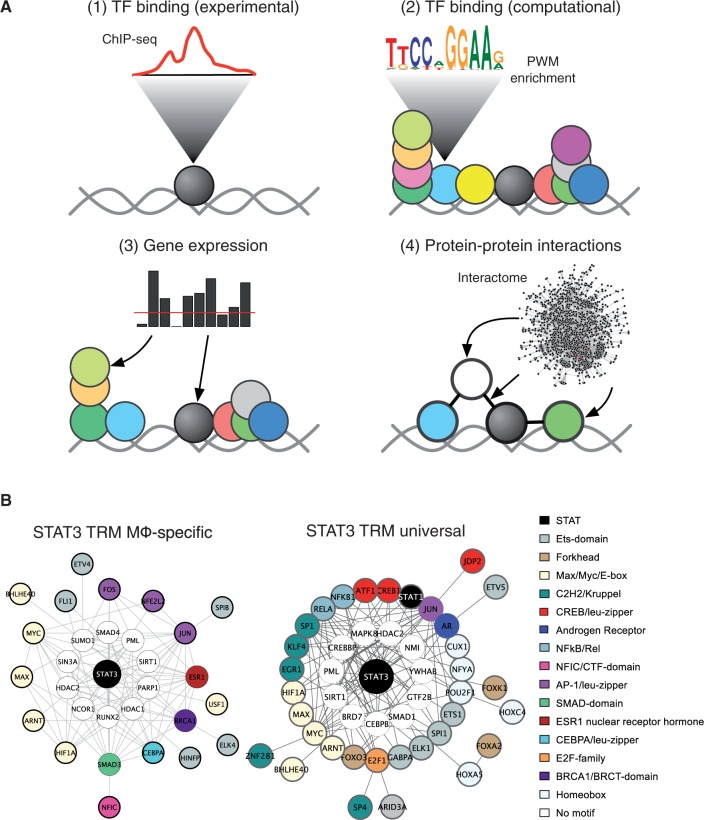
Inflammation is a fundamental response of the immune system whose successful termination involves the elimination of the invading pathogens, the resolution of inflammation and the repair of the local damaged tissue. In this context, the interleukin 10 (IL-10)-mediated anti-inflammatory response (AIR) represents an essential homeostatic mechanism that controls the degree and duration of inflammation. Here, we review recent work on the mechanistic characterization of the IL-10-mediated AIR on multiple levels: from the cataloguing of the in vivo genomic targets of STAT3 (the transcription factor downstream of IL-10) to the identification of specific co-factors that endow STAT3 with genomic-binding specificity, and how genomic and computational methods are being used to elucidate the regulatory mechanisms of this essential physiological response in macrophages.
炎症是免疫系统的基本反应,其成功终止涉及消除入侵病原体、炎症消退和局部受损组织修复。在这种情况下,白细胞介素 10(IL-10)介导的抗炎反应(AIR)代表了一种重要的体内平衡机制,可控制炎症的程度和持续时间。在这里,我们回顾了最近在多个层面上对 IL-10 介导的 AIR 的机制特征进行的研究:从对 STAT3(IL-10 的下游转录因子)体内基因组靶标的编目到鉴定赋予 STAT3 基因组结合特异性的特定共同因子,以及如何使用基因组和计算方法阐明这种巨噬细胞中重要生理反应的调节机制。