Center for Plant Transformation, Plant Sciences Institute, Iowa State University, Ames, Iowa, United States of America.
PLoS One. 2013 Aug 8;8(8):e70720. doi: 10.1371/journal.pone.0070720. eCollection 2013.
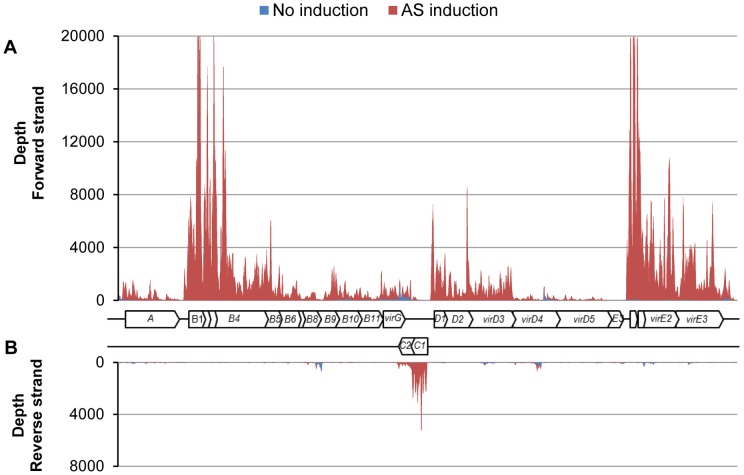
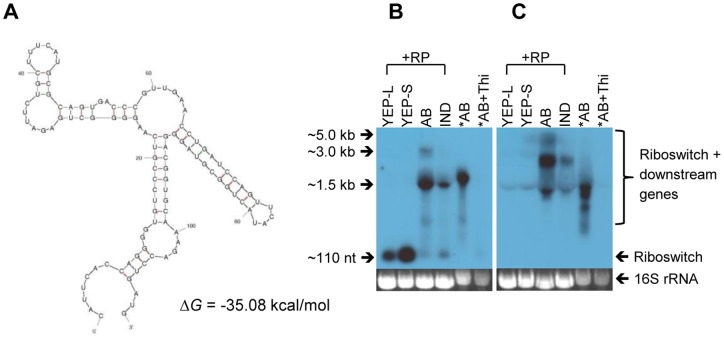
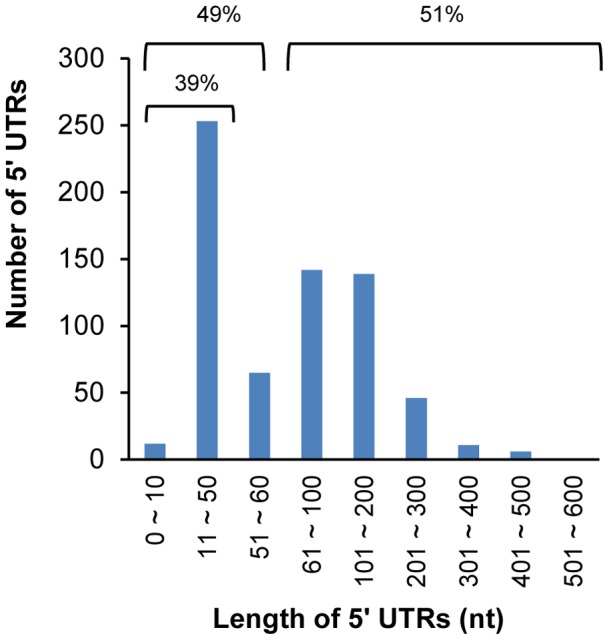
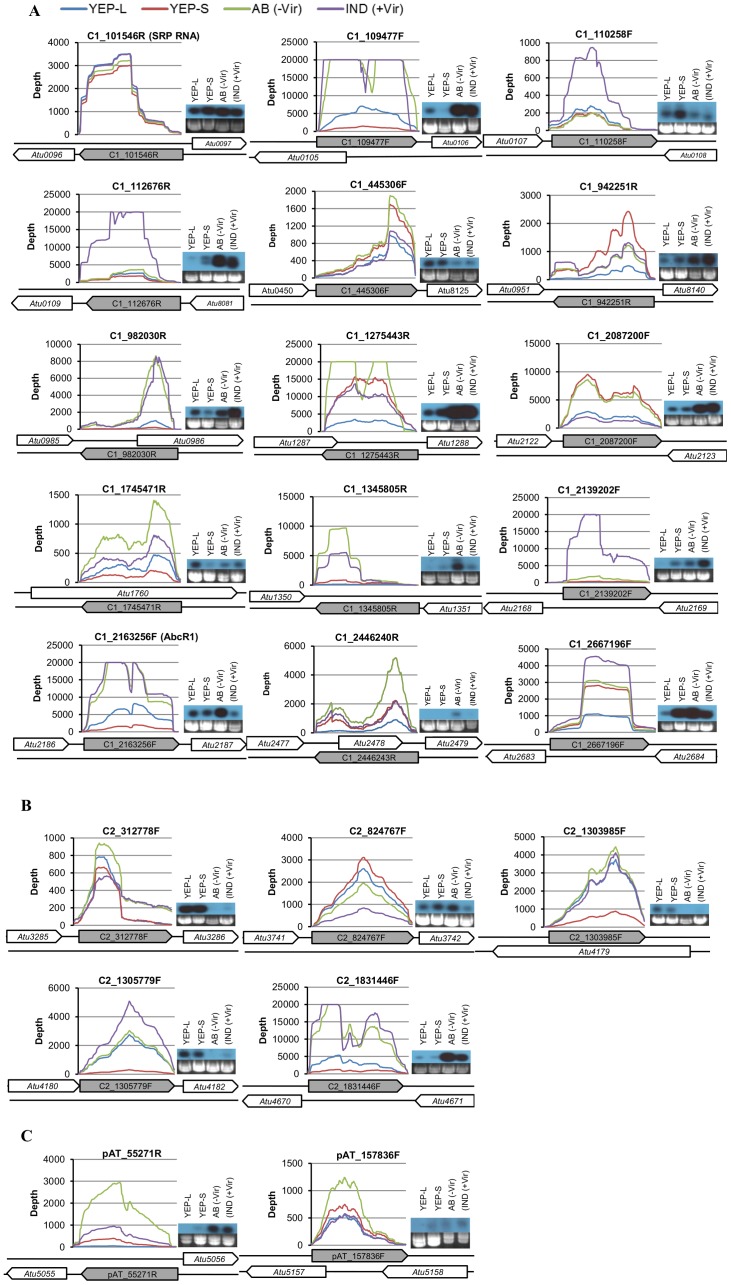
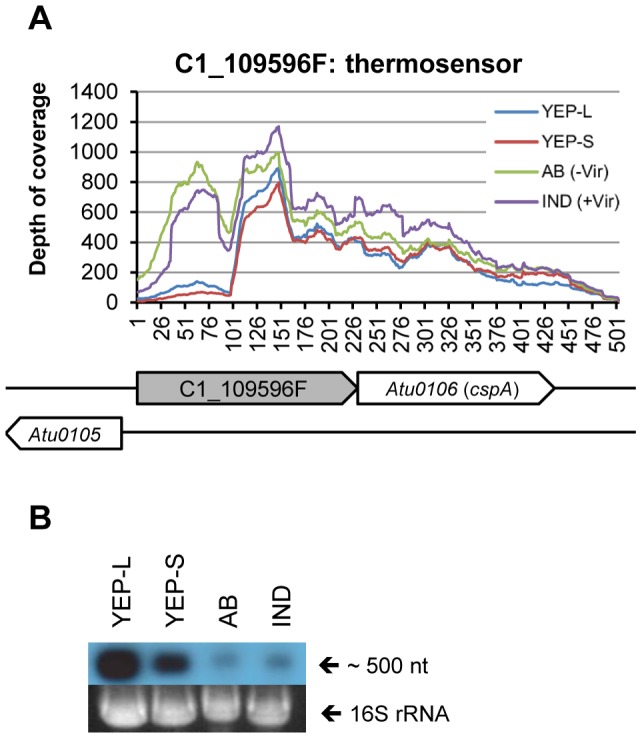
Agrobacterium tumefaciens is a plant pathogen that has the natural ability of delivering and integrating a piece of its own DNA into plant genome. Although bacterial non-coding RNAs (ncRNAs) have been shown to regulate various biological processes including virulence, we have limited knowledge of how Agrobacterium ncRNAs regulate this unique inter-Kingdom gene transfer. Using whole transcriptome sequencing and an ncRNA search algorithm developed for this work, we identified 475 highly expressed candidate ncRNAs from A. tumefaciens C58, including 101 trans-encoded small RNAs (sRNAs), 354 antisense RNAs (asRNAs), 20 5' untranslated region (UTR) leaders including a RNA thermosensor and 6 riboswitches. Moreover, transcription start site (TSS) mapping analysis revealed that about 51% of the mapped mRNAs have 5' UTRs longer than 60 nt, suggesting that numerous cis-acting regulatory elements might be encoded in the A. tumefaciens genome. Eighteen asRNAs were found on the complementary strands of virA, virB, virC, virD, and virE operons. Fifteen ncRNAs were induced and 7 were suppressed by the Agrobacterium virulence (vir) gene inducer acetosyringone (AS), a phenolic compound secreted by the plants. Interestingly, fourteen of the AS-induced ncRNAs have putative vir box sequences in the upstream regions. We experimentally validated expression of 36 ncRNAs using Northern blot and Rapid Amplification of cDNA Ends analyses. We show functional relevance of two 5' UTR elements: a RNA thermonsensor (C1_109596F) that may regulate translation of the major cold shock protein cspA, and a thi-box riboswitch (C1_2541934R) that may transcriptionally regulate a thiamine biosynthesis operon, thiCOGG. Further studies on ncRNAs functions in this bacterium may provide insights and strategies that can be used to better manage pathogenic bacteria for plants and to improve Agrobacterum-mediated plant transformation.
根瘤农杆菌是一种植物病原体,它具有将自身 DNA 的一小段传递并整合到植物基因组中的天然能力。尽管已经证明细菌非编码 RNA(ncRNA)可以调节包括毒力在内的各种生物学过程,但我们对根瘤农杆菌 ncRNA 如何调节这种独特的跨界基因转移知之甚少。使用全转录组测序和为此工作开发的 ncRNA 搜索算法,我们从根瘤农杆菌 C58 中鉴定了 475 个高表达的候选 ncRNA,包括 101 个反式编码小 RNA(sRNA)、354 个反义 RNA(asRNA)、20 个 5'非翻译区(UTR)启动子,包括一个 RNA 热传感器和 6 个核糖体开关。此外,转录起始位点(TSS)映射分析显示,约 51%的映射 mRNA 具有 60nt 以上的 5'UTR,这表明大量顺式作用调控元件可能编码在根瘤农杆菌基因组中。在 virA、virB、virC、virD 和 virE 操纵子的互补链上发现了 18 个 asRNA。15 个 ncRNA 被根瘤农杆菌毒力(vir)基因诱导物乙酰丁香酮(AS)诱导,AS 是植物分泌的一种酚类化合物,7 个 ncRNA 被抑制。有趣的是,14 个 AS 诱导的 ncRNA 在其上游区域具有推定的 vir 框序列。我们使用 Northern blot 和快速扩增 cDNA 末端分析实验验证了 36 个 ncRNA 的表达。我们展示了两个 5'UTR 元件的功能相关性:一个 RNA 热传感器(C1_109596F),它可能调节主要冷休克蛋白 cspA 的翻译,和一个硫胺素生物合成操纵子 thiCOGG 的转录调控的 thi 盒核糖体开关(C1_2541934R)。进一步研究该细菌中 ncRNA 的功能可能为更好地管理植物病原菌和提高根瘤农杆菌介导的植物转化提供思路和策略。