Department of Pediatrics, University of Maryland School of Medicine, , Baltimore, Maryland, USA.
Arch Dis Child Fetal Neonatal Ed. 2014 Jan;99(1):F87-92. doi: 10.1136/archdischild-2012-303351. Epub 2013 Aug 19.
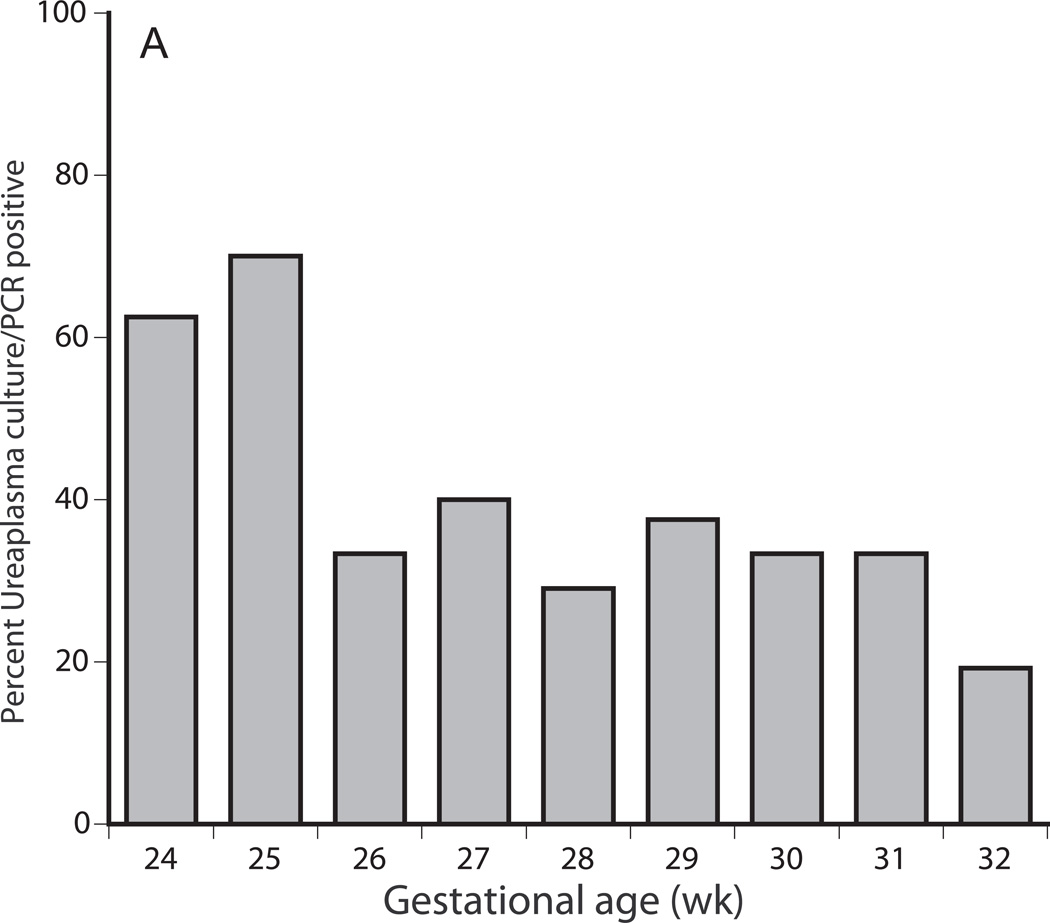
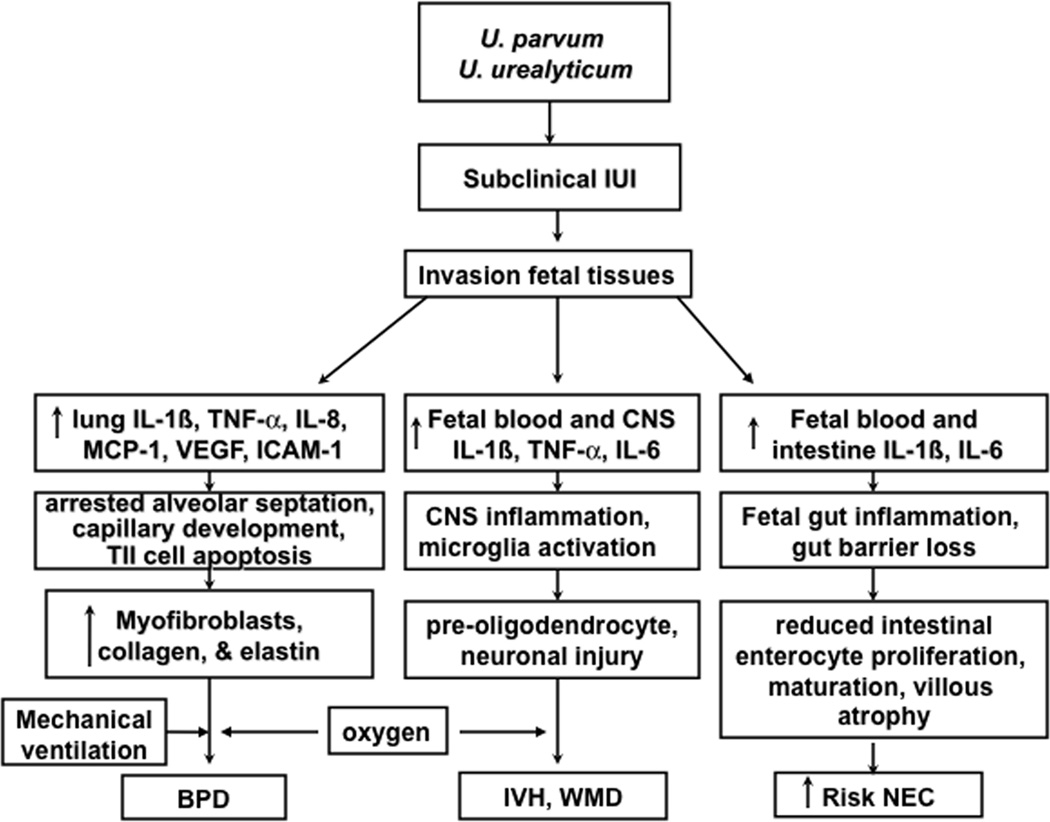
The genital mycoplasma species, Ureaplasma parvum and Ureaplasma urealyticum are the most common organisms isolated from infected amniotic fluid and placentas, and they contribute to adverse pregnancy outcomes including preterm birth and neonatal morbidities. In our institution, almost half of the preterm infants of less than 32 weeks gestation are Ureaplasma-positive in one or more compartment (respiratory, blood and/or cerebrospinal fluid), indicating that these organisms are the most common pathogens affecting this population. This review will focus on the compelling epidemiological and experimental evidence linking perinatal Ureaplasma species exposure to important morbidities of prematurity, such as bronchopulmonary dysplasia, intraventricular haemorrhage and necrotising enterocolitis.
生殖支原体种属,解脲脲原体和人型支原体是从感染的羊水和胎盘中最常分离到的微生物,它们与不良妊娠结局有关,包括早产和新生儿并发症。在我们的机构中,几乎一半的妊娠不满 32 周的早产儿在一个或多个部位(呼吸道、血液和/或脑脊液)中 Ureaplasma 阳性,这表明这些微生物是影响该人群的最常见病原体。这篇综述将重点关注围产期解脲脲原体种属暴露与早产儿重要并发症(如支气管肺发育不良、脑室出血和坏死性小肠结肠炎)之间的有力的流行病学和实验证据。