Gaweda Adam E, Bhat Premila, Maglinte Gregory A, Chang Chun-Lan, Hill Jerrold, Park Grace S, Ashfaq Akhtar, Gitlin Matthew
Division of Nephrology, Department of Medicine, University of Louisville, Louisville, Kentucky, USA.
Hemodial Int. 2014 Jan;18(1):38-46. doi: 10.1111/hdi.12078. Epub 2013 Aug 22.
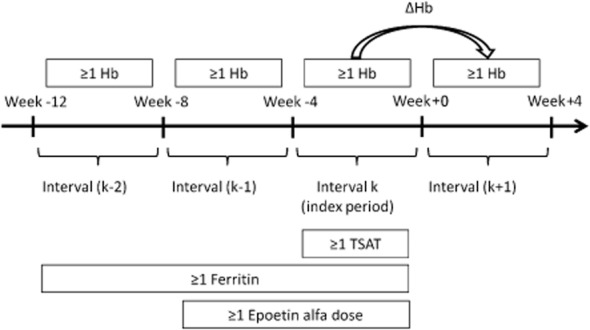
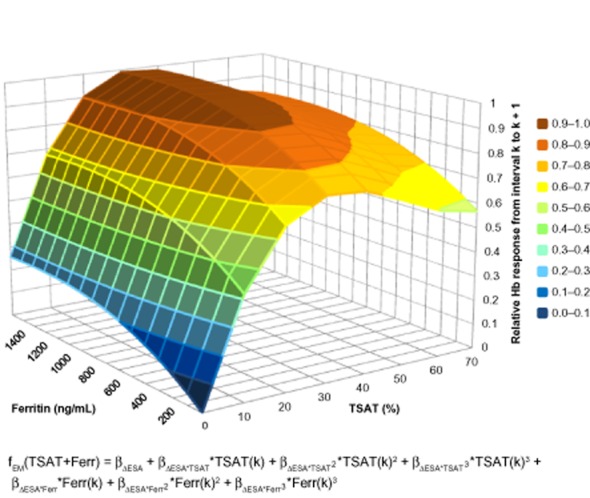
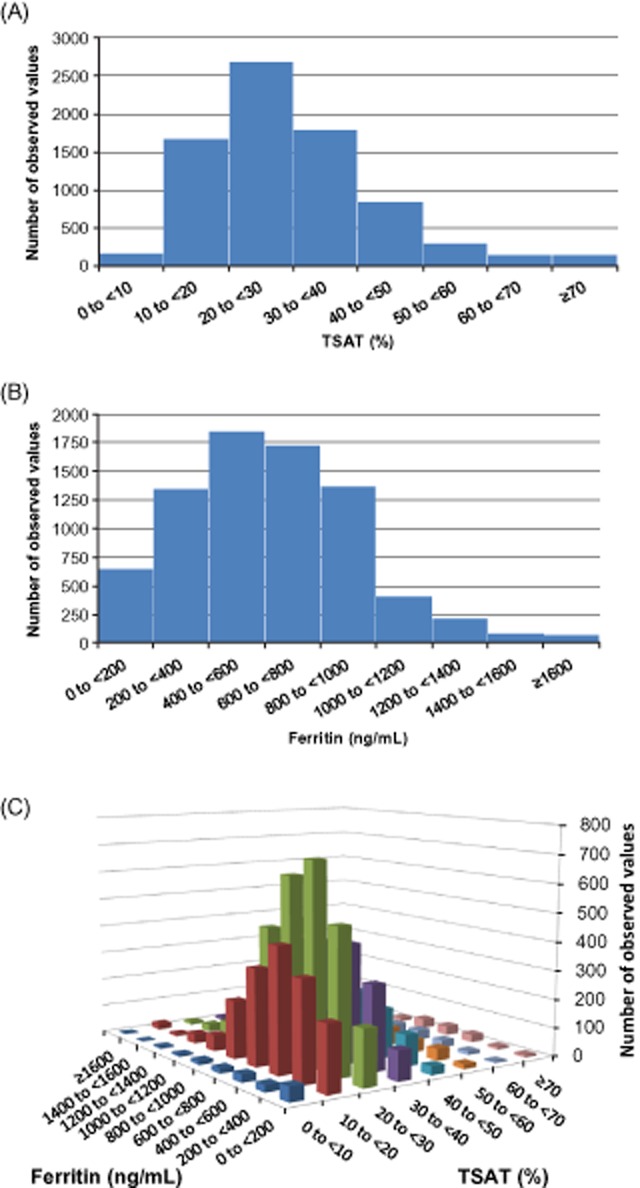
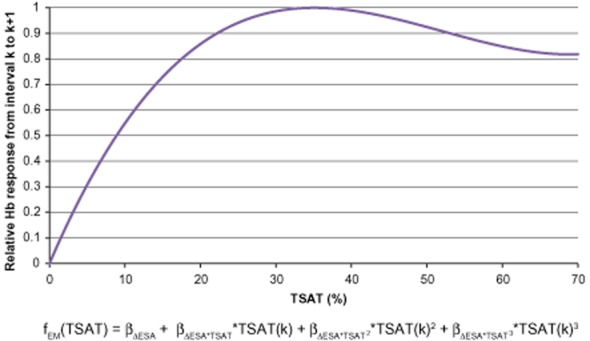
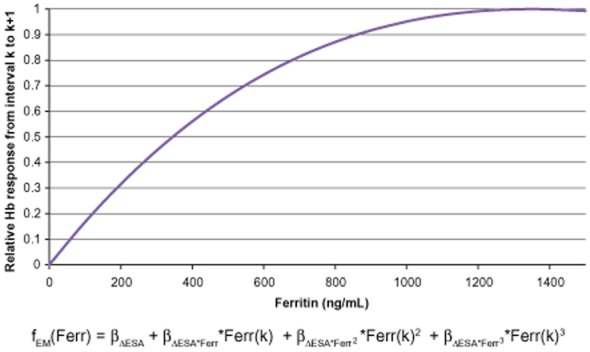
Clinical guidelines recommend concurrent treatment of anemia in end-stage renal disease with erythropoiesis-stimulating agents (ESAs) and iron. However, there are mixed data about optimal iron supplementation. To help address this gap, the relationship between iron markers and hemoglobin (Hb) response to ESA (Epoetin alfa) dose was examined. Electronic medical records of 1902 US chronic hemodialysis patients were analyzed over a 12-month period between June 2009 and June 2010. The analysis included patients who had at least one Hb value during each 4-week interval for four consecutive intervals (k - 2, k - 1, k, and k + 1; k is the index interval), received at least one ESA dose during intervals k - 1 or k, had at least one transferrin saturation (TSAT) value at interval k, and at least one ferritin value during intervals k - 2, k - 1, or k. Effect modification by TSAT and ferritin on Hb response was evaluated using the generalized estimating equations approach. Patients had a mean (standard deviation) age of 62 (15) years; 41% were Caucasian, 34% African American, 65% had hypertension, and 39% diabetes. Transferrin saturation, but not ferritin, had a statistically significant (P < 0.05) modifying effect on Hb response. Maximum Hb response was achieved when TSAT was 34%, with minimal incremental effect beyond these levels. Of the two standard clinical iron markers, TSAT should be used as the primary marker of the modifying effect of iron on Hb response to ESA. Long-term safety of iron use to improve Hb response to ESA warrants further study.
临床指南建议,终末期肾病患者贫血的治疗应同时使用促红细胞生成剂(ESA)和铁剂。然而,关于最佳铁补充量的数据并不一致。为了填补这一空白,研究人员考察了铁指标与血红蛋白(Hb)对ESA(阿法依泊汀)剂量反应之间的关系。分析了2009年6月至2010年6月期间1902例美国慢性血液透析患者的电子病历,为期12个月。分析对象包括在连续四个4周间隔期(k - 2、k - 1、k和k + 1;k为索引间隔期)内至少有一个Hb值、在间隔期k - 1或k内至少接受过一剂ESA、在间隔期k至少有一个转铁蛋白饱和度(TSAT)值,以及在间隔期k - 2、k - 1或k内至少有一个铁蛋白值的患者。使用广义估计方程法评估TSAT和铁蛋白对Hb反应的效应修正。患者的平均(标准差)年龄为62(15)岁;41%为白种人,34%为非裔美国人,65%患有高血压,39%患有糖尿病。转铁蛋白饱和度而非铁蛋白对Hb反应具有统计学显著(P < 0.05)的效应修正作用。当TSAT为34%时可实现最大Hb反应,超过这些水平的增量效应最小。在两种标准临床铁指标中,TSAT应作为铁对Hb对ESA反应的效应修正的主要指标。使用铁剂改善Hb对ESA反应的长期安全性值得进一步研究。