1] Key Laboratory of Carcinogenesis and Translational Research, Ministry of Education, Peking University Health Science Center, Beijing 100191, China [2] Department of Pathology, Peking University Health Science Center, Beijing 100191, China.
Br J Cancer. 2013 Sep 17;109(6):1666-75. doi: 10.1038/bjc.2013.484. Epub 2013 Aug 22.
Our previous study demonstrated that extracellular adenosine 5'-triphosphate (ATP) stimulated prostate cancer cell invasion via P2Y receptors. However, the purinergic receptor subtype(s) involved in this process remains unclear. Here we aimed to determine whether P2Y2, one subtype of P2Y receptors, was involved in the invasion and metastasis of prostate cancer cells, and elucidated the underlying mechanism.
RNAi was introduced to silence the expression of P2Y2. In vitro invasion and migration assays and in vivo experiments were carried out to examine the role of P2Y2 receptor in cell invasion and metastasis. cDNA microarray was performed to identify the differentially expressed genes downstream of ATP treatment.
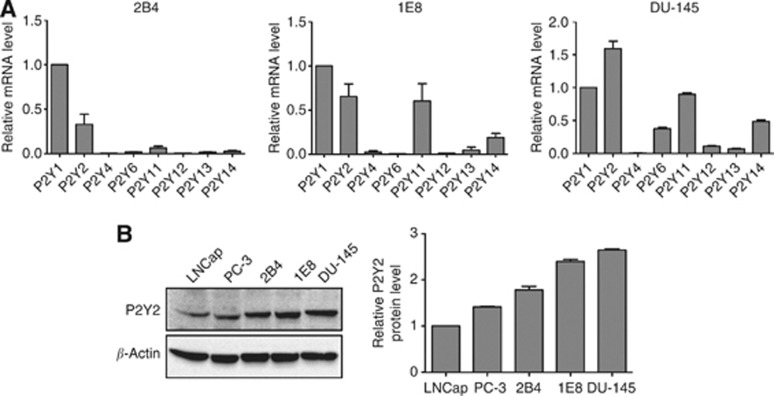
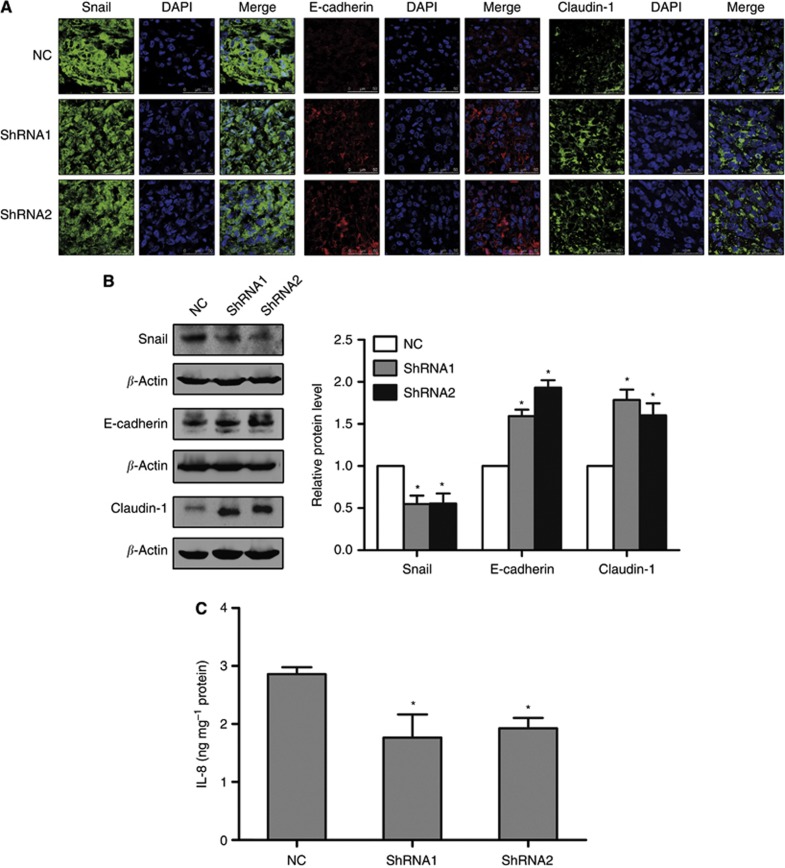
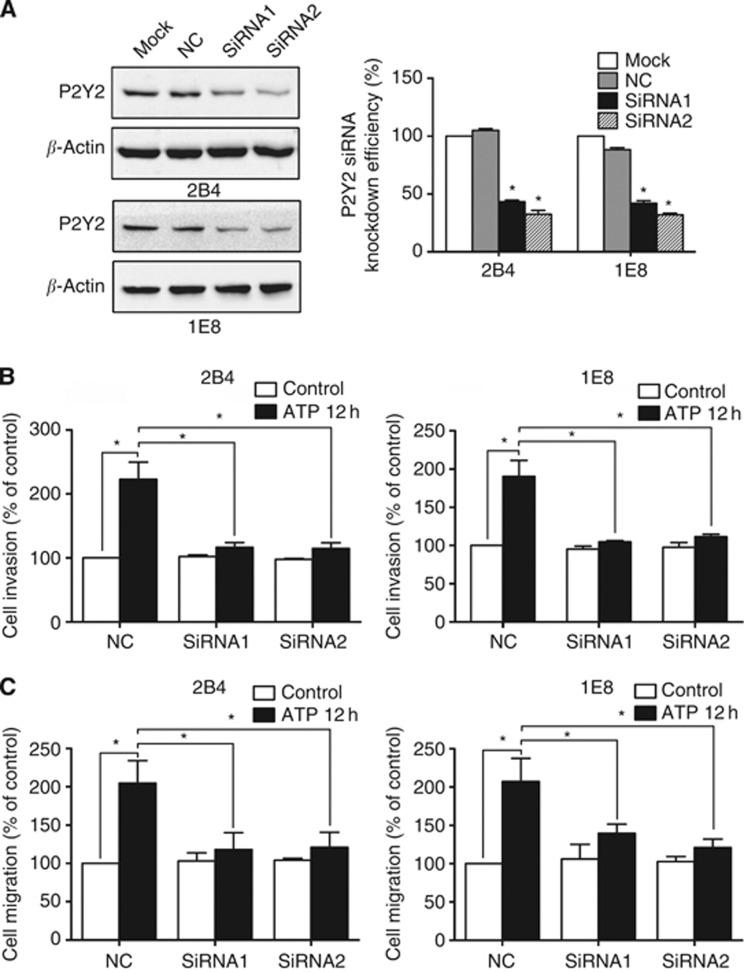
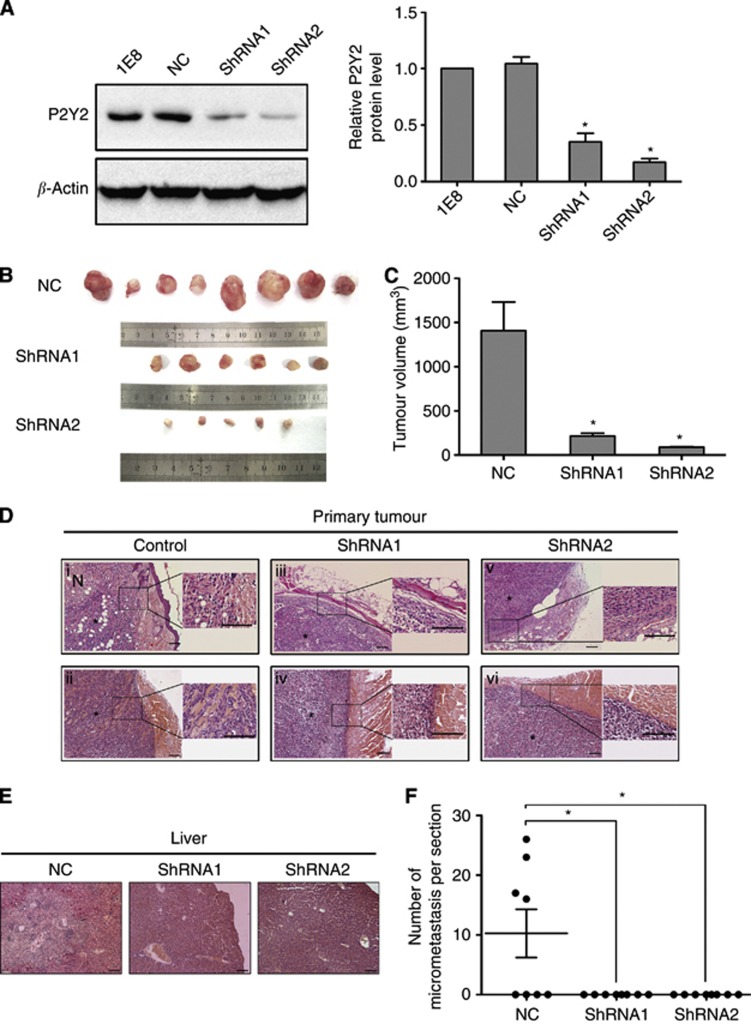
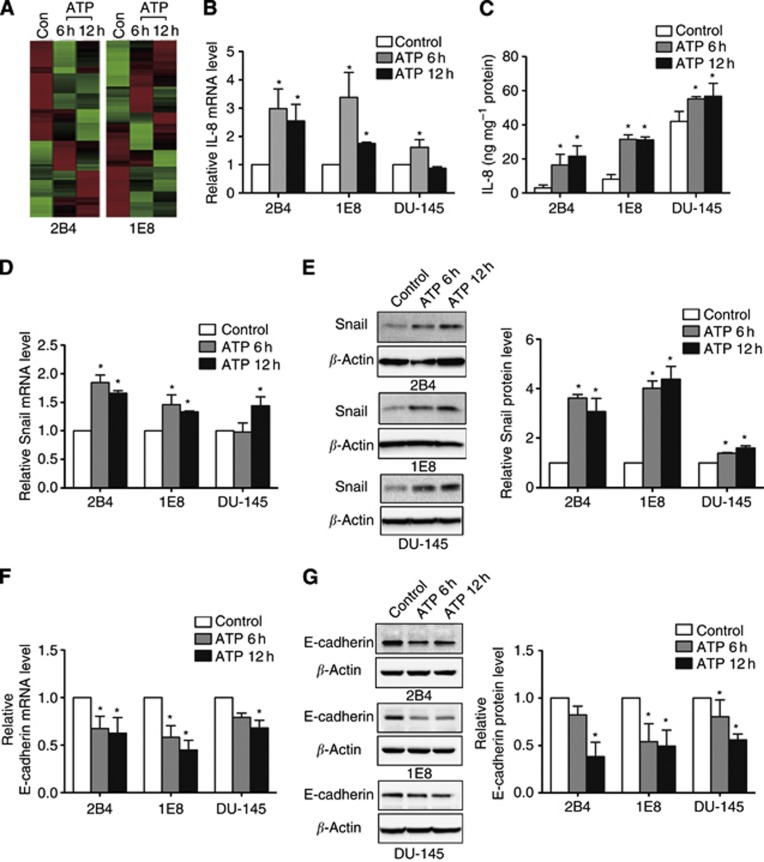
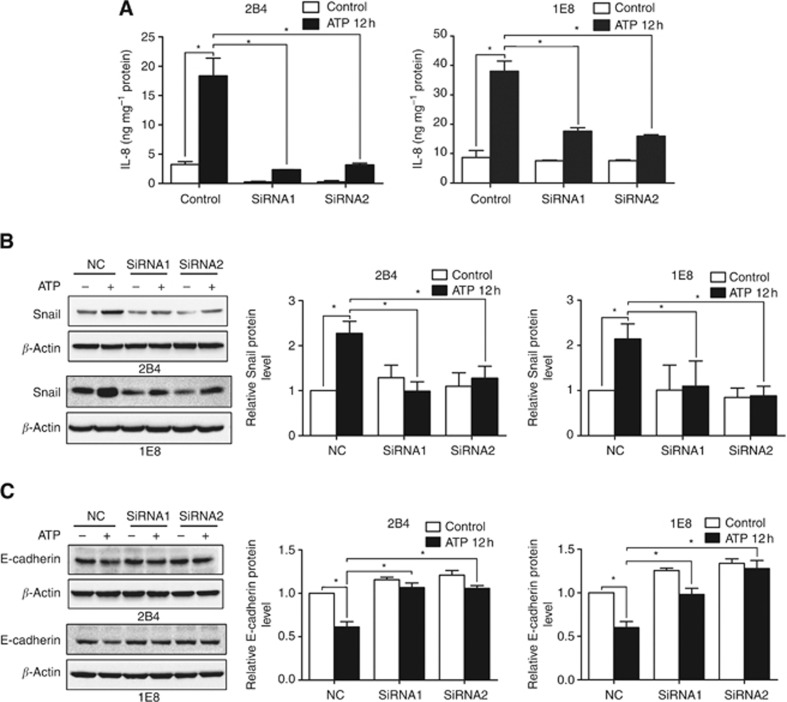
P2Y2 was significantly expressed in the prostate cancer cells. Knockdown of P2Y2 receptor suppressed cell invasion and metastasis in vitro and in vivo. Further experiments identified that ATP could promote IL-8 and Snail expression and inhibit E-cadherin and Claudin-1 expression. Knockdown of P2Y2 receptor affected the expression of these EMT/invasion-related genes in vitro and in vivo.
P2Y2 receptor promotes cell invasion and metastasis in prostate cancer cells via some EMT/invasion-related genes. Thereby, P2Y2 receptor could be a potential therapeutic target for the treatment of prostate cancer.
我们之前的研究表明,细胞外三磷酸腺苷(ATP)通过 P2Y 受体刺激前列腺癌细胞侵袭。然而,这一过程涉及的嘌呤能受体亚型尚不清楚。在此,我们旨在确定 P2Y 受体的一种亚型 P2Y2 是否参与了前列腺癌细胞的侵袭和转移,并阐明其潜在机制。
采用 RNAi 技术沉默 P2Y2 的表达。进行体外侵袭和迁移实验以及体内实验,以研究 P2Y2 受体在细胞侵袭和转移中的作用。进行 cDNA 微阵列分析,以鉴定 ATP 处理后差异表达的下游基因。
P2Y2 在前列腺癌细胞中表达显著。P2Y2 受体的敲低抑制了体外和体内的细胞侵袭和转移。进一步的实验表明,ATP 可以促进白细胞介素-8(IL-8)和 SNAI1 表达,并抑制 E-钙黏蛋白(E-cadherin)和 Claudin-1 表达。P2Y2 受体的敲低影响了这些 EMT/侵袭相关基因在体外和体内的表达。
P2Y2 受体通过一些 EMT/侵袭相关基因促进前列腺癌细胞的侵袭和转移。因此,P2Y2 受体可能成为治疗前列腺癌的潜在治疗靶点。