National Bioenergy Center, Golden, CO, USA.
Biotechnol Biofuels. 2013 Aug 23;6(1):118. doi: 10.1186/1754-6834-6-118.
Microalgae can make a significant contribution towards meeting global renewable energy needs in both carbon-based and hydrogen (H2) biofuel. The development of energy-related products from algae could be accelerated with improvements in systems biology tools, and recent advances in sequencing technology provide a platform for enhanced transcriptomic analyses. However, these techniques are still heavily reliant upon available genomic sequence data. Chlamydomonas moewusii is a unicellular green alga capable of evolving molecular H2 under both dark and light anaerobic conditions, and has high hydrogenase activity that can be rapidly induced. However, to date, there is no systematic investigation of transcriptomic profiling during induction of H2 photoproduction in this organism.
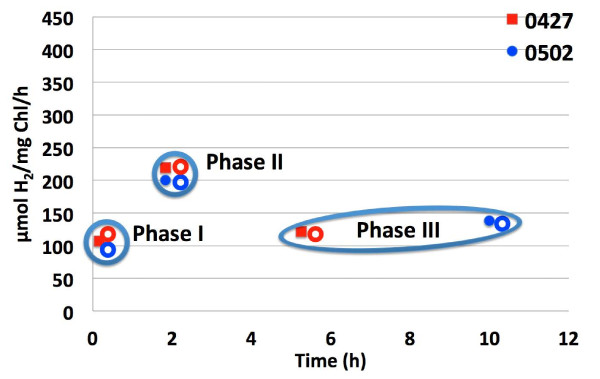
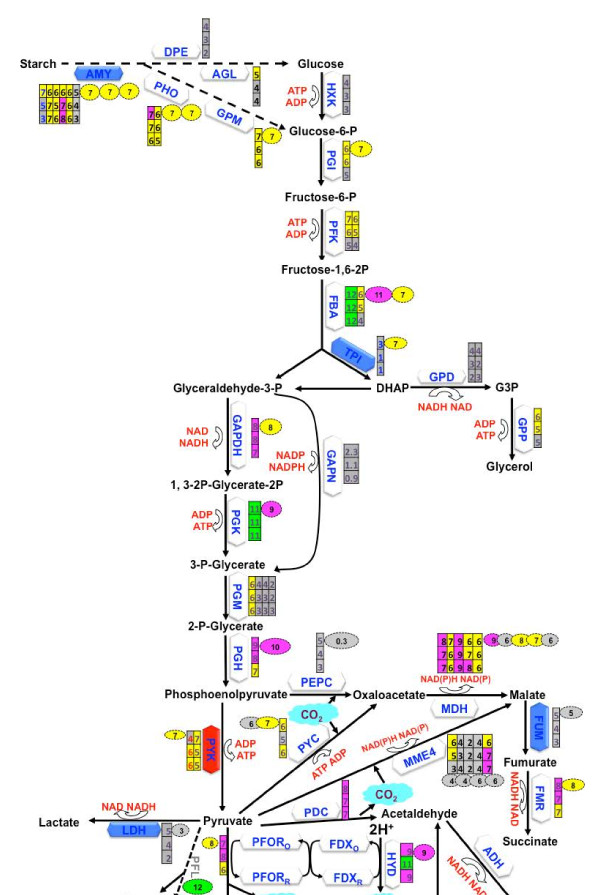
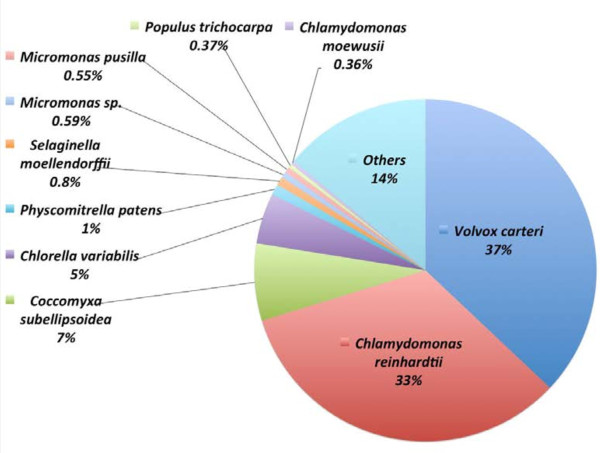
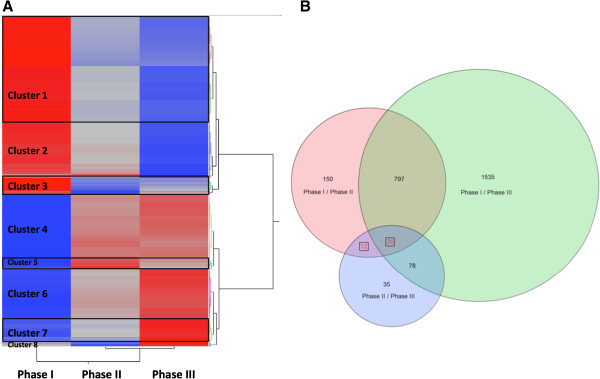
In this work, RNA-Seq was applied to investigate transcriptomic profiles during the dark anaerobic induction of H2 photoproduction. 156 million reads generated from 7 samples were then used for de novo assembly after data trimming. BlastX results against NCBI database and Blast2GO results were used to interpret the functions of the assembled 34,136 contigs, which were then used as the reference contigs for RNA-Seq analysis. Our results indicated that more contigs were differentially expressed during the period of early and higher H2 photoproduction, and fewer contigs were differentially expressed when H2-photoproduction rates decreased. In addition, C. moewusii and C. reinhardtii share core functional pathways, and transcripts for H2 photoproduction and anaerobic metabolite production were identified in both organisms. C. moewusii also possesses similar metabolic flexibility as C. reinhardtii, and the difference between C. moewusii and C. reinhardtii on hydrogenase expression and anaerobic fermentative pathways involved in redox balancing may explain their different profiles of hydrogenase activity and secreted anaerobic metabolites.
Herein, we have described a workflow using commercial software to analyze RNA-Seq data without reference genome sequence information, which can be applied to other unsequenced microorganisms. This study provided biological insights into the anaerobic fermentation and H2 photoproduction of C. moewusii, and the first transcriptomic RNA-Seq dataset of C. moewusii generated in this study also offer baseline data for further investigation (e.g. regulatory proteins related to fermentative pathway discussed in this study) of this organism as a H2-photoproduction strain.
微藻可以为满足全球碳基和氢能(H2)生物燃料的可再生能源需求做出重大贡献。通过改进系统生物学工具,开发与能源相关的藻类产品的速度可以加快,而测序技术的最新进展为增强转录组分析提供了一个平台。然而,这些技术仍然严重依赖于可用的基因组序列数据。衣藻是一种能够在黑暗和光照厌氧条件下进化出分子 H2 的单细胞绿藻,具有高氢化酶活性,可快速诱导。然而,迄今为止,对于该生物体内 H2 光生产诱导过程中的转录组谱系统研究尚未进行。
在这项工作中,应用 RNA-Seq 来研究黑暗厌氧诱导 H2 光生产过程中的转录组谱。从 7 个样品中生成的 1.56 亿个读数在数据修剪后用于从头组装。针对 NCBI 数据库的 BlastX 结果和 Blast2GO 结果用于解释组装的 34136 个连续序列的功能,然后将这些连续序列用作 RNA-Seq 分析的参考连续序列。我们的结果表明,在早期和更高的 H2 光生产期间,更多的连续序列表现出差异表达,而当 H2 光生产速率降低时,较少的连续序列表现出差异表达。此外,衣藻和莱茵衣藻共享核心功能途径,并且在这两种生物中都鉴定出了 H2 光生产和厌氧代谢产物的转录本。衣藻还具有与莱茵衣藻相似的代谢灵活性,衣藻在氢化酶表达和涉及氧化还原平衡的厌氧发酵途径上的差异可能解释了它们在氢化酶活性和分泌的厌氧代谢物方面的不同特征。
本文描述了一种使用商业软件在没有参考基因组序列信息的情况下分析 RNA-Seq 数据的工作流程,该流程可应用于其他未测序的微生物。这项研究为衣藻的厌氧发酵和 H2 光生产提供了生物学见解,并且本文生成的衣藻的第一个转录组 RNA-Seq 数据集也为进一步研究(例如,本文讨论的与发酵途径相关的调节蛋白)提供了基础数据。