Department of Evolutionary and Functional Biology, University of Parma, 43121 Parma, Italy; Wolf Science Centre, 2115 Ernstbrunn, Austria.
Curr Biol. 2013 Sep 9;23(17):1677-80. doi: 10.1016/j.cub.2013.06.066. Epub 2013 Aug 22.
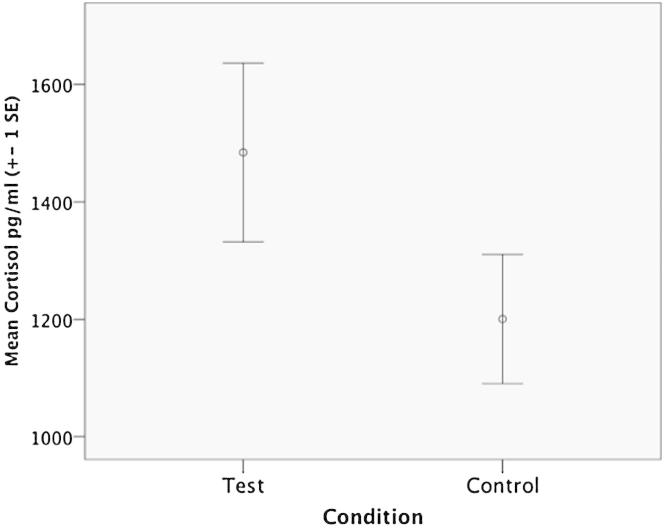
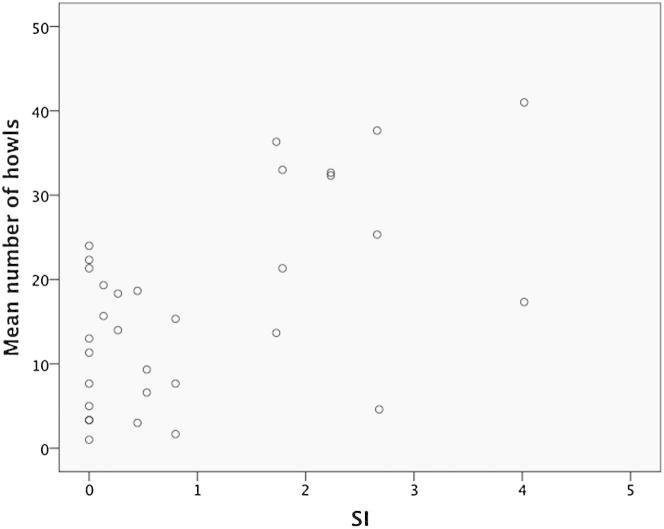
While considerable research has addressed the function of animal vocalizations, the proximate mechanisms driving call production remain surprisingly unclear. Vocalizations may be driven by emotions and the physiological state evoked by changes in the social-ecological environment, or animals may have more control over their vocalizations, using them in flexible ways mediated by the animal's understanding of its surrounding social world. While both explanations are plausible and neither excludes the other, to date no study has attempted to experimentally investigate the influence of both emotional and cognitive factors on animal vocal usage. We aimed to disentangle the relative contribution of both mechanisms by examining howling in captive wolves. Using a separation experiment and by measuring cortisol levels, we specifically investigated whether howling is a physiological stress response to group fragmentation and whether it is driven by social factors, particularly relationship quality. Results showed that relationship quality between the howler and the leaving individual better predicted howling than did the current physiological state. Our findings shed important light on the degree to which animal vocal production can be considered as voluntary.
虽然大量研究已经探讨了动物叫声的功能,但驱动叫声产生的近因机制仍令人惊讶地不清楚。叫声可能是由情绪和社会生态环境变化引起的生理状态驱动的,或者动物可能对自己的叫声有更多的控制,通过动物对周围社会世界的理解,以灵活的方式使用叫声。虽然这两种解释都是合理的,而且彼此并不排斥,但迄今为止,没有一项研究试图通过实验来调查情感和认知因素对动物叫声使用的影响。我们旨在通过研究圈养狼的嚎叫来区分这两种机制的相对贡献。我们使用分离实验和测量皮质醇水平,专门研究了嚎叫是否是对群体分裂的生理应激反应,以及它是否是由社会因素驱动的,特别是关系质量。结果表明,嚎叫者与离开者之间的关系质量比当前的生理状态更能预测嚎叫。我们的研究结果重要地揭示了动物叫声产生在多大程度上可以被视为自愿的。