Department of Biotechnology, Delft University of Technology, Julianalaan 67, 2628, BC Delft, The Netherlands.
Biotechnol Biofuels. 2013 Aug 29;6(1):125. doi: 10.1186/1754-6834-6-125.
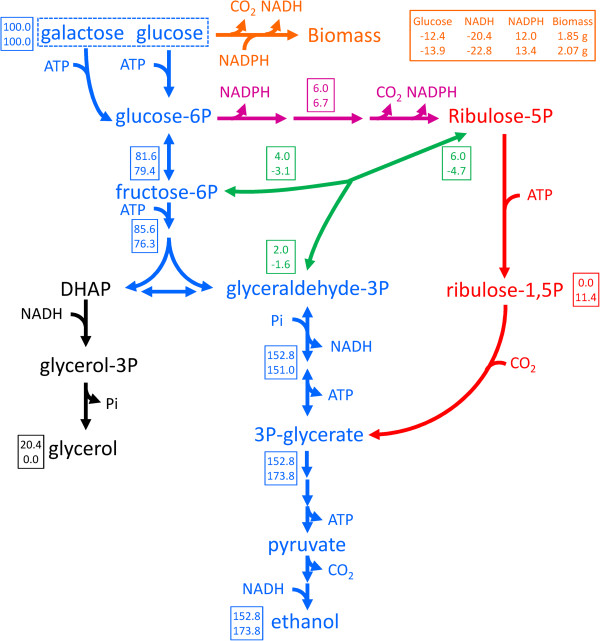
Redox-cofactor balancing constrains product yields in anaerobic fermentation processes. This challenge is exemplified by the formation of glycerol as major by-product in yeast-based bioethanol production, which is a direct consequence of the need to reoxidize excess NADH and causes a loss of conversion efficiency. Enabling the use of CO2 as electron acceptor for NADH oxidation in heterotrophic microorganisms would increase product yields in industrial biotechnology.
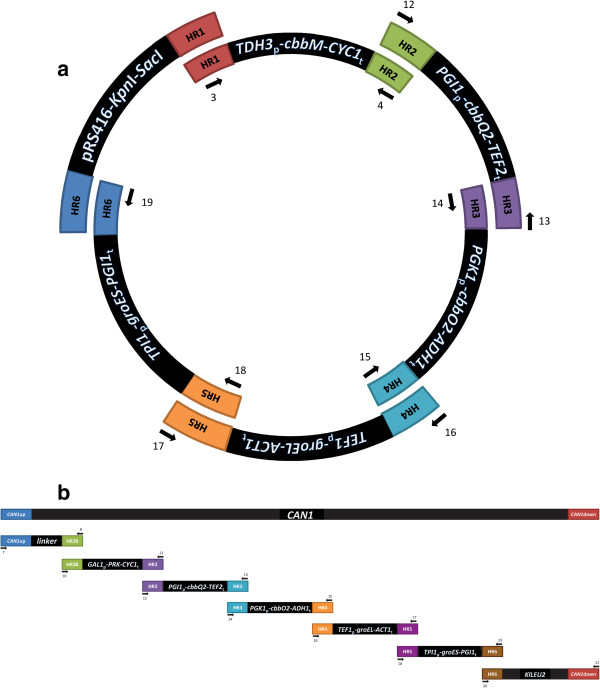
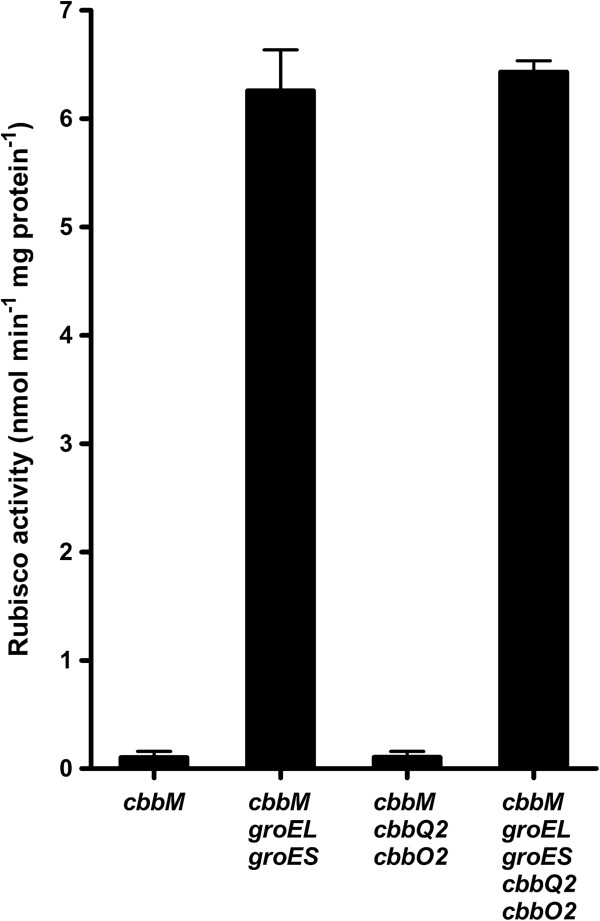
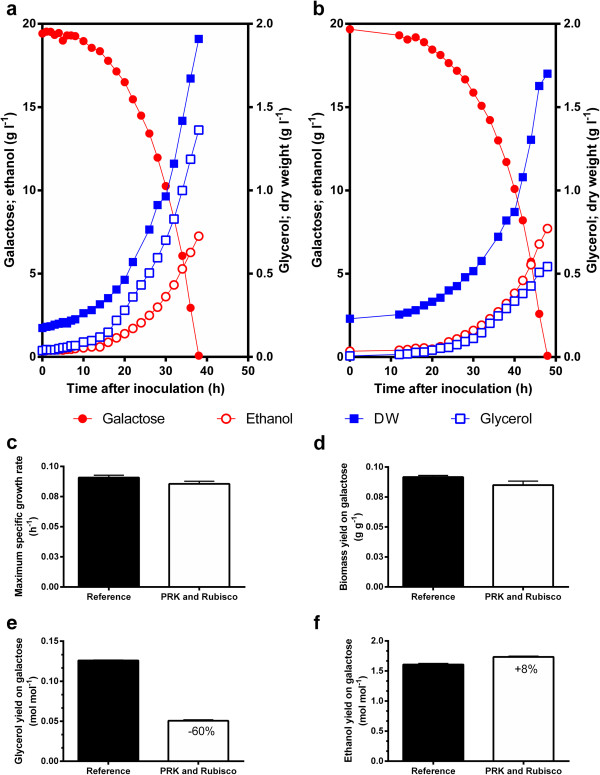
A hitherto unexplored strategy to address this redox challenge is the functional expression in yeast of enzymes from autotrophs, thereby enabling the use of CO2 as electron acceptor for NADH reoxidation. Functional expression of the Calvin cycle enzymes phosphoribulokinase (PRK) and ribulose-1,5-bisphosphate carboxylase (Rubisco) in Saccharomyces cerevisiae led to a 90% reduction of the by-product glycerol and a 10% increase in ethanol production in sugar-limited chemostat cultures on a mixture of glucose and galactose. Co-expression of the Escherichia coli chaperones GroEL and GroES was key to successful expression of CbbM, a form-II Rubisco from the chemolithoautotrophic bacterium Thiobacillus denitrificans in yeast.
Our results demonstrate functional expression of Rubisco in a heterotrophic eukaryote and demonstrate how incorporation of CO2 as a co-substrate in metabolic engineering of heterotrophic industrial microorganisms can be used to improve product yields. Rapid advances in molecular biology should allow for rapid insertion of this 4-gene expression cassette in industrial yeast strains to improve production, not only of 1st and 2nd generation ethanol production, but also of other renewable fuels or chemicals.
氧化还原辅助因子平衡限制了厌氧发酵过程中的产物产量。这种挑战的一个例子是在基于酵母的生物乙醇生产中甘油作为主要副产物的形成,这是需要重新氧化过量 NADH 的直接结果,导致转化率效率降低。使异养微生物能够将 CO2 用作 NADH 氧化的电子受体将增加工业生物技术中的产物产量。
解决此氧化还原挑战的一种迄今尚未被探索的策略是在酵母中功能性表达自养生物的酶,从而能够将 CO2 用作 NADH 再氧化的电子受体。在酿酒酵母中功能性表达 Calvin 循环酶磷酸核糖激酶(PRK)和核酮糖-1,5-二磷酸羧化酶(Rubisco),导致在以葡萄糖和半乳糖混合物为碳源的糖限制恒化器培养物中,副产物甘油减少了 90%,乙醇产量增加了 10%。大肠杆菌伴侣蛋白 GroEL 和 GroES 的共表达是将来自化能自养细菌脱氮硫杆菌的 CbbM(一种 II 型 Rubisco)成功表达在酵母中的关键。
我们的结果证明了 Rubisco 在异养真核生物中的功能性表达,并展示了如何将 CO2 作为共底物纳入异养工业微生物的代谢工程中,以提高产物产量。分子生物学的快速进展应该允许在工业酵母菌株中快速插入这个 4 基因表达盒,以提高生产效率,不仅是第一代和第二代乙醇生产,还包括其他可再生燃料或化学品。