Institute of Immunology, PLA, Third Military Medical University, Chongqing, PR China.
PLoS One. 2013 Aug 21;8(8):e71815. doi: 10.1371/journal.pone.0071815. eCollection 2013.
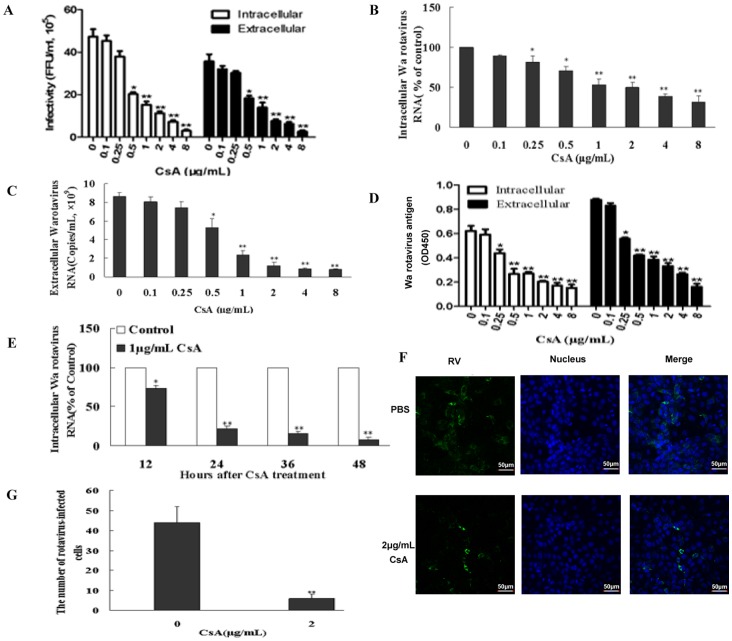
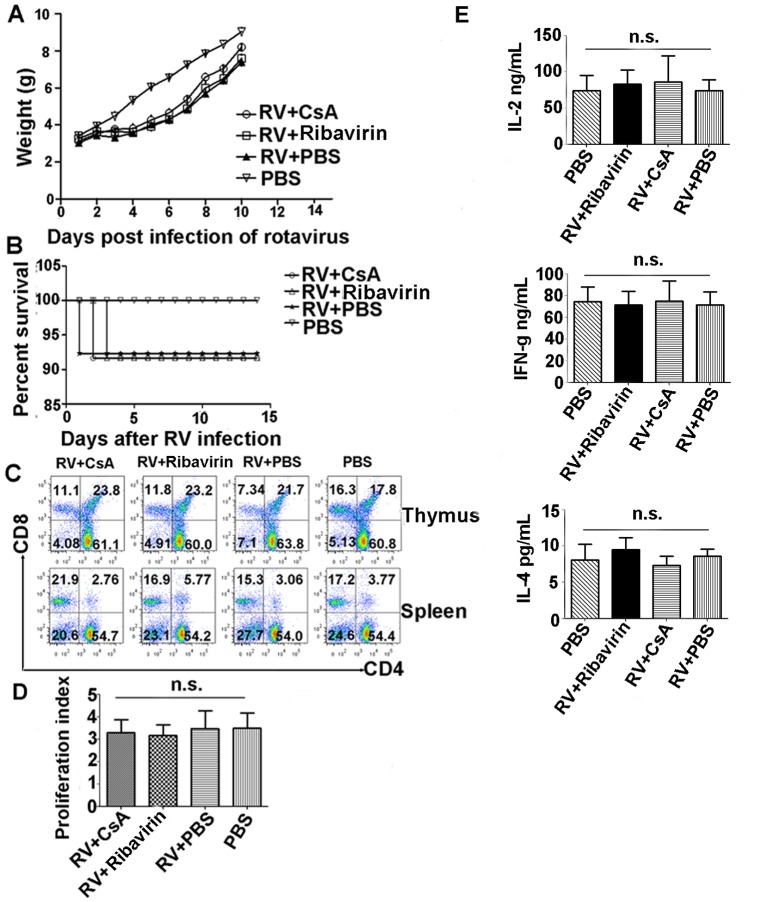
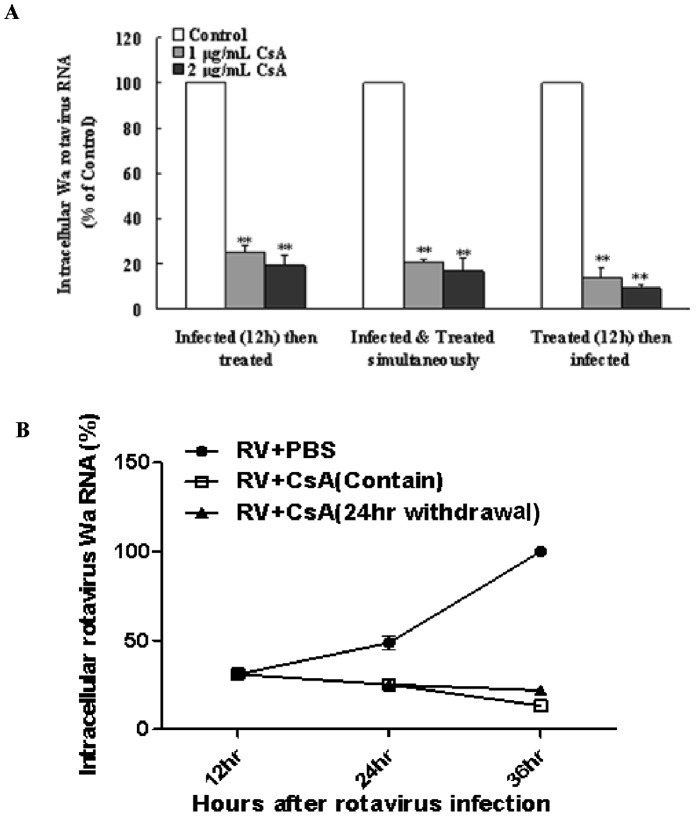
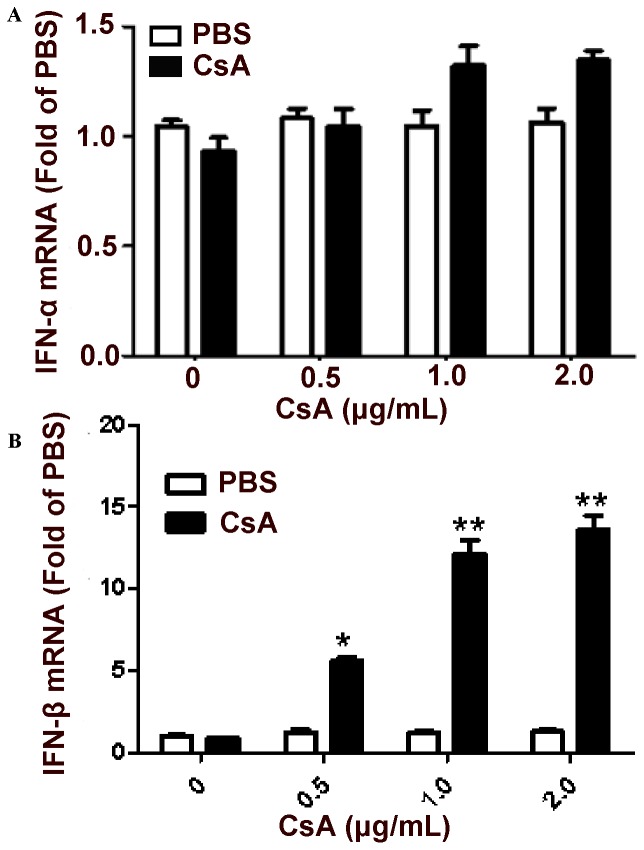
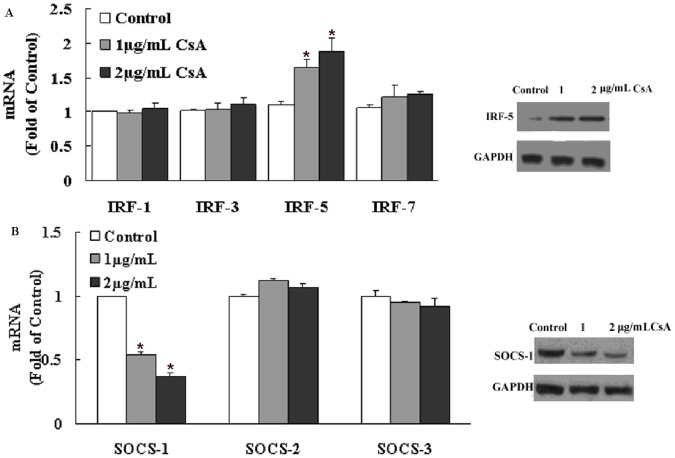
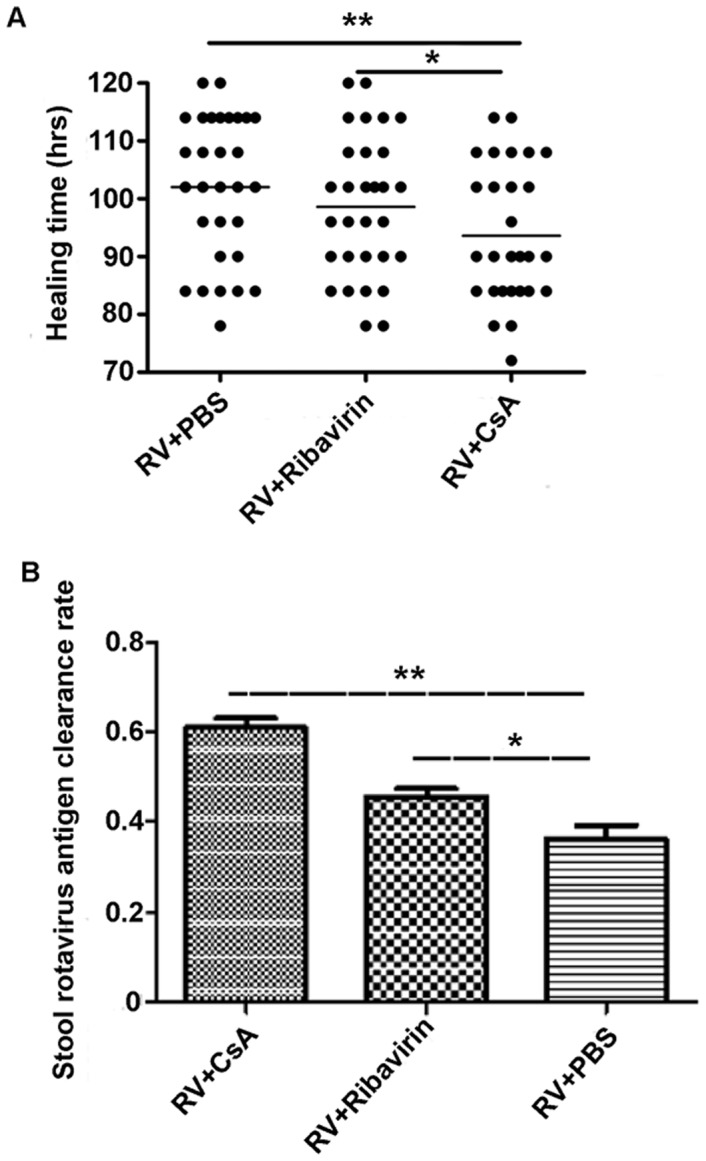
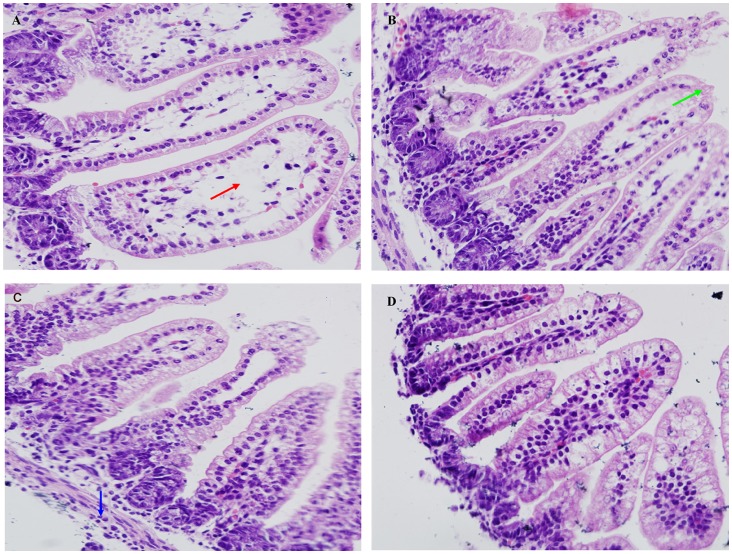
Rotavirus (RV) is the most common cause of severe diarrhea among infants and young children. Currently, there is no specific drug available against rotavirus, largely due to the lack of an ideal target molecule which has hampered drug development. Our previous studies have revealed that cyclosporin A (CsA) might be potentially useful as an anti-RV drug. We therefore used both cellular and mouse models to study the immunological safety and effectiveness of CsA as an anti-RV drug. We found that CsA treatment of HT-29 cells before, during, and after viral infection efficiently inhibited Wa strain RV replication and restored IFN-β expression in a HT-29 cell line model. Exploring the underlying mechanisms showed that CsA promoted Interferon Regulatory Factor-5 (IRF-5) expression (a key positive regulator of the type I IFN signaling pathway), but not IRF-1, IRF-3, or IRF-7. Additionally, CsA inhibited SOCS-1 expression (the key negative regulator of IFN-α/β), but not SOCS-2 or SOCS-3. The antiviral effect of CsA was confirmed in an RV-infected neonatal mouse model by evaluation of antigen clearance and assessment of changes in intestinal tissue pathology. Also, no differences in T cell frequency or proliferation between the CsA- and vehicle-treated groups were observed. Thus, both our in vitro and in vivo findings suggest that CsA, through modulating the expression of key regulators in IFN signaling pathway, promote type I IFN-based intracellular innate immunity in RV host cells. These findings suggest that CsA may be a useful candidate to develop a new anti-RV strategy, although further evaluation and characterization of CsA on RV-induced diarrhea are warranted.
轮状病毒(RV)是导致婴幼儿严重腹泻的最常见原因。目前,尚无针对轮状病毒的特效药物,这主要是因为缺乏理想的靶分子,从而阻碍了药物研发。我们之前的研究表明,环孢素 A(CsA)可能是一种有潜力的抗轮状病毒药物。因此,我们使用细胞和小鼠模型来研究 CsA 作为抗轮状病毒药物的免疫安全性和有效性。我们发现,在 Wa 株轮状病毒感染前、感染中和感染后,用 CsA 处理 HT-29 细胞可有效抑制病毒复制,并恢复 HT-29 细胞系模型中的 IFN-β表达。探索其潜在机制表明,CsA 促进干扰素调节因子 5(IRF-5)的表达(I 型 IFN 信号通路的关键正调控因子),而不是 IRF-1、IRF-3 或 IRF-7。此外,CsA 抑制 SOCS-1 的表达(IFN-α/β的关键负调控因子),而不是 SOCS-2 或 SOCS-3。通过评估抗原清除和评估肠组织病理学变化,在轮状病毒感染的新生小鼠模型中证实了 CsA 的抗病毒作用。此外,CsA 处理组和载体处理组之间 T 细胞频率或增殖没有差异。因此,我们的体外和体内研究结果表明,CsA 通过调节 IFN 信号通路中关键调节因子的表达,促进 RV 宿主细胞中的 I 型 IFN 为基础的细胞内固有免疫。这些发现表明,CsA 可能是开发新的抗轮状病毒策略的有用候选药物,但仍需要进一步评估和表征 CsA 对轮状病毒诱导腹泻的作用。