Experimental Transplantation and Immunology Branch, National Cancer Institute, National Institutes of Health, Bethesda, Maryland, USA.
PLoS One. 2013 Aug 21;8(8):e72305. doi: 10.1371/journal.pone.0072305. eCollection 2013.
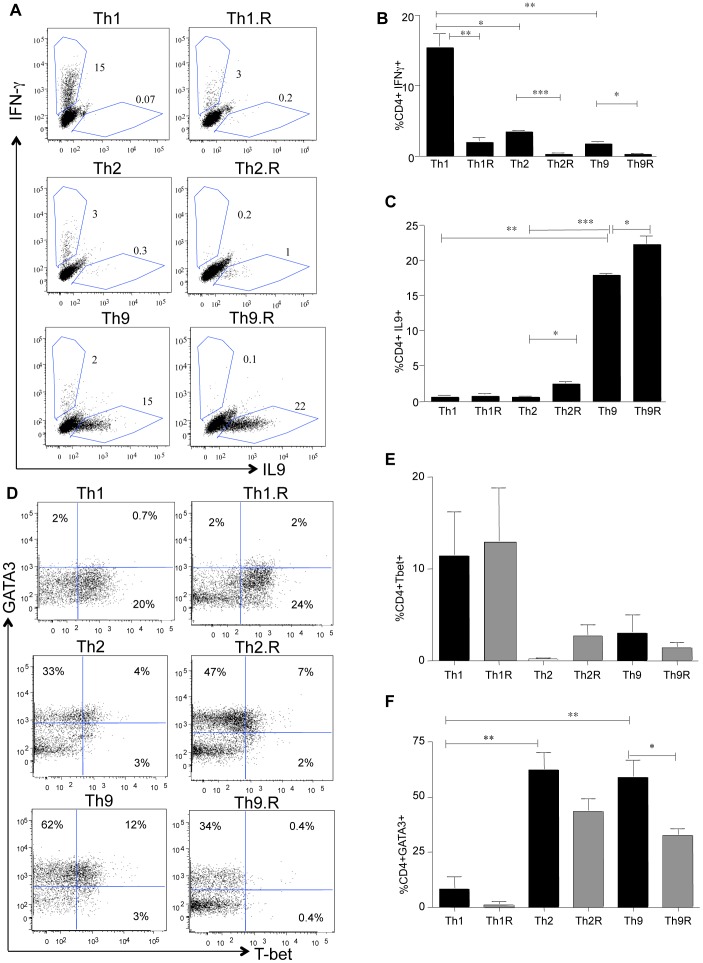
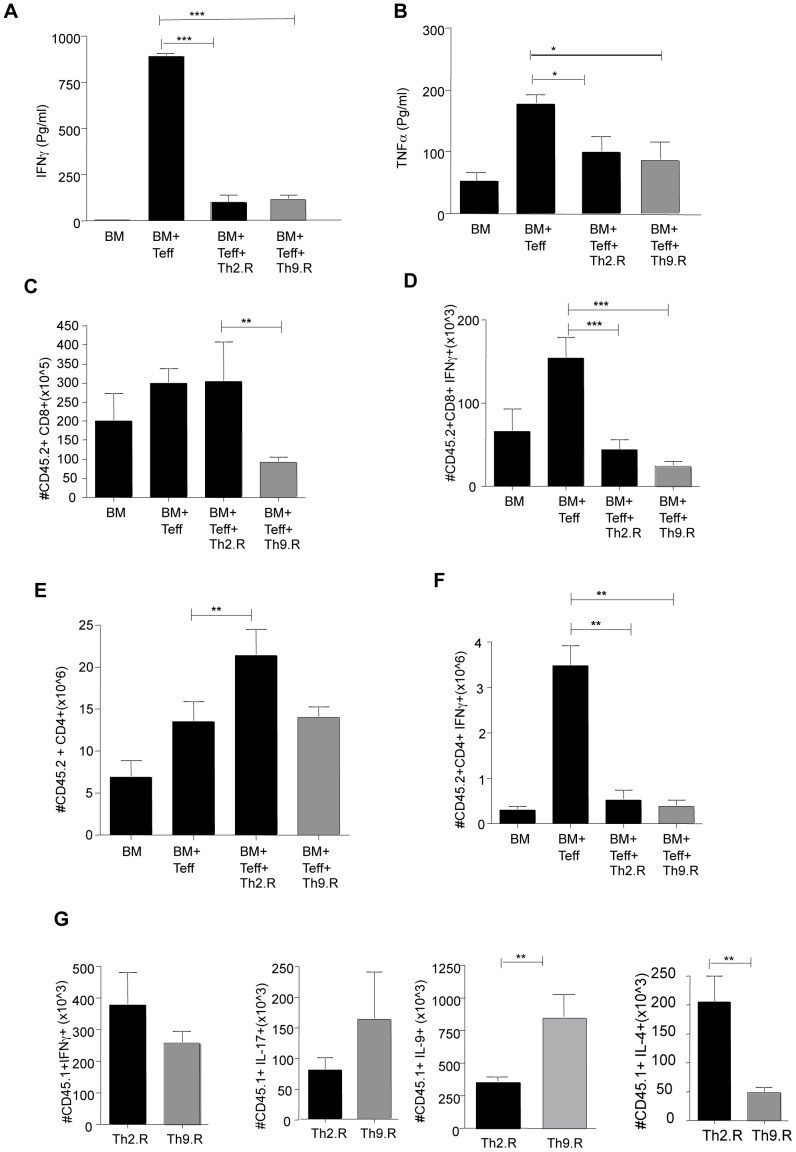
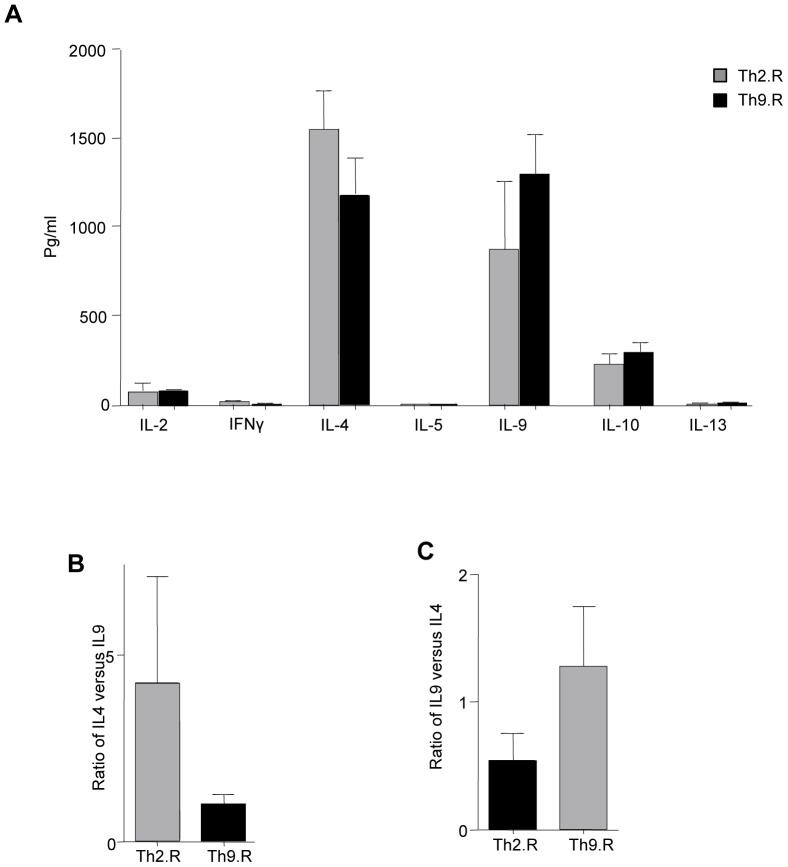
The cytokine micro-environment can direct murine CD4(+) T cells towards various differentiation lineages such as Th1, Th2 and Tregs even in the presence of rapamycin, which results in T cells that mediate increased in vivo effects. Recently, a new lineage of T cells known as Th9 cells that secrete increased IL-9 have been described. However, it is not known whether Th9 differentiation occurs in the presence of rapamycin or whether adoptively transferred donor Th9 cells would augment or restrict alloreactivity after experimental bone marrow transplantation. We found that CD4(+) T cells that were co-stimulated and polarized with TGF-β and IL-4 in the presence or absence of rapamycin each yielded effector cells of Th9 phenotype that secreted increased IL-9 and expressed a transcription factor profile characteristic of both Th9 and Th2 cells (high GATA-3/low T-bet). Augmentation of T cell replete allografts with manufactured rapamycin resistant Th9 cells markedly reduced both CD4(+) and CD8(+) T cell engraftment and strongly inhibited allo-specific T cell secretion of IFN-γ. The potency of Th9 cell inhibition of alloreactivity was similar to that of rapamycin resistant Th2 cells. Importantly, rapamycin resistant Th9 cells persisted and maintained their cytokine phenotype, thereby indicating limited differentiation plasticity of the Th9 subset. As such, Th9 differentiation proceeds in the presence of rapamycin to generate a cell therapy product that maintains high IL-9 expression in vivo while inhibiting IFN-γ driven alloreactivity.
细胞因子微环境可以指导小鼠 CD4(+) T 细胞向不同的分化谱系分化,如 Th1、Th2 和 Tregs,即使在雷帕霉素存在的情况下也是如此,这导致介导体内作用增强的 T 细胞。最近,已经描述了一种新的 T 细胞谱系,称为 Th9 细胞,其分泌增加的 IL-9。然而,目前尚不清楚在雷帕霉素存在的情况下是否会发生 Th9 分化,或者过继转移的供体 Th9 细胞是否会在实验性骨髓移植后增强或限制同种异体反应性。我们发现,在存在或不存在雷帕霉素的情况下,用 TGF-β 和 IL-4 共刺激和极化的 CD4(+) T 细胞各自产生 Th9 表型的效应细胞,这些细胞分泌增加的 IL-9,并表达特征为 Th9 和 Th2 细胞(高 GATA-3/低 T-bet)的转录因子谱。用制造的雷帕霉素抗性 Th9 细胞增强 T 细胞充足的同种异体移植物显著减少了 CD4(+)和 CD8(+) T 细胞的植入,并强烈抑制了同种异体特异性 T 细胞 IFN-γ 的分泌。Th9 细胞抑制同种异体反应性的效力与雷帕霉素抗性 Th2 细胞相似。重要的是,雷帕霉素抗性 Th9 细胞持续存在并保持其细胞因子表型,从而表明 Th9 亚群的分化可塑性有限。因此,在雷帕霉素存在的情况下,Th9 分化会产生一种细胞治疗产品,该产品在体内保持高 IL-9 表达,同时抑制 IFN-γ 驱动的同种异体反应性。