Danner S, Benzin H, Vollbrandt T, Oder J, Richter A, Kruse C
Fraunhofer Research Institution for Marine Biotechnology, 23562 Luebeck, Germany.
Int J Cell Biol. 2013;2013:918242. doi: 10.1155/2013/918242. Epub 2013 Jul 24.
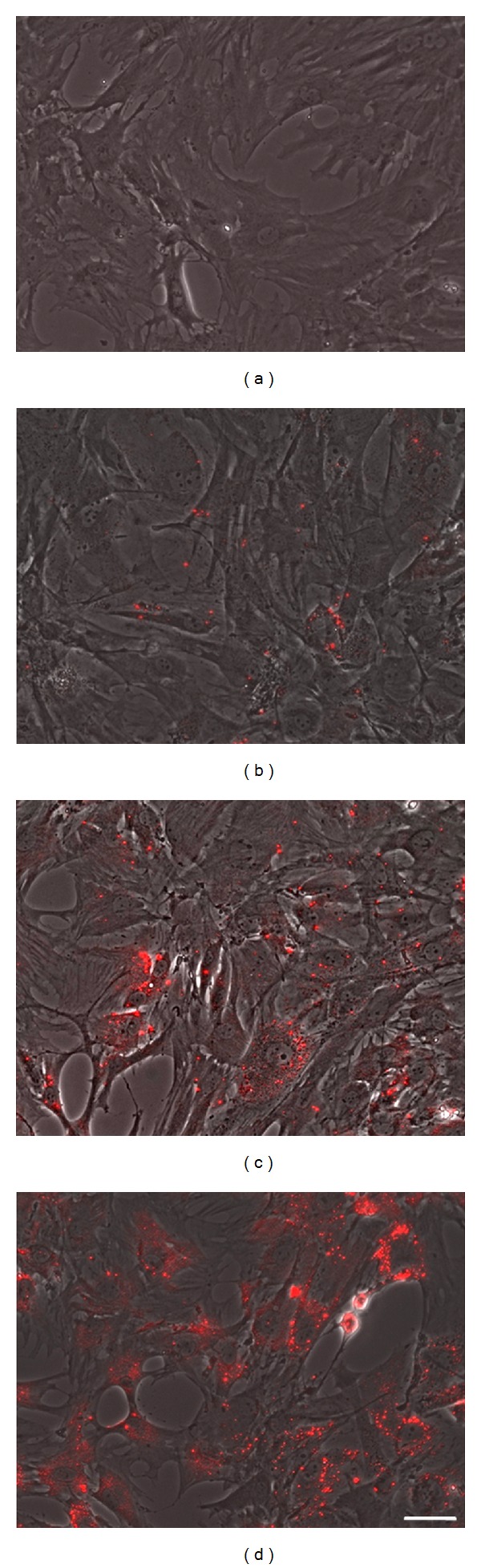
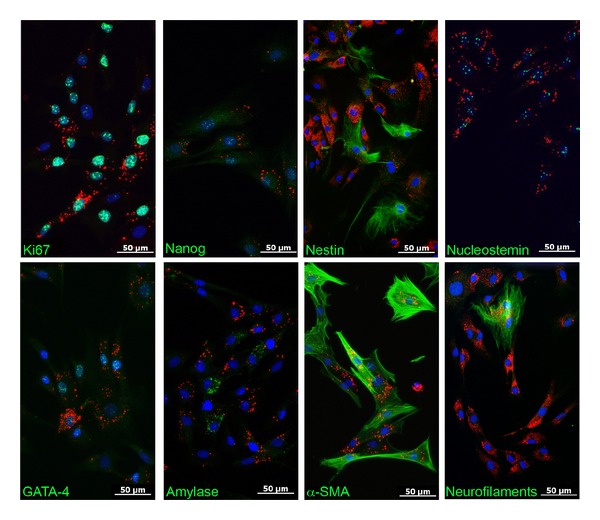
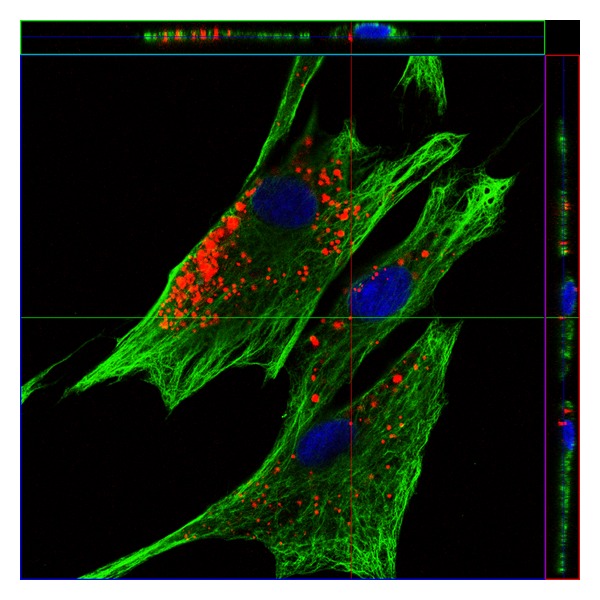
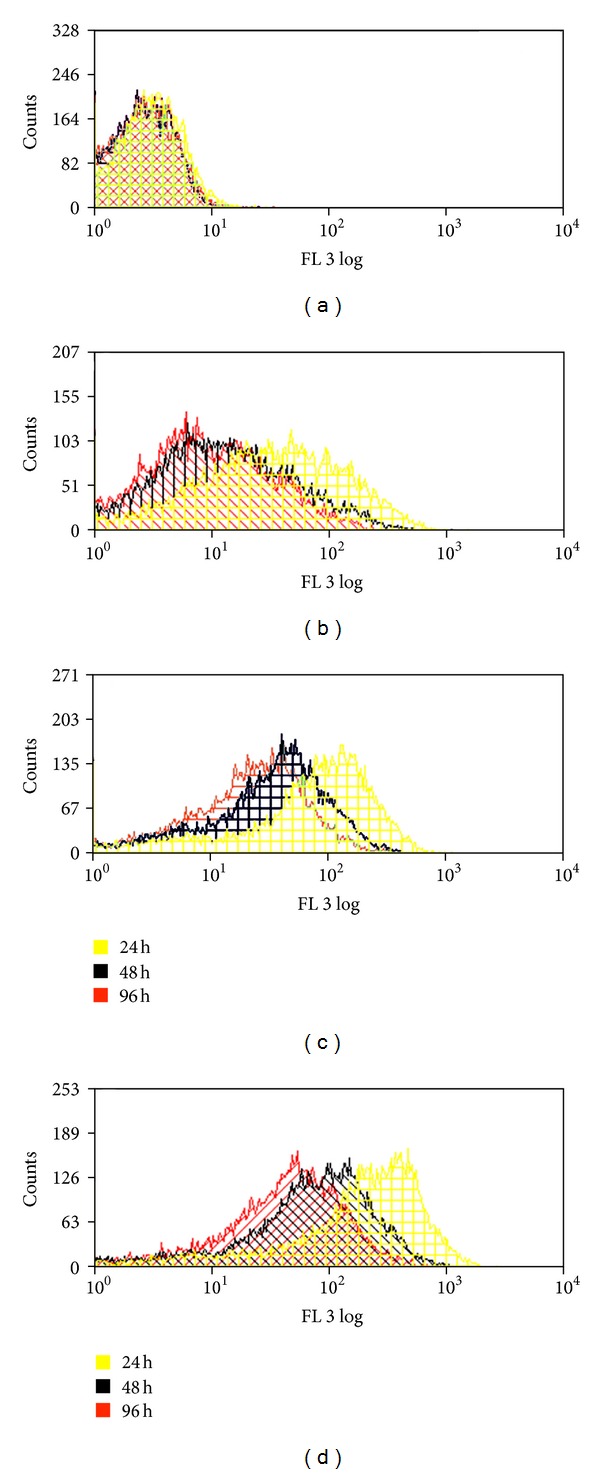
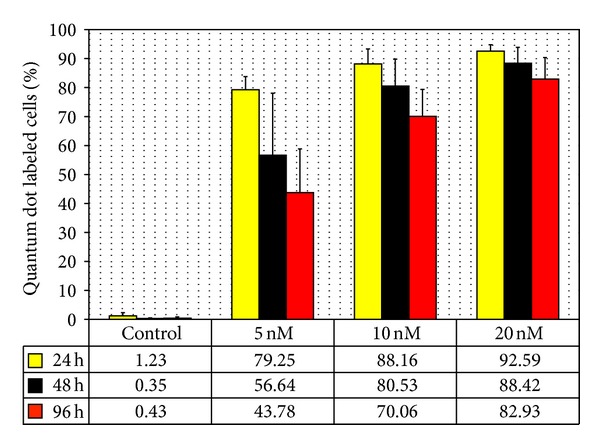
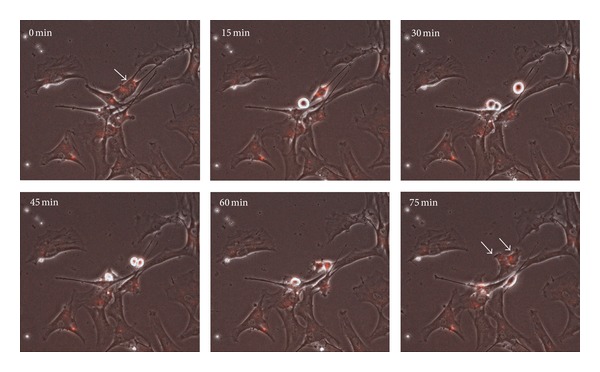
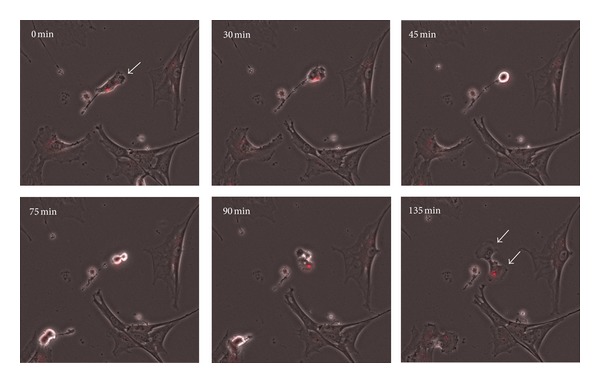
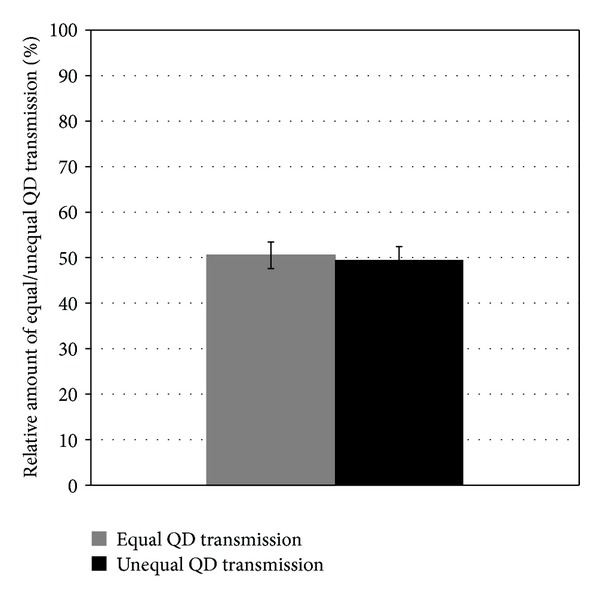
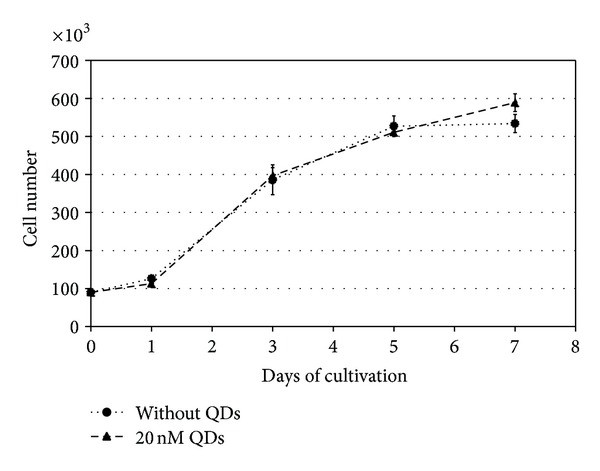
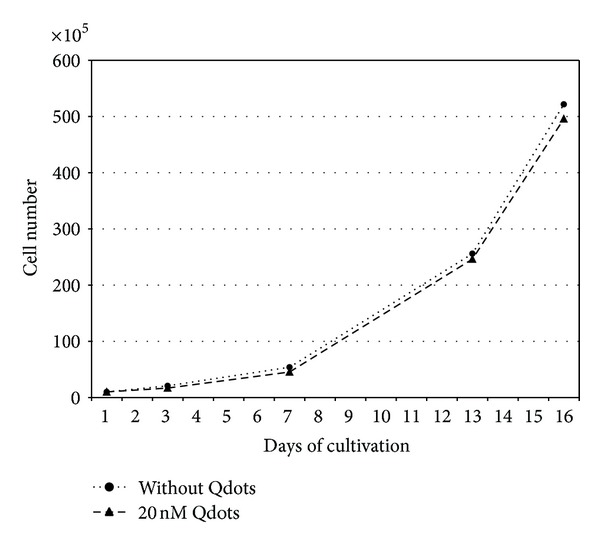
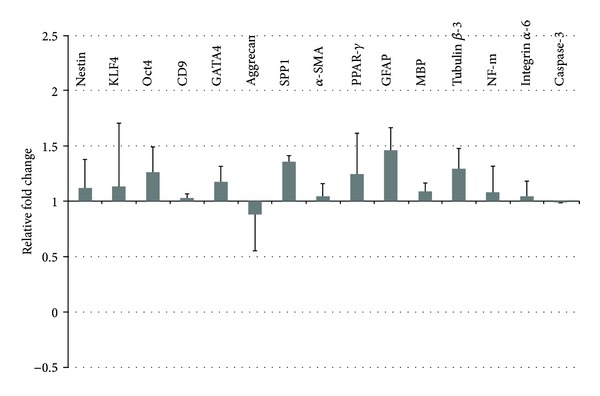
With the increasing relevance of cell-based therapies, there is a demand for cell-labeling techniques for in vitro and in vivo studies. For the reasonable tracking of transplanted stem cells in animal models, the usage of quantum dots (QDs) for sensitive cellular imaging has major advances. QDs could be delivered to the cytoplasm of the cells providing intense and stable fluorescence. Although QDs are emerging as favourable nanoparticles for bioimaging, substantial investigations are still required to consider their application for adult stem cells. Therefore, rat pancreatic stem cells (PSCs) were labeled with different concentrations of CdSe quantum dots (Qtracker 605 nanocrystals). The QD labeled PSCs showed normal proliferation and their usual spontaneous differentiation potential in vitro. The labeling of the cell population was concentration dependent, with increasing cell load from 5 nM QDs to 20 nM QDs. With time-lapse microscopy, we observed that the transmission of the QD particles during cell divisions was random, appearing as equal or unequal transmission to daughter cells. We report here that QDs offered an efficient and nontoxic way to label pancreatic stem cells without genetic modifications. In summary, QD nanocrystals are a promising tool for stem cell labeling and facilitate tracking of transplanted cells in animal models.
随着基于细胞的疗法的相关性日益增加,对用于体外和体内研究的细胞标记技术有了需求。为了在动物模型中合理追踪移植的干细胞,使用量子点(QD)进行灵敏的细胞成像有了重大进展。量子点可以递送至细胞的细胞质中,提供强烈且稳定的荧光。尽管量子点正成为用于生物成像的有利纳米颗粒,但仍需要大量研究来考虑它们在成体干细胞中的应用。因此,用不同浓度的CdSe量子点(Qtracker 605纳米晶体)标记大鼠胰腺干细胞(PSC)。量子点标记的胰腺干细胞在体外显示出正常的增殖及其通常的自发分化潜能。细胞群体的标记呈浓度依赖性,随着量子点浓度从5 nM增加到20 nM,细胞负载增加。通过延时显微镜观察,我们发现量子点颗粒在细胞分裂期间的传递是随机的,表现为向子细胞的均等或不均等传递。我们在此报告,量子点提供了一种无需基因改造即可有效且无毒地标记胰腺干细胞的方法。总之,量子点纳米晶体是一种用于干细胞标记的有前途的工具,并有助于在动物模型中追踪移植的细胞。